

It’s election season: How are Durham University’s political societies campaigning?
From meeting the Chancellor to canvassing door-to-door, here’s how students have been campaigning

Local elections are coming up quickly, and while ballot papers won’t be ticked in Durham, that isn’t to say our very own students aren’t busy campaigning in surrounding areas.
Durham, like many other UK universities, has a broad range of political societies to get involved in, whether that be through canvassing, attending MP visits to socials, or even by the power of social media, aiming to swing voters in favour of their chosen party.
All are keen to win a majority in what appears to be a very tight race between the left and right. Here’s what Durham’s student societies have been doing to boost their parties’ chances.
Firstly, what are ‘local elections’ and how do they differ from a general election?
On the 7th May, 2026, the following elections are taking place in England.
- Local government elections
- Mayoral elections in England
The deadline to register for a free voter ID was Tuesday, 28th April. Voter ID is required to vote at polling stations in all elections (parliamentary, general, by-elections and recall petitions, as well as local and police and crime commissioner elections).
So, back to Durham. We spoke to each of the university’s political societies about how students are helping to promote their message, boost electoral prospects, and most importantly, win the most councils on the 7th May.
The Durham Young Greens
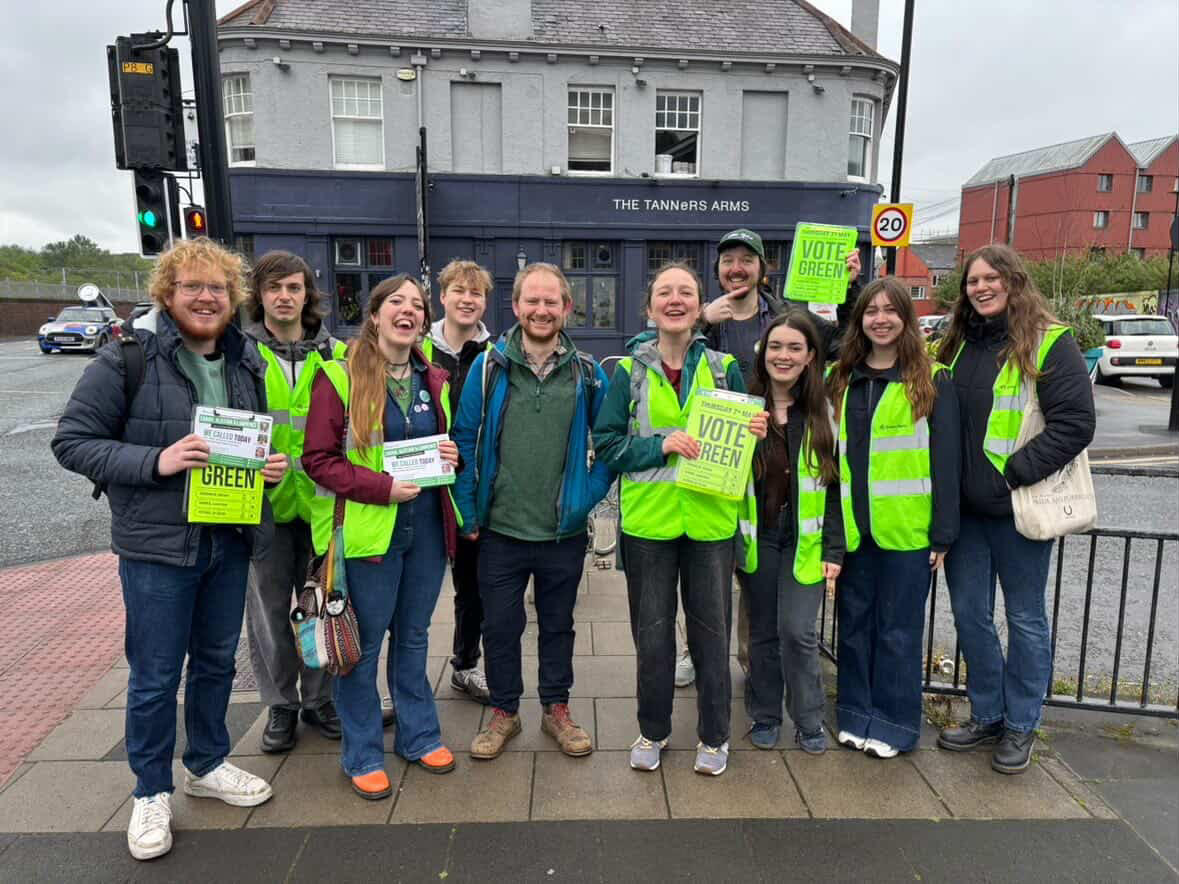
Isaac Short, second year student and the 2025-27 chair of the Durham Young Greens, told The Durham Tab “we have been hard at work helping out campaigns across the county over Easter, including in Leeds, Surrey, Oxfordshire and beyond.
Since returning, they have attended the Green Party policy launch in Newcastle around free buses, and have done some wider canvassing in Newcastle in the weekend leading up to the local elections.
He stressed the urgency for hope; “life can and should be better, and the Green Party are showing that. We present a positive alternative, having actual solutions to problems rather than demonising immigrants. Across the country, millions of people will be voting to end rip off Britain, and make hope normal again.”
The Durham Young Greens also highlighted the need to address the nation-wide affordability crisis, adding “the Greens are focused on tackling that. Rent controls, proper social housing, nationalised buses free for young people and our workers charter are but just a number of policies that we will implement to make life better and more affordable for everyone.”
The Durham Labour Society
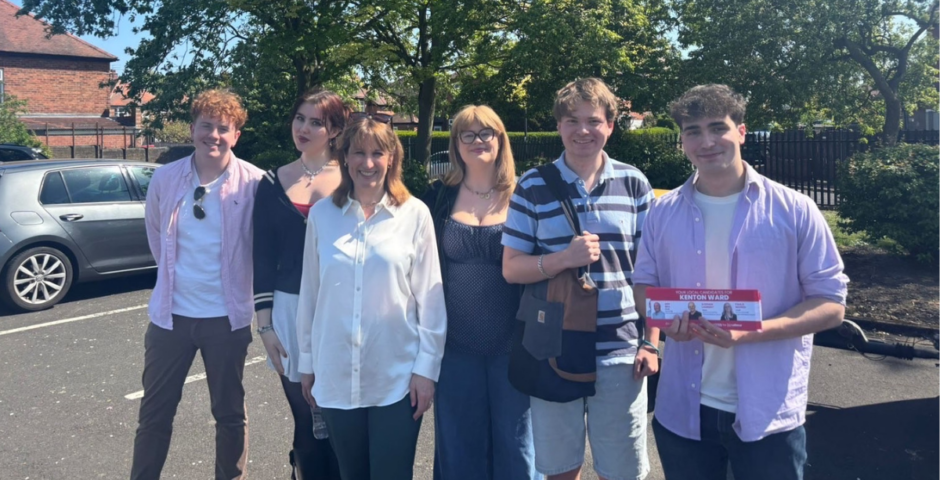
We spoke to Robbie Bono, third year and the 2025-26 chair of the Labour Society in Durham, representing the governing party’s local student branch, on what his society has been doing to campaign during this election season. Plans have been put in place to canvass with the party, speaking to local residents about Labour’s promises, keen to replicate the government’s majority in local elections. Robbie told us the Durham Labour Society has stepped up its campaigning efforts this year, getting more of their members actively involved in local communities.
He stated, “We’ve worked closely with our local constituency Labour Party, helping with leafleting for Durham County Council by-elections, and have regularly travelled up to Newcastle to canvass in key wards alongside local MPs ahead of the council elections – on a recent trip, we were joined by Rachel Reeves! In February, we also attended Labour North Regional Conference, where we met Bridget Phillipson and Wes Streeting.
“We’ve also hosted MPs for City of Durham, Bishop Auckland, and Newcastle upon Tyne East and Wallsend, giving our members insight into the role and stressing the importance of fighting for progressive principles, even in a challenging national context.” Their “pints and policy” events also offer students the opportunity to debate current affairs, policies, and developments, providing a forum for many political opinions, even welcoming guest speakers to these too.
He stressed that “at a time when fewer young people are getting involved in the Labour Party, we’re excited to be bucking that trend by mobilising students to campaign in our region and take the fight to Reform. As the only student Labour society in the North East, we take that responsibility seriously – we will continue to stand up to hate and division while fighting for the values that make us proud to be Labour.” The society also have plans to attend the upcoming national Labour conference in Liverpool, this coming September.

The Durham Conservative Society
The Durham Conservative Society told us: “As of right now we are running a very local campaign to help Conservative Councillors get re-elected. This is due to the obvious agitation the public has towards the 2 mainstream parties – Labour and Conservatives.
“Our most significant challenger is coming from the Liberal Democrat’s, whose campaign literature for the local elections is preoccupied with national issues as opposed to those of the local community. For example, council attendance for each councillor, number of potholes filled, the number of rubbish and graffiti removed from our streets etc.
“To maximise our vote share, all of our campaign literature is within a personalised envelope to each persons address. On another note, the train journey to Newcastle to campaign certainly wasn’t easy during the match against Brighton!”


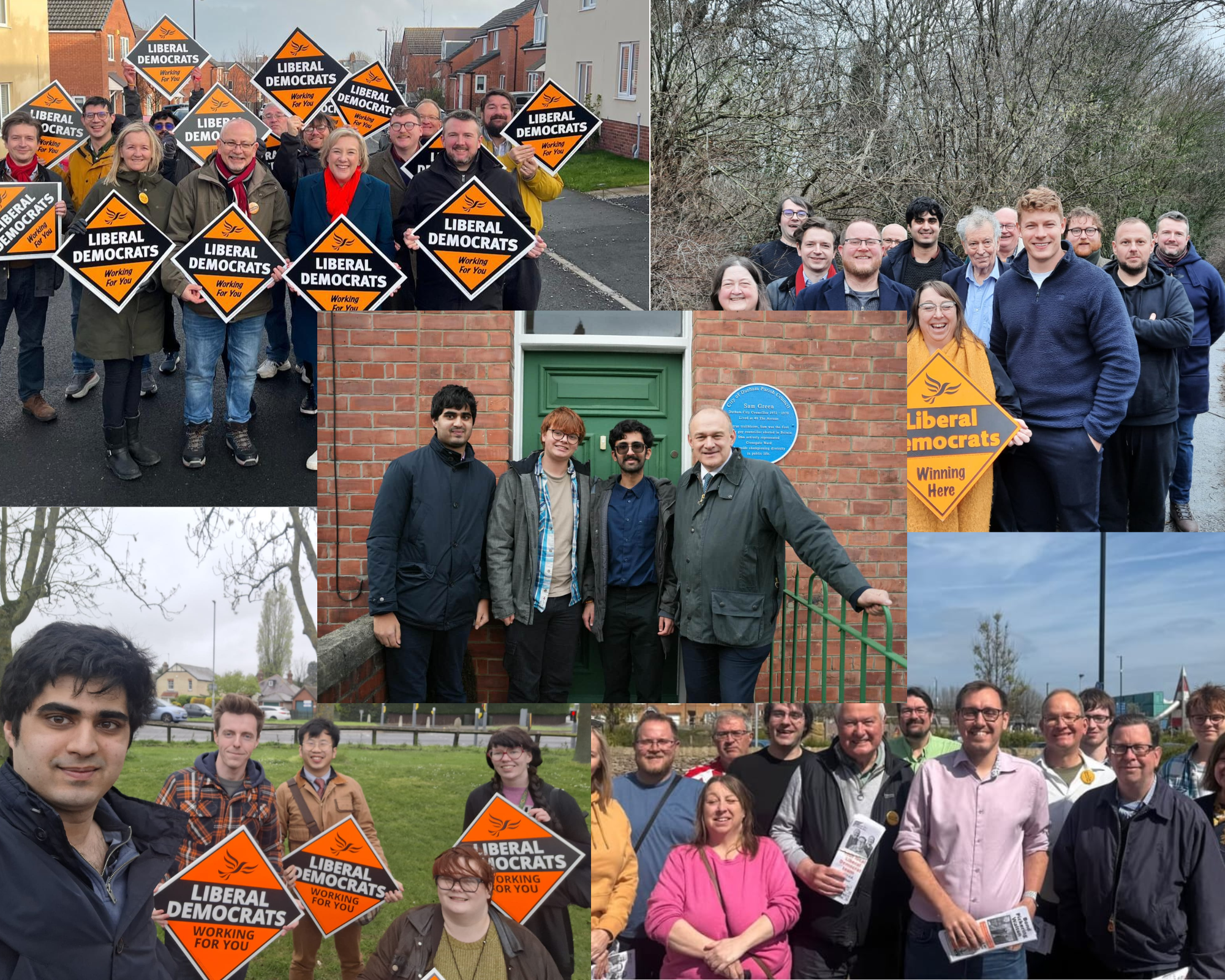
The Durham University Liberal Association
Can Durham University students vote?
The simple answer is yes. The complex answer is it depends. Local elections differ to a general election held every 5 years in the UK to elect a new government, where 650 MPS are selected using a First-Past-The-Post voting system, requiring a “simple majority”.
Local elections take place at least every 4 years, but not all take place at the same time. In 2026, they are being held for 4,851 councillors on Thursday, 7th May across 134 of England’s 317 councils.
In Durham, the last county-council elections took place in 2025, when Reform UK, on the 1st May, 2025, won an overall majority of 98. This means the next elections will take place in May 2029. Therefore, students who have registered to vote in Durham won’t be able to vote this time.
Students, if registered in their home councils, can vote. This can be done in person, by proxy, or via a postal vote.
Who controls the councils up for election?
96 of the 134 councils holding elections have a single-party majority. 66 are labour, 16 Conservative, 13 Liberal Democrat, and one has an independent majority. The remaining 38 are under no overall control, meaning a coalition or minority administration runs it.
The Durham Reform Society refused to comment.
For more of the latest news, guides, gossip, and memes, follow The Durham Tab on Instagram, TikTok, and Facebook.


Latest
First week back at uni? Here’s everything you need to pack in your bag

Mary Poppins is quaking in her boots…
London university releases statement after professor sentenced for a child sexual offence

Barry Langford was a Professor of Film Studies at Royal Holloway


Young father-of-two died on day he was due to start at University of Glasgow

Young father tragically passes away at 24 years old after suffering a brain aneurysm

Bella Ramsey’s specific acting career gives them ‘an edge’ on Celebrity Traitors (they hope)
Their past roles have prepped them for Missions
12 of The Celebrity Traitors season two cast asked to be Traitors, and six to be Faithfuls
Three celebs couldn’t make up their minds

Maya Jama’s game plan for Celebrity Traitors is to avoid trying ‘too hard’ or ‘overthinking’
This is really devious tbh

Newcastle University buildings evacuated after ‘suspicious item’ found on campus

Police, fire crews, and fire engines arrived at the scene

12 things every Fresher gets wrong in their first few weeks at uni

From wearing your lanyard everywhere to leaving your washing-up until it grows its own ecosystem
Our Celebrity Traitors predictions include Maya Jama turning on her fellow Traitors

Here’s what we think will happen

I’ve just realised that three cast members from Celebrity Traitors were in Game of Thrones

Having flashbacks to Bella Ramsey being crushed by a giant




23 to 70: The ages of the Celebrity Traitors 2026 cast, from youngest to oldest

There’s a huge age range this year

James Blunt was a British Army captain before becoming a singer and joining Celebrity Traitors
He mentioned it on the show

Monster director finally admits why they forced Aileen Wuornos in a show about Lizzie Borden
Despite the name, Lizzie Borden is not the focus of the story
Shows and films you can watch about Aileen Wuornos, where she isn’t thrown into another story

Others tell her entire case, unlike Monster on Netflix

This viral tool lets you customise your Apple Pay cards, and here’s how to do it
You can personalise the entire design

James Acaster could be the Celebrity Traitors’ recruit, as filming reportedly paused for him
It’s not much of a cliffhanger

The ridiculous fortunes of The Celebrity Traitors: Their net worths, from £500K to £50 million
One of them could legit buy the castle three times over