


New renting laws come into force today – here’s what York students need to know
The Renters’ Rights Act is now in place across England

New renting laws have officially come into force today, bringing major changes to how private renting works across England.
The Renters’ Rights Act introduces stronger protections for tenants and could have a noticeable impact on students renting privately.
If you’re living in a shared house or planning your next student home, here’s everything you need to know.
What is the Renters’ Rights Act?
The Renters’ Rights Act is a new lew designed to make renting fairer, more secure and more flexible.
One of the biggest changes is that most tenancies are no longer fixed for a set period, but instead become rolling agreements.
A rolling tenancy does not have a fixed end date. This means you are not automatically required to move out at the end of the academic year. Instead, the tenancy continues until you choose to leave, or the landlord has a valid reason to end it.
The law also removes no-fault evictions, meaning landlords can no longer ask tenants to leave without giving a specific legal reason.
Does this apply to current student renters?
Yes – the new rules apply not only to new tenancies, but also to most existing private rental contracts from today.
This means that if you are already renting a house or flat, many of these protections will apply to you automatically.
However, the changes generally do not apply to on campus accommodation or most purpose-built student accommodation (PBSA), as these operate under different types of contracts tied to the academic year.
How do rolling tenancies work?
Under a rolling tenancy, you can usually leave your accommodation by giving notice to your landlord.
In most cases, this means giving at least two months’ notice in writing, such as by email. Your tenancy will then end after that notice.
If you live in a shared student house under a joint tenancy, the situation is more complex. Ending the tenancy typically applies to the whole household, not just one individual. This means you should agree any decision to leave with your housemates in advance.
Some landlords may allow a replacement tenant, but this depends on the terms of your agreement.



How are rent payments changing?
The act also introduces clearer rules around how rent is paid.
For new tenancies starting from today, landlords can no longer require large upfront payments. In most cases, they can only ask for one month’s rent in advance once the tenancy is agreed.
During the tenancy, rent should be paid only for the period you are living in the property, usually on a monthly basis. Landlords cannot require tenants to pay several months’ rent upfront.
Rent increases are also more controlled. They will generally be limited to once per year and must follow a formal legal process, with advance notice given.
For most existing tenancies that began before May 2026, some previous arrangements may still apply until the contract is renewed under the new system.
Do you still need to sign housing early?
The changes are also expects to affect how early students sign housing contracts.
Previously, fixed-term tenancies and the use of no-fault evictions meant landlords could require properties to be vacated at the end of the academic year. This contributed to pressure on students to secure housing months in advance.
With rolling tenancies and stronger protections in place, tenants may be able to remain in their current accommodation for longer. As a result, there may be less pressure to commit to a new contract early, although demand in popular student areas may still influence the timing of house hunting.
How will evictions work?
While no-fault evictions have been removed, landlords can still regain possession of a property under specific legal grounds.
For student housing, this includes a provision that allows landlords to take back a property to let it to a new group of students. However, they must now provide at least four months’ notice.
In all cases, landlords must follow a formal process and provide a valid reason for ending a tenancy.
What about pets?
The new rules also give tenants the right to ask their landlord for permission to keep a pet.
Landlords cannot refuse without a valid reason, although this will still depend on the type of tenancy and the property. Many rental agreements include a no pets clause, so it is important to check your contract before making any arrangements.
Latest

First week back at uni? Here’s everything you need to pack in your bag

Mary Poppins is quaking in her boots…

London university releases statement after professor sentenced for a child sexual offence

Barry Langford was a Professor of Film Studies at Royal Holloway



Young father-of-two died on day he was due to start at University of Glasgow

Young father tragically passes away at 24 years old after suffering a brain aneurysm

Bella Ramsey’s specific acting career gives them ‘an edge’ on Celebrity Traitors (they hope)
Their past roles have prepped them for Missions

12 of The Celebrity Traitors season two cast asked to be Traitors, and six to be Faithfuls
Three celebs couldn’t make up their minds

Maya Jama’s game plan for Celebrity Traitors is to avoid trying ‘too hard’ or ‘overthinking’
This is really devious tbh

Newcastle University buildings evacuated after ‘suspicious item’ found on campus

Police, fire crews, and fire engines arrived at the scene

12 things every Fresher gets wrong in their first few weeks at uni

From wearing your lanyard everywhere to leaving your washing-up until it grows its own ecosystem

Our Celebrity Traitors predictions include Maya Jama turning on her fellow Traitors

Here’s what we think will happen

I’ve just realised that three cast members from Celebrity Traitors were in Game of Thrones

Having flashbacks to Bella Ramsey being crushed by a giant




23 to 70: The ages of the Celebrity Traitors 2026 cast, from youngest to oldest

There’s a huge age range this year

James Blunt was a British Army captain before becoming a singer and joining Celebrity Traitors
He mentioned it on the show

Monster director finally admits why they forced Aileen Wuornos in a show about Lizzie Borden
Despite the name, Lizzie Borden is not the focus of the story

Shows and films you can watch about Aileen Wuornos, where she isn’t thrown into another story

Others tell her entire case, unlike Monster on Netflix
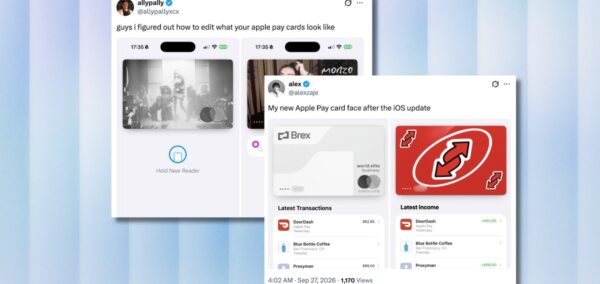
This viral tool lets you customise your Apple Pay cards, and here’s how to do it
You can personalise the entire design

James Acaster could be the Celebrity Traitors’ recruit, as filming reportedly paused for him
It’s not much of a cliffhanger

The ridiculous fortunes of The Celebrity Traitors: Their net worths, from £500K to £50 million
One of them could legit buy the castle three times over