

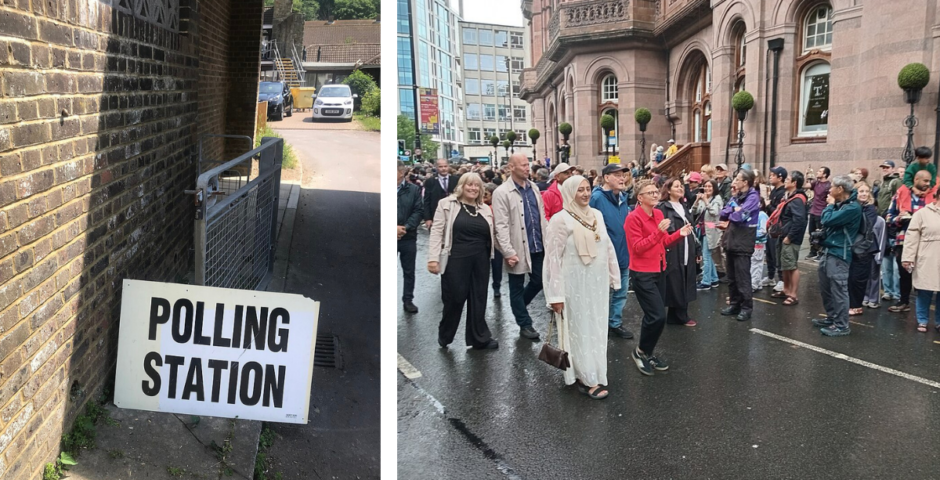
Only a quarter of Manchester voted in the mayoral elections – where were the students?
Turnout was just over 25 per cent on Thursday’s election

On Friday evening, Bev Craig became the Metropolitan Mayor of Manchester. Following in the footsteps of now-prime minister Andy Burnham, she’s now the first female to hold the position.
Perhaps surprisingly for such a huge election, there was a turnout of just 538,659 voters (25.14 per cent) across Greater Manchester.
Given that 2.1 million people in the region are eligible to vote, this turnout reflects roughly a quarter of the population. This is noticeably lower than the past three general elections, and even that of the 2022 Stretford by-election.
But why such a low attendance?
For The Mill and the Manchester Evening News, guesses are hazarded on voter fatigue, election complexities and seasonally-linked absences from Manchester. Not least of these absences is the student population in central and south Manchester, headed home for the summer between academic terms.
Data collected by the electoral commission in 2022 suggests that younger people (18-25) are the groups least likely to register to vote, particularly those who are students, or have moved away from home.
The borough of Manchester (inclusive of Rusholme, Fallowfield and Withington), recorded turnouts of just 23 per cent. While this was by no means the lowest in the region, neighbouring boroughs of Stockport and Trafford recorded 31 per cent and 35 per cent turnouts respectively.
via Wikimedia Commons
During the May council elections, the Fallowfield ward turnout reflected 25.83 per cent of the voting population, while Withington’s hit 36.6 per cent to elect Cllr Beth Hartness, a student at the University of Manchester.
It would be difficult to pin the lack of attendance on anything (or anyone) specific, given that demographic data is not often released following local elections.
Tyron Surmon, head of research at Find Out Now, explained it would be equally as difficult to estimate turnout by age group using exit polls. This is largely due to polling overstating turnout figures, and that “the least accurate samples in any poll is usually the 18-24 group, this is a common problem across all of polling and market research.”
Despite the student population being somewhat absent from Manchester during July and August, multiple students confirmed they had hit the polls on Thursday, in response to an Instagram story on The Manchester Tab page.
Salah, a student at Manchester Metropolitan, said though he voted, he felt there was barely any awareness of the election: “There was a bit of advertising around it but only on certain apps like SoundCloud but for the non premium version.”
As a commuter student, he said he tries to encourage his friends and family to vote, saying: “I feel more inclined to vote due to me doing a humanities course that goes heavy into the politics aspect.”
He did feel some apathy towards the mayoral election from his friends, telling The Manchester Tab: “One friend asked if we were electing a prime minister.”
Charles, a recent graduate from University of Manchester, said he didn’t vote due to being on holiday, but believed most students didn’t vote either: “I didn’t manage to register in time, which was my own fault.”



He explained: “Younger voters around university age are more likely to actually show up to vote since we seem to be very politically active in Manchester and understand the power of our vote to make change – I think the student union contributes to this sense of voter awareness a lot!”
“However, most 20-24 year olds won’t have been in the city at the time as it was outside of university time and I think, while it wouldn’t have made a massive difference, the voter turnout does reflect this.”
Due to the urgency of the election (a mayoral vacancy must be filled within 35 working days), and the size of the region, organising an effective campaign to reach all voters proved quite difficult.
However, campaigns on social media for the Greater Manchester Student Partnership, represented by Manchester Met and UoM union officers, sought to increase awareness of the election among student bodies.
@george.charlton Here’s everything you need to know before Thursday’s Mayoral By-Election 🗳️ This election uses a “Supplementary Vote” system, different from the traditional “First Past the Post” system used in the UK. Let’s explain it… #manchester #mmu #manmet #uni #universitystudent @Manchester Metropolitan Uni @The Union, Manchester Met
George Charlton, the President of Manchester Met’s student union, told us that content on the election process was engaged with well online, with students expressing their thanks for explainer videos.
The supplementary voting system used, which requires voters to select a first and second preference of candidates, may have confused matters slightly, though Salah believes this mainly “confused people who did go to the poll.”
George echoed sentiments of confusing process and election timing affecting the student turnout, saying: “It’s a tough one, because of the time it was held, out of term time students are less likely to be here.”
Despite levels of confusion and perception that students didn’t engage well with the elections, plenty of students reached out to tell us they valued getting out to vote.
Rachel, a graduate from Manchester Met, said: “It’s important for me to stay informed about local politics, it affects all of us whether we’re living here temporarily or staying around after uni is over.”
“I think it’s a misconception that students don’t engage with local elections, even if less of us did this time.”
To look to the future, George has aims to push electoral register sign-ups as part of the Manchester Met freshers fair plan.
With yet another by-election now triggered for Burnage to replace Bev Craig’s council seat, only time can tell if voter fatigue reigns over student turnout in keeping people from the polls.
Featured image via Wikimedia Commons
Latest

Inside the vibey life of Lizzie Borden actress Ella Beatty, who has two very famous parents

I’m sorry, dating rumours with Hugh Jackman?

So, that nursery rhyme about Lizzie Borden is almost completely factually incorrect

I can’t believe children actually sing it

What to wear for lectures when you go to uni in the North

Despite the weather warnings, signs may suggest your 9am is still manageable

LA nonprofit founder arrested after stealing $7.5m for luxury nightclub and Tahiti holiday

He spent public money meant to help the homeless

What you think Welcome Week will be like VS the reality at Birmingham University

Don’t panic if you don’t have the same experience as everyone else
Winner who pooed at HYROX finally speaks out in a lengthy, genuinely surprising message
‘I felt completely fit and healthy at the start of the race, with no reason to expect any illness’

HYROX athlete Joanna Wietrzyk suffers career blow as major sponsor deletes her after poop scandal
The brand is ‘distancing itself’ from her

‘I don’t remember’: American Airlines passenger duct-taped to plane seat speaks out for first time
He called the whole thing a ‘mess’
There’s one ‘dangerous’ detail in the Ed Sheeran scandal that a politician says we’re overlooking
Alexandria Ocasio-Cortez is right… once again
Cambridge college informs students they can’t move into their chosen rooms when term starts

Affected students will receive compensation estimated to be £400

Health expert reveals how dangerous HYROX poop incident really is after ‘biohazard’ concerns
Everyone’s right to be freaking out

New one-day Lancaster music festival cancelled due to financial hardship after months of postponement

Rapper Tinchy Stryder was supposed to make a headline appearance at the event
Explaining that resurfaced video of Macklemore ‘mocking Jewish people’, and how he responded
‘If this guy is your human rights hero, you’ve got a serious problem’


Very few celebs are publicly backing Ed Sheeran, but the ones who are speak VOLUMES
Alexa, play clown music