
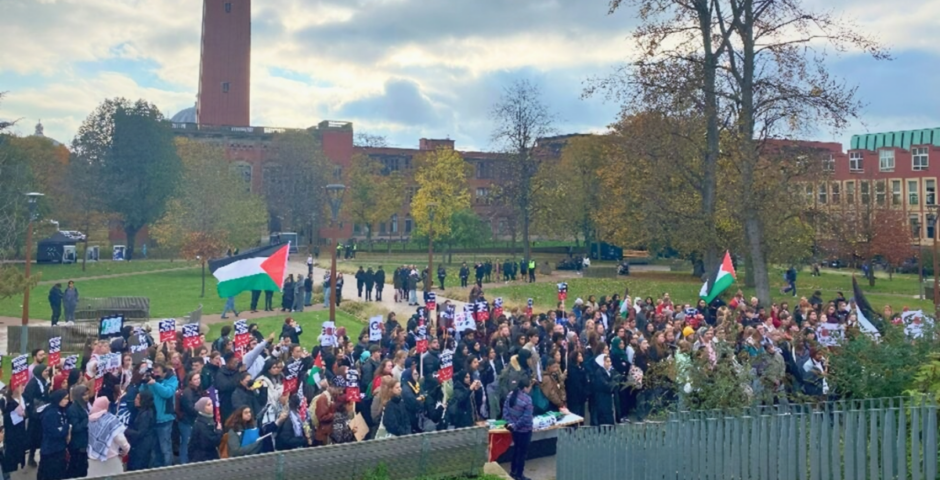
Russell Group universities criticised by Amnesty over how they handled pro-Gaza protests
Amnesty investigated how unis disciplined students
Amnesty International has called out several of the UK’s Russell Group universities for their response to students’ protests about Palestine.
A new report, “Silencing Dissent: UK universities’ response to Palestine solidarity on campus” draws attention to how various institutions reacted to students and academics expressing views about Palestine since October 2023.
Amnesty was critical of how seven Russell Group universities handled students’ protests.
University of Birmingham
Birmingham‘s Code of Practice on Freedom of Speech insists people submit a form about any proposed “meetings, demonstrations, protests or marches” two weeks in advance, and the protest can’t go ahead unless the university approves it.
On 29th May 2024, Birmingham began disciplinary proceedings against a student called Mariyah Ali. She participated in a protest of approximately eight to 15 students, which lasted for about 20 minutes. The students were calling on the University of Birmingham to divest from companies connected to Israel’s military. The university argued Mariyah had broken the Student Conduct Regulations, as the protesters used “intimidating” or “offensive” language and disrupted a meeting. Mariyah argued that the protest was not disruptive. The university eventually discontinued the disciplinary process. Amnesty argued the whole incident “had a substantial impact on Mariyah Ali’s academic experience and wellbeing”.
The University of Birmingham also obtained an injunction against a student encampment. Mariyah Ali chose to be a named defendant in the legal proceedings. She was then responsible for the university’s legal costs, which were estimated at about £60,000. Birmingham University waived the money on condition she agreed not to be involved in “unauthorised” protests.
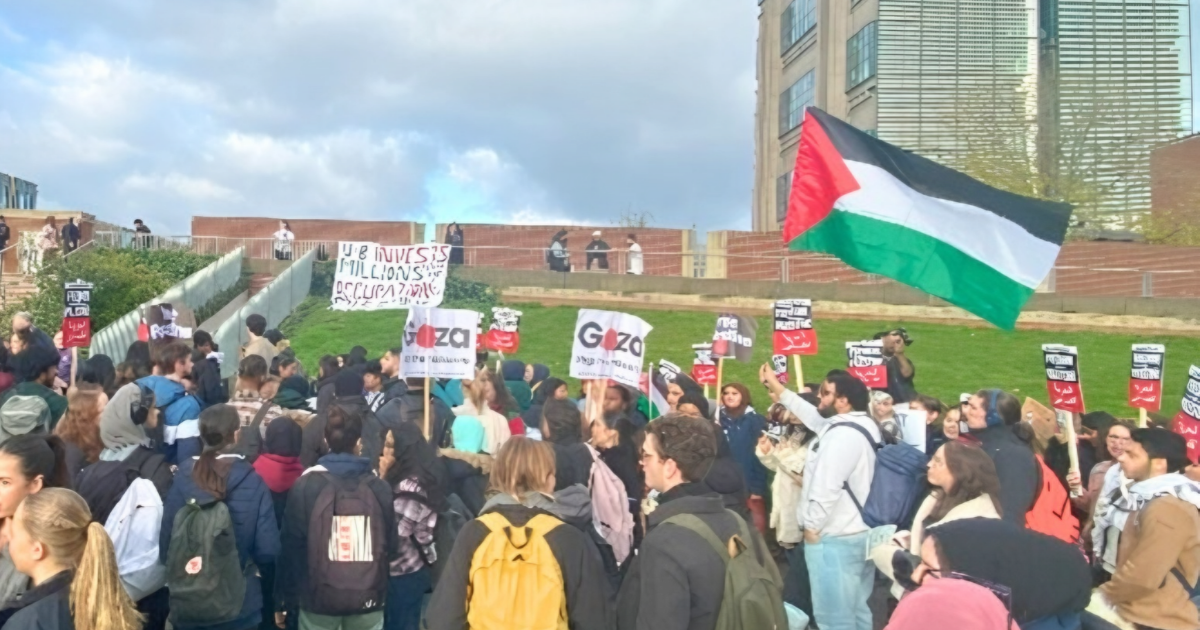
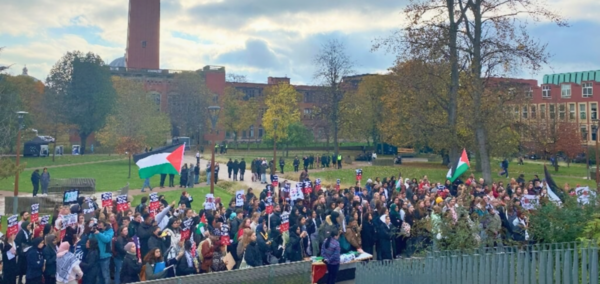
A pro-Palestine protest in Birmingham in 2024
A University of Birmingham spokesperson told Times Higher Education: “As part of the [disciplinary] process, a panel of university staff not connected with the investigation meets to review evidence and determine whether a breach of the university’s regulations has occurred. This is standard, and proper, practice.
“We have a strong and longstanding commitment to freedom of speech and academic freedom, supported by our code of practice. Through this we regularly facilitate debates and activities (such as rallies) on a range of issues, including in relation to Palestine.”
University of Cambridge
The University of Cambridge attempted to get an injunction blocking protests relating to the Israel-Palestine conflict on several sites for five years. The High Court did grant the university a four-month injunction stopping protesters disrupting graduation events near King’s Parade.
Amnesty’s report argued that “the Cambridge proceedings illustrate broader concerns about the use of injunctions as pre-emptive tools to regulate protest”.
This injunction was later extended. In March 2025, the university explained: “The University of Cambridge took this action to protect the right of students to graduate and to prevent unauthorised access to buildings that contain sensitive, confidential information. This was never about preventing lawful protest.”
The university’s website highlights the Judge’s assessment: “As to vigils and the like, there are ample other places for these to be carried out. I do not accept that in this or any respect the proposed injunction has the chilling effect which is alleged.“
Cardiff University
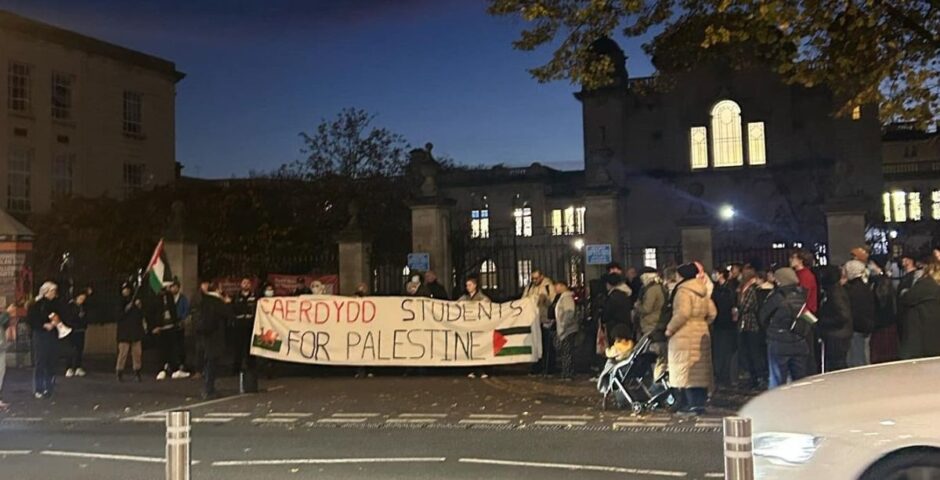
Students at a rally in 2024
In 2025, Cardiff University got an injunction against unauthorised protests on ten different sites. The court order specified “anyone in breach of the order will be in contempt of court and may be imprisoned, fined, or have their assets seized”. The injunction ran out at the end of July 2026.
At the time, a Cardiff University spokesperson told The Cardiff Tab: “The university rejects the suggestion that we are suppressing the right to peaceful and lawful protest. We have not ‘banned every form of protest’. In authorising the injunction, it was made clear that the evidence presented by the university was compelling and that the actions do not prohibit conduct which is lawful, and do not prohibit lawful protest.
“Whilst we remain absolutely committed to free speech and to the right to peaceful protest, part of the DNA of our university, in this, our second year of working with protesters in respect of the war in Palestine, we have seen an escalation in practices that put protesters and the community at risk. We have therefore had to take steps to ensure that the whole community can peacefully and safely engage with university spaces and support services.”



University of Edinburgh
A student called Ben Law was attacked with a blade or sharp object while attending a Palestine protest on 28th March 2025. Ben Law criticised how the university handled the incident, and said: “They are supportive until the support costs them.”
Amnesty International claimed the organisers felt the university was “deflecting blame for the attack on to the student organisers for not formally notifying the university of the protest, even though this was not required”.
The University of Edinburgh told Amnesty International: “Any allegation that the university takes a different approach to the rights, wellbeing or safety of its staff and students depending on the nature of an event they are attending, their nationality or views they hold, is strenuously and unambiguously denied.”
In 2024, students set up in the university’s Old College Quad a “Martyrs’ Memorial” to Palestinians killed in Gaza. University staff removed the memorial and reportedly binned photographs and handwritten messages.
The University of Edinburgh told Amnesty International it found no evidence it handled requests for memorials for Palestinians differently to requests for other memorials.
London School of Economics and Political Science (LSE)
Seven LSE students protested in the Student Services Centre on 7th July 2024. The students were calling for the university to divest from companies with links to Israel’s military. LSE banned the students from campus. Before the university adjusted the restrictions, one student found it difficult to access medical support in-person. LSE lifted the bans in December 2024. The university stated it took this decision because the disciplinary investigation was over, not because of external pressure.
Newcastle University
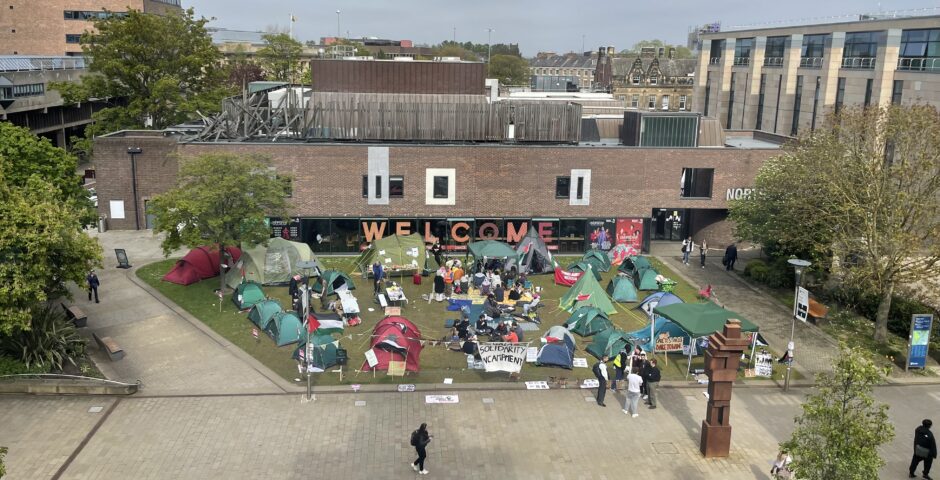
The encampment by Newcastle University’s campus
In May 2024, the university called Northumbria Police when protesters blockaded the King’s Gate building, and when protesters occupied the Armstrong Building.
Newcastle students told Amnesty International that the police response was forceful and the experience was traumatic. Amnesty’s report says “the events described by students raise concerns regarding the use of police powers in response to peaceful protest”.
Newcastle University confirmed to the BBC in May 2024 that it did ask the police to assist the university’s security team. A spokesperson said: “While we respect students’ rights to peaceful protest, unauthorised occupation of university property is trespass. We wish to be clear that this behaviour is unacceptable and those involved could face disciplinary action.”
University of Warwick
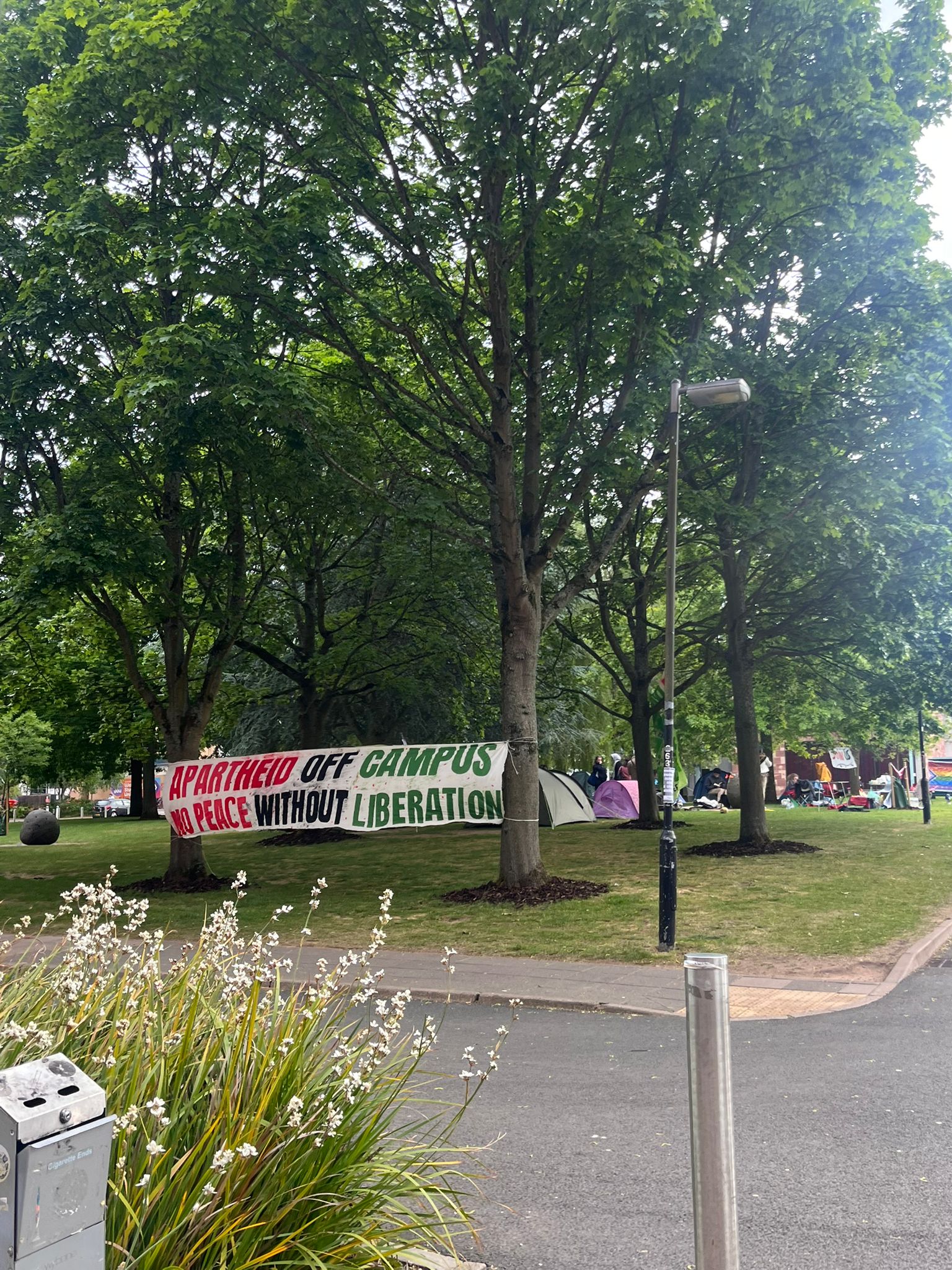
An encampment in Warwick in May 2025
A University of Warwick student participated in a protest in November 2023. Her placard drew parallels between the Holocaust and the situation in Gaza. The student said it was not her intention to trivialise the Holocaust or to express antisemitic opinion. The university made a report to the police about the placard. The police arrested the student at her university accommodation, detained her then issued a conditional caution. The university also launched an investigation into the student, but chose not to take disciplinary action.
Amnesty’s report argued “the whole ordeal caused the student significant distress, reputational harm, and academic disruption”.
The University of Warwick told Amnesty International it would not comment on specific cases, but all activities were managed in line with the university’s legal duty to protect freedom of speech within a framework “of law, respect and safety”.
For more like this, follow The Tab on Instagram.

Latest

The most popular 2026 Halloween costumes are here, but the Obsession one is majorly icky

I’m sorry, how does one go about dressing as a NeeDoh cube?
Russell Group universities criticised by Amnesty over how they handled pro-Gaza protests

Amnesty investigated how unis disciplined students
Friend claims Romesh is ‘nothing like’ how he seems on Celebrity Traitors and has one main aim

‘He’s a competitive person’

Former Traitors stars break the illusion of what they eat, and breakfast will never be the same
I didn’t realise they can basically order anything at the hotel
UWE student jailed for life for murdering his housemate in Filton

Zach Coughlan, 23, must serve at least 28 years for murdering Jamie Collins, 21

‘Superficial, no romance’: Everything Love Is Blind’s Jax has admitted she didn’t like about Stew
She has listed off his ‘red flags’

One more reason to love Celebrity Traitors’ Michael Sheen: How he spends his fortune
Celebrities, take note

An analysis of Bake Off icon Mo’s baking experience, since he shunned bread and biscuits
His former teacher clarified what he actually does bake

James Acaster and Romesh Ranganathan have a long history beyond Celebrity Traitors ‘feud’

‘You’re a mate and I’m a fan’

Celebrity Traitor James Acaster addressed Rob Beckett relationship weeks before ‘teasing’ claims
Rob and Romesh were described as ‘very different people’ away from the cameras
‘Most people think we’re mad’: Nottingham student plans row across the Atlantic
Notts student James and his friend Noah will be one of the youngest teams to take on the race
Sheffield MP calls for abandoned university buildings to be sold

Abtisam Mohamed has called on Sheffield Hallam University to include affordable and social housing within its redevelopment

Bake Off’s Paul, Alison and Noel detail what Nigella Lawson is like to work with
Noel Fielding compared her to Cleopatra


Bake Off’s vibey Clara has big plans after the show, including a huge move to America
She’s one of the last two women in the tent

As Christa Pike recovers from failed execution, her accomplice Shadolla Peterson has moved on
Shadolla stood watch as Christa and her boyfriend carried out the murder

Cardiff Met and USW rank in the top 10 most sexually active universities in the UK

Cardiff students are clearly keeping busy, and it’s not just with uni work

What the Off Campus characters would look like as University of Birmingham freshers

Which characters would actually fit in at UoB?

Bake Off’s Yannis felt ‘a strange sense of relief’ after he went out in Dessert Week
He described his exist as ‘bittersweet’
It’s been three weeks since Christa Pike’s botched lethal injection – this is how she is today
She has had a ‘profound turnaround’