
Liverpool students warned to check symptoms as two die after Kent meningitis outbreak
Students are being urged to be vigilant and act quickly if symptoms arise

Students across the Liverpool region are being advised to remain alert to meningitis symptoms following a serious outbreak in Kent.
The University of Liverpool and Liverpool John Moores University have shared information about the infection this week, urging students to stay vigilant.
These updates come in the wake of a cluster of meningitis cases emerging in Canterbury earlier this week.
Two students, from a local university and sixth form, have died. There are also around 20 confirmed and suspected cases in the area.
Several others have ended up in hospital, and more cases are still being investigated.
Health officials are calling it fast-moving and unusual, and linked to student populations, so here’s what you need to know.
Liverpool John Moores University released information encouraging students to understand the difference between meningitis, freshers’ flu, and even hangovers.
In an article shared to students, the university said: “Meningitis and Freshers’ Flu are very different things but can often be confused.
“While the signs and symptoms may be quite similar at first, people with meningitis are likely to become much more unwell very quickly”.
Health Secretary Wes Streeting has noted that while meningitis does not spread as easily as some infections, the concentration of cases in a short period of time is a cause for concern.
Young people and students living in shared accommodation across the UK’s major university cities are being urged to stay alert, make themselves aware of the symptoms, and act quickly if they suspect they may be infected.
The outbreak is currently centred in Kent, but because students travel between cities, universities across Liverpool are urging students to be vigilant, especially if they live in shared housing or have been out at busy social events recently, such as St. Patrick’s Day.



So what should you actually do?
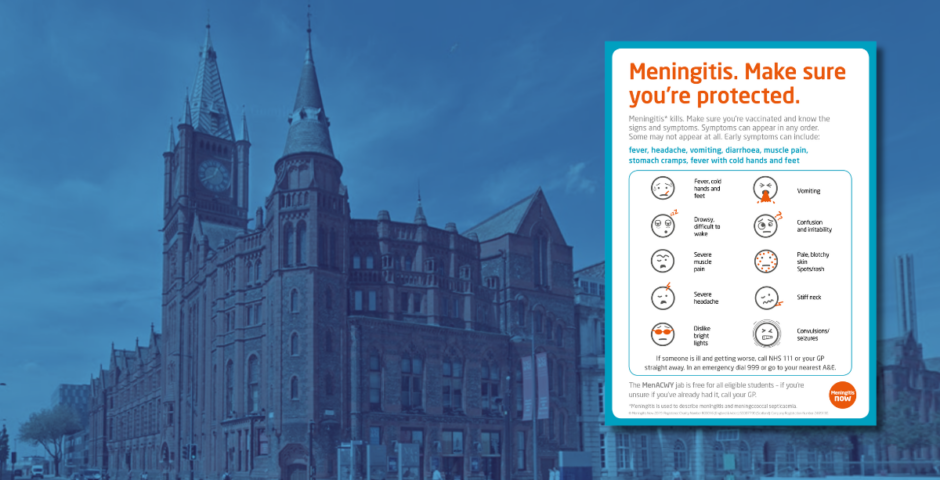
Students across Liverpool are being reminded of the importance of vaccination, particularly the MenACWY jab, which protects against several common strains of meningococcal disease.
An article shared with students from the University of Liverpool said: “If you have not been vaccinated, or you are not sure, it is important you contact your GP and arrange to receive the vaccine.
“If you haven’t registered with a GP in Liverpool yet, make sure you contact Brownlow Health or your local GP as soon as possible to register”.
The information continues to read: “TheMenACWY vaccine protects against four different causes of meningitis and septicaemia: meningococcal (Men) A, C, W and Y diseases.
“However, it does not protect you against all forms of meningitis, such as Meningitis B, which can occur in young people.
“For this reason, it’s really important that you know the signs and symptoms and what action to take – spotting meningitis and getting treated early is key”.
Public health officials have advised students to act promptly if any symptoms begin to appear. These include high fever, a severe headache, stiff neck, sensitivity to light, vomiting, and sometimes a rash.
Meningitis can go from fine to life-threatening within hours, so if something feels off, don’t wait it out.
Additionally, do not wait for a rash to appear before contacting a health professional.
The general advice is, if you’re worried, get seen. Early treatment makes a significant difference.
Featured image via Google Maps and Meningitis Now


Latest

Lizzie Borden’s doctor’s full court testimony, where he recalled finding Andrew and Abby dead

‘His face was hardly to be recognised by one who knew him’

A weapon in the Lizzie Borden case was never found, and it might not have even been an axe

Many different theories were investigated

Lizzie Borden wasn’t right for Monster, and the ‘female rage’ reason they chose her makes it worse
There was so much wrong with it

The full Celebrity Traitors 2026 episode schedule as day change is confirmed
Don’t get caught out when it returns this week

Ryan Murphy picks his favourite American Horror Story season, and it’s a controversial choice

It’s Sarah Paulson’s least favourite

Why the Love Island 2026 Islanders are suddenly posting ‘tart’ on all of Lorenzo’s posts
People think it’s a divide
Former Newcastle student raped in Freshers’ Week speaks out on potential dangers

“I didn’t know what had happened to me… I came home and was very confused”


The 20 easiest UK universities to get into, based on accepted students’ grades

University of Roehampton students have a D and two Cs on average


Here’s what joining these Cardiff Uni societies says about you

Things you need to know before joining a new society

A favourite from the Love Island 2026 cast is getting an All Stars return
A second chance is well deserved

Right, it’s time to lock in: Here are 10 things every Cardiff Uni final year needs to know

It’s never too late to make this year the best one yet

Charli XCX’s viral VMAs reaction wasn’t about Taylor Swift, so here’s what actually happened
They’ve been surrounded by rumours for years

University sued over alleged fraternity gang sexual assault and punishing accused with essays
The members discussed the attack over Snapchat

Here’s what TV show your Cardiff Uni accommodation would feature in

Everyone’s favourite show is finally back for another season

The major celebs who skipped the VMAs 2026 and why, despite having multiple nominations
Ariana Grande was nominated eight times but didn’t attend

All the advice freshers need to survive first year: Love, Cardiff Uni students who survived

From YOLO to locking in, here’s all you need