
Interview: Alexander Newman, outgoing Editor-in-Chief
From an unpublished study of Italian seduction to the top of the masthead in record time: the outgoing Editor-in-Chief on manifestation, media barons and why first years should be kept well away from microphones
I interview a lot of people, it would seem, for The Tab or simply for my own enjoyment. At Cambridge, after all, it is incredibly easy to get people to talk about themselves.
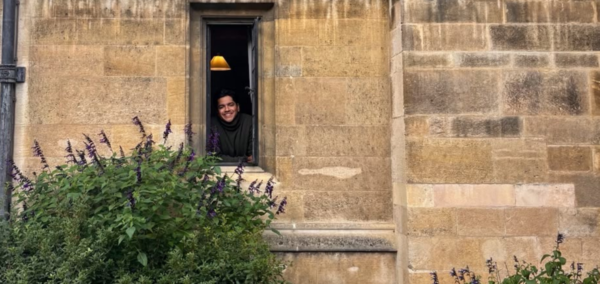
Today, though, déjà vu was strong as I sat at the desk in Alexander Newman’s set in King’s College, Bodley’s Court. See, it didn’t seem long ago that he sat in mine; October 2025, when I first met Mr Newman at his Tab interview.
His first piece, never published, was an analysis of the seductive tactics of Italian men, as observed on his gap year. The fieldwork, one assumes, was strictly observational.
Now I was here to interview him in his final term as Editor-in-Chief. Say what you like about Alexander, he rises quickly: his was the second-fastest Editor-in-Chief appointment in Cambridge Tab history. (Those Italians clearly taught him something about the close, it would seem.)
His room smelt vaguely of horse. Polo sticks of varying sizes hung from picture rails, the way other people hang, you know, pictures. A carved African head watched proceedings from the wall with an intimidating expression. Alexander, meanwhile, was entirely relaxed and, as ever, his charming self, with the ease of a man who has rehearsed being interviewed for most of his life, largely in the mirror, I might imagine.
‘A recent graduate of King’s College, Cambridge’
Alexander grew up in Cambridge, “on the other side of the walls,” watching undergraduates sweep past in their gowns and wanting very badly to be one of them. In his Year 8 leavers’ yearbook, asked where he would be in ten years, he wrote: “a recent graduate of King’s College, Cambridge.”
“If there’s proof of manifestation anywhere in the world,” he told me, “it’s the fact that through sheer will, I managed to get myself into Cambridge.”
(A different Year 8, who wrote “professional footballer”, is quietly seething somewhere.)
King’s was no accident. Alexander went to school in Cambridge as a child, and now fondly remembers the bridge connecting the college to the Backs. “They used to call it the Silent Bridge at school,” he reminisced with a laugh, “because whenever we did our chapel services, we’d have to cross over the bridge, and we weren’t allowed to speak once we crossed it.” “There was always a sense of excitement around what was on the other side of that bridge that we weren’t quite privy to.”
It is a sweet story. It is also, as far as I can tell, the last recorded occasion on which Alexander Newman followed a rule that said he was not allowed to speak.
He reads History of Art and Architecture, which he calls “the truest form of anthropology.” “If we view history as a black and white diagram of the way that things are, it gives you facts, it gives you dates, it gives you figures and people and locations,” he explained.
“But what History of Art does is it adds the colour, the tonal modelling, the shadow, the depth, and it brings those people and those places to life.” It is not, he insists, a story of great men and women, but of the ‘everyman.’”
(The ‘everyman’, I thought, glancing at the polo sticks, would perhaps like a word.)
Has Cambridge lived up to such great expectations? With that question, this writer can’t help but be reminded of one of her favourite Dickens quotes, Pip’s declaration of his love for Estella, that he, “loved her against reason, against promise, against peace, against hope, against happiness, against all discouragement that could be.” I think there is certainly something to be said about the Cambridge experience in there.
On that vein, he said he is in fact “perennially stressed and inordinately tired,” but “there’s genuinely nowhere else [he’d] rather be.” “You’ve got to pinch yourself every day”
I resisted the urge to offer.
‘I’ve always dreamed of being a media baron’
Why The Tab? “I knew from a very young age that I wanted to be a media baron,” he said, before insisting he was joking.
Sure, sure, I read his application, which said much the same thing, and I can report that he was not entirely joking. It remains one application I will never forget receiving.
The serious answer loops back to his degree. Student journalism, he argued, isn’t about Fleet Street scandals but “the stories that really impact and affect people” in the community. He read The Tab as his main source of Cambridge news before he ever worked for it, and says that hasn’t changed since. (Touching loyalty, or the world’s most obvious conflict of interest. I’ll let readers decide.)
Remarkably, he took up an editorial position before he had published a single piece for The Tab. (The Italian seduction tactics, I should note, remain unpublished.)
His plan was to keep the fun (he cited the Chapel Eurovision series, which I accepted as the sincere and entirely unprompted compliment it was) while reviving and emphasising the paper’s investigative side.
His inspiration was Josh Simons, Tab editor in 2013, who he says turned the paper into “a really well-oiled investigative machine.” I suggested that might be a controversial choice of role model for some readers. (Say, his predecessor; now there’s an editor-in-chief worthy of inspiration.)
He laughed, and seemed flattered he could even be compared to the controversial Simons as an editor: “Whilst I don’t think I ever quite matched Josh Simons’ level of efficiency, I feel like we, as a group after I took over, tried to push more towards his brand of investigative journalism.”
Well, Alexander’s track record would certainly say there’s merit in a comparison with the investigative powerhouse of the 2013 Tab; his editorship came with exclusives on bullying allegations inside the Cambridge Union, Fitzwilliam College fellowships funded from China, and interviews with the free speech society and Jack Anderton.
I put it to him that many of the year’s biggest names and stories leaned (plummeted off a cliff) to the right.
“Across the country and across the world, we’re seeing this massive swing to the right and towards populist movements,” he said. “Particularly within Cambridge, there’s been a massive movement towards this radical populist right.” It isn’t covered elsewhere, he thinks, “because people perhaps are afraid of the implications.” These figures, and their ideas, have been legitimised by this lack of coverage, he argues. “It is the responsibility of journalists then to examine those ideas and hold those figures to account,” he said, “and not to treat them as jokes.”
‘Very opinionated and incredibly snide’
The hardest adjustment, he admitted, was The Tab’s rule that news pieces are completely objective: no opinions, no snide remarks. “People that know me know that I’m very opinionated and incredibly snide.” (I don’t think he is that snide.) (Opinionated on the other hand…)
However, senior editor at The Tab’s national desk, Esther Knowles, gave him advice he still swears by: let the story speak for itself. Present the facts so readers reach their own conclusions, “One of the arts of editing is looking at the facts and figuring out how to convey the facts in such a way that tells the story without you having to put in your own opinion,” he said, “even in language choices.”
(Reader, I must confess I have written this article with none of that advice in mind.)
It was tested by a story on a drinking society that had got rather out of hand. Friends who had been involved came to him asking to be cut from it. He wavered, and considered pulling the piece entirely, until he was told that you can’t pull a story because you feel bad for people when they’ve done what they’ve done.
The compromise: no names, anonymous quotes, and framing that made clear the students had been held accountable. Part of university, he said, is learning. Editing The Tab, he thinks, made him “a more sensitive person.”
Then came the October Fresher’s print edition, with no budget from The Tab’s national team. So, he raised it himself, from Jack’s Gelato, Scott’s All Day on Mill Road, Iola Eyewear, the Cambridge Cycle Company and the Oak Bistro. His inspiration, once again, was Josh Simons’s 2013 print edition, whose formatting he first said he “stole,” before swiftly revising this to “inspired massively by.”
For the print edition, Alexander wanted something that wouldn’t date in a week, “a really wonderful portrait of what Cambridge was, which is a collection of slightly eccentric, but well-meaning figures.” (I looked at the carved head on the wall and his juicy couture-esque CUFS jogging bottoms and wondered whether he knew he was describing himself.)
When asked what his favourite article from print edition was, he gave an answer but regrettably would not let me name it for this article. However, the runner-up was an anonymous Day in the Life of a stressed-out Cambridge student, which he said he identified with.
‘Don’t be afraid to ask the tough questions’
What won’t he miss? “God, I’m not gonna miss the workload. I think I spend more time on The Tab per week than my degree.” (I’m sure if his Director of Studies sees this, she’ll think that was incredibly humorous and not at all a point for concern.) What he will miss is (as I gathered) the illusion of omniscience you enjoy within newspaper editorship. “If I see a protest, I know what that protest is about. I know what they’re protesting, I know why they’re protesting it.” “Everyone in Cambridge is living, I guess, their own novel,” he said, and journalism lets you read a few pages of each.
His advice to the seven incoming section editors, in one sentence: “Don’t be afraid to ask the tough questions.” He invoked Louis Theroux, “his ability to really relish the awkward moment, and find the truth in that silent space.” “The interviewee will speak for themselves. The story will speak for itself. It’s never about you.” I then let the silence sit, Theroux-style. Alexander did me the grace of proving his own point by filling it in under what must have been only two seconds.
What’s next for Alexander Newman, soon-to-be ‘former’ editor-in-chief of the Cambridge Tab?
This year, he is creative director of the Cambridge University Charity Fashion Show, raising money for the charity ‘Everyone’s Invited’, and directing King Lear in King’s College Chapel, his favourite play since he was just a child on the “Silent Bridge.”
“The wheel has come full circle,” he said, borrowing Edmund’s line.
He keeps from announcing his strict retirement from a life of journalism but admits he now interrogates everything, his essays and his friends included. (Maybe the life of journalism won’t let him leave it!)
In ten years, he hopes to be a diplomat. “I’ve identified all the issues and perhaps arrogantly now I feel like it’s my turn to solve them.” (The “perhaps” doing heroic work in that sentence.)
The quickfire round
I’m nothing if not a devotee to The Tab’s ultimate goal as I saw it when I was editor, whimsy and fun. So we end this interview with some irreverent questions I forced Mr Newman to answer.
If not King’s, which college? Peterhouse: “a little old-fashioned and everyone thinks it’s homosexual.”
(I noticed over the course of this interview that Alexander really has a tendency to walk into a “I wonder if he knows he’s describing himself” moment, potentially something to work on before a career in diplomacy?)
Rank in order of threat: a porter, a King’s Parade pigeon, or a first year with a CamFM radio show.
“King’s Parade pigeon?” he asked in confusion.
Now readers, am I the only one to fear the pigeons of Cambridge? I refuse to believe so. Alexander had no issue with the pigeons, so they were ranked least threatening.
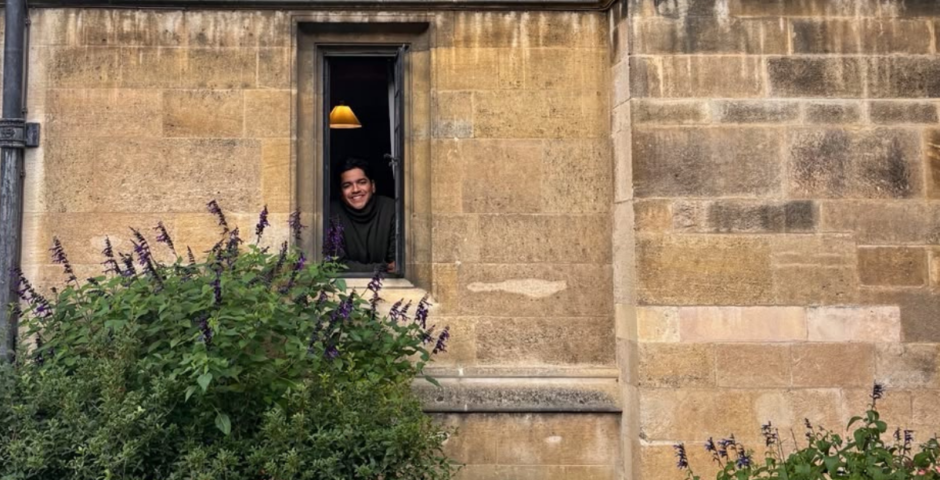
The porter came second: “I do confess I’ve had to climb into my window multiple times because the porters have been strict with how many keys I can borrow.” (“I actually really like Norman,” he would like on the record.)
First place went to the fresher with the microphone: “I don’t think first years should be allowed near anything that gives them a digital footprint, as a general rule.”
Ironic, from a man handed the editorship of The Tab as a first year, I pointed out to him. “I’m sure it will come back to haunt me,” he conceded with a laugh.
His University Challenge specialist subject?
“I can’t say Victoria’s Secret Angels, can I?”
…
I left Bodley’s with the smell of horse still faintly following me across the court. The Tab will mourn the loss of Alexander Newman at its helm, I am sure, but I look forward to seeing who will fill his shoes for 2026/27.
Despite his leaving The Cambridge Tab, I have no doubt we will be hearing more in future from Mr Newman; nothing he has touched since that bridge has ever been silent.
For more of the latest news, guides, gossip and memes, follow The Cambridge Tab on Instagram, TikTok and Facebook.


Latest
Interview: Alexander Newman, outgoing Editor-in-Chief

From an unpublished study of Italian seduction to the top of the masthead in record time: the outgoing Editor-in-Chief on manifestation, media barons and why first years should be kept well away from microphones
The flatmate red flags Leeds students need to watch out for (and how to avoid them)

Don’t trust your flatmate? Here’s how to fix that
Newcastle food hot spots worth spending your maintenance loan on
If you’re going to splurge, splurge at these spots x
Top tips for securing the perfect student house in Birmingham

It’s like Escape to the Country, except we’re in Selly and there’s not a blade of grass in sight x
‘Everyone needs to fart’: Bristol bus driver loses tribunal claim after ‘significant flatulence’ incident

A Bristol bus driver has lost her tribunal claim after being dismissed on probation, with the judge ruling there was no discrimination or harassment
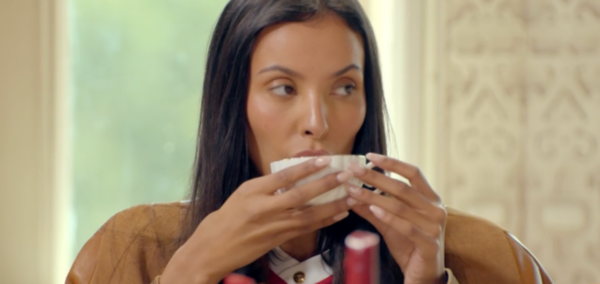
Traitor Maya Jama outed herself at breakfast, and we (and the Faithfuls) didn’t catch it

Gotta love a classic Freudian slip
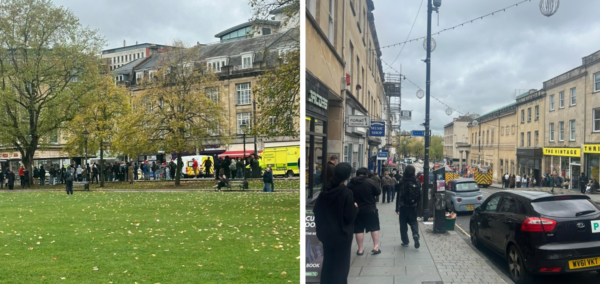
Bristol road closed off after bomb squad called to neutralise suspicious item

Bomb experts have been called to Park Street after a suspicious package was left unattended
Stew’s workplace shares hilarious videos poking fun at his time on Love Is Blind

Posted on the actual work account

Here are all the famous people you didn’t know went to university in Leeds

All five major Leeds universities have some pretty famous alumni
Want to live your Strictly dreams? Here are the best places to dance in Cardiff

Cardiff, its time to get your dancing shoes on and cha-cha-cha your way into the night

Ed Gamble has defended Celebrity Traitors’ James Acaster, after he ‘sabotaged’ challenge

‘He just wants everyone to be okay’

What Does Your Favourite Pres Game Say About You?

Your go-to pres game is basically a personality test…
H3 Podcast crew shares statement as Ethan Klein’s wife publicly accuses him of ‘nightmare’ affair
His own crew has cut ties with him

James Acaster is being called out for his bizarre behaviour during Celebrity Traitors mission
He’s taking the phrase ‘playing it safe’ too literally
Christa Pike’s team say IV site might have ‘blown’ during failed lethal injection in detailed update
They have finally explained exactly what happened
Second clip of comedian’s rape ‘joke’ resurfaces from five months before his apology
‘There are some clips coming out from that that could be a problem’
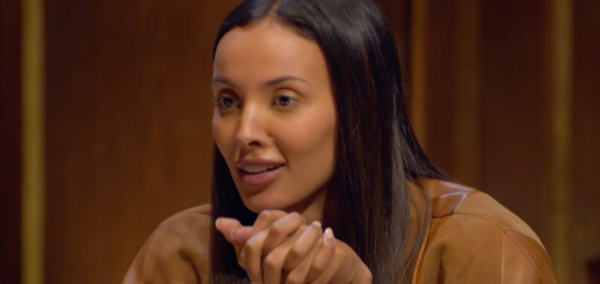
Mind-boggling flaw makes it ‘obvious’ who the Celebrity Traitors final three will be
It’s staring us in the face
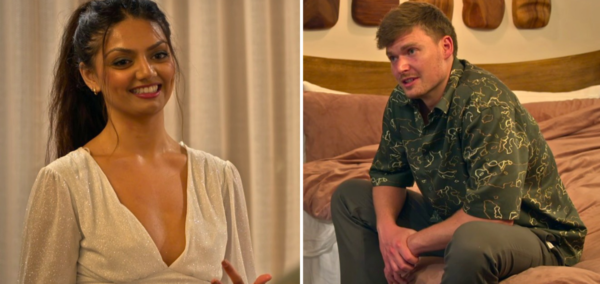
Love Is Blind’s Aneha feels viewers ‘misunderstood’ her family’s response to Cam

‘My family and I have always been incredibly accepting’
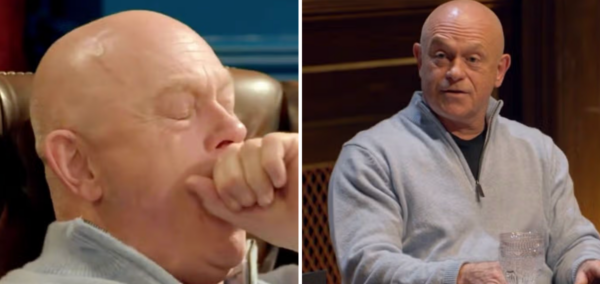
Ross Kemp explains the mindset that left him suspicious of everyone on Celebrity Traitors
‘I was really sensitive’