


‘Happee’ or ‘Happeh’? New Lancaster study shows link between social class and pronunciation
The final vowel in words like ‘happy’ and ‘city’ varies by social class across Mancunian accents, according to new research

According to new research led by Lancaster University and the University of Manchester’s linguistics departments, an individual’s accent can be a key indicator of their social class.
This sociolinguistic study focuses on Mancunian accents and the pronunciation of what is known as the “happy vowel” to linguists, with results suggesting that the pronunciation of the final vowel in words like “happy” and “city” differs based on the speaker’s social class.
Although Manchester is seen to have changed dramatically over recent decades – socially, economically and culturally – the findings of this study would prove that certain aspects of Mancunian accents have remained stable during this time frame, particularly within working class accents.
The research, published in the Language Variation and Change journal, indicates that middle class speakers are more likely to say “happee” and working class speakers are more likely to say “happeh.” Speakers in higher social classes are also more likely to use tenser vowels overall.
This pattern found in Mancunian speech is said to have remained consistent across several generations living in the city with little difference between the speech of younger and older Mancunians, demonstrating stability and continuity in an ever-changing Manchester.
The study draws on over 100 hours worth of recordings collected by the researchers from 109 speakers, aged 16 to 85, who grew up in Manchester and identify as white, black or British Pakistani – the three largest ethnicity groups within the city. This group aims to cover the full socio-economic range of the city’s habitants and act as part of a wider investigation into speech variation and change in Manchester.
The study also found that there is some variation across different ethnicities – Mancunian Pakistani speakers have “tenser realisations” of the “happy vowel” in comparison to black and white speakers, which may be explained as a heritage language effect.
Most Read



Study lead author, Dr Danielle Turton, who worked alongside University of Manchester’s Dr Maciej Baranowski, said: “Our research in Manchester demonstrates how everyday speech can reflect long-standing social patterns.
“Working-class speakers tend towards a very open ‘eh’ sound in happy, almost rhyming with ‘yeah’, while upper-middle-class speakers use a tenser ‘ee’ sounding closer to the vowel in ‘bee’.”
She added that, as a Mancunian herself, she was unaware of this accent feature until she became a trained linguist and heard comments from those living outside of the Manchester area.
Dr Turton highlighted that prestige forms of the English language are still “based on those people with the money and the power.”
She said: “I am actually really hopeful, because I just think with things like more diverse voices on TikTok and podcasts and social media, and things like this, people are hearing different accents and they love them.
“I think when we don’t pre-judge, because we don’t have assumptions about how certain people should sound, then we actually love it.”
For more of the latest news, guides, gossip, and memes, follow The Lancaster Tab on Instagram, TikTok, and Facebook.


Latest
Oasis is returning to Manchester: here’s everything you need to know

Get your bucket hats at the ready for another Ticketmaster war

The Lost Paintings: A Prelude to Return at Bristol Museum and Art Gallery

19 June – 27 September 2026
The Lost Paintings: A Prelude to Return, running until 27 September, brings together 53 Palestinian artists from Palestine and the diaspora. Each artist was invited to respond to one of Tomb’s lost painting titles.

The mother of missing Jack O’Sullivan blames police for ‘total failure’ to find him

The most recent update in the Jack O’Sullivan case

New Sloane Robinson Building opens: Temple Quarter

First step towards the new Temple Quarter Enterprise Campus

Missing 13-year-old found in Manchester city centre after eight day search

Police have confirmed the teenager is safe and well
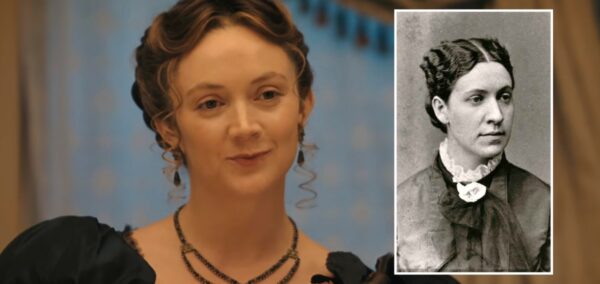
Who Lizzie Borden’s sister Emma was and if they were close, because Monster gets it all wrong

She never got married for a start
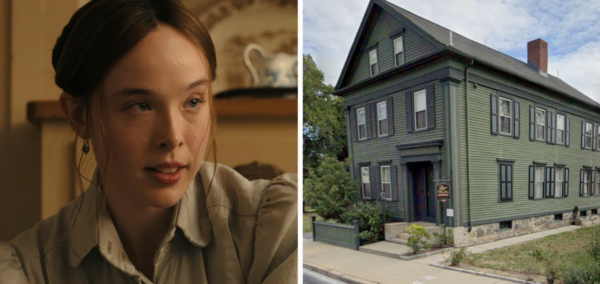
The real life Lizzie Borden house is still standing today, so here’s what it’s used for

It’s one of the most visited true crime landmarks

What Lizzie Borden was actually like in real life, according to the people who knew her
Monster keeps describing her as ‘plain’

Was Lizzie Borden in love with her maid Bridget? The real life theory around her sexuality
People dug up notes and have tried to prove the theory for decades
Calling all aspiring journalists! How to join The Bristol Tab

Come to our open meeting on the 28th of September at 8pm at The Beckford (In Senate House)

Stop what you’re doing: The King’s Tab is looking for new writers AND content creators

Come to our open meeting on Thursday 1st October, 5pm at The Vault!

Channelling your broke uni student lifestyle

Not everything needs to be accompanied by a £5 iced latte, here’s how to be more mindful
The York Tab is recruiting new writers and we want YOU!

Open meeting Monday 28th September, 6pm in SLB/004!

Here’s who the uncle in Monster: The Lizzie Borden Story was, and what Netflix makes up

John Morse really did stay in the Bordens’ house

Er, Lizzie Borden’s meeting with the actor Nance O’Neil was nothing like Netflix’s Monster
Their paths didn’t actually cross for another 14 years

With 600 alleged killings, this minor character in Lizzie Borden should have been the Monster

HUGE missed opportunity

Did Andrew Borden have a stutter? Charlie Hunnam breaks down accent and voice in Netflix show
The actor has fully explained it

Elektrik Warehouse responds to alleged ‘crowd crush’ concerns at Shoshi event

‘It was just lucky nothing insanely bad happened’

Uni of Edinburgh confirms 25 days of strike action over five weeks, affecting Welcome Week

Am email sent to Edinburgh University students read ‘staff are not obliged to tell us if they plan to take part, which means we cannot tell you who is or is not’

There’s a really smart way to hack your Spotify Wrapped results for 2026 – before it’s too late
The cut-off for data tracking is very soon!