

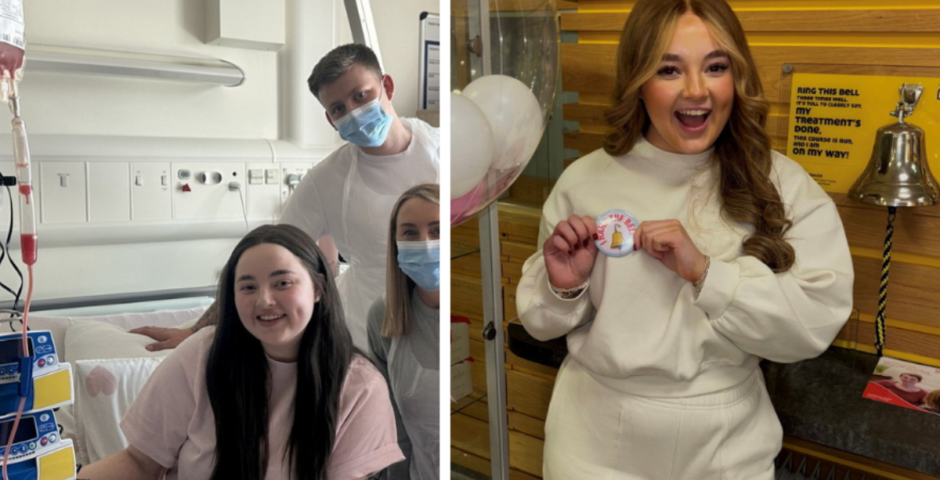
Glasgow student thought she had a cold before being diagnosed with aggressive blood cancer
What began as constant colds and exhaustion for one Glasgow student turned out to be a life-threatening leukaemia diagnosis

A Glasgow Caledonian University student who believed she was suffering from repeated colds and sinus infections was later diagnosed with an aggressive form of blood cancer.
Ayley Crawford, 21, from Wishaw in North Lanarkshire, had recently begun a nursing degree at Glasgow Caledonian University when she started experiencing persistent illnesses. What initially felt like ordinary student sickness quickly became more serious, as she found herself constantly exhausted, unable to keep food down and so weak she could barely stand.
After fainting during a practical university exam, Ayley decided to seek medical help. Her GP arranged blood tests and referred her to University Hospital Wishaw with suspected diabetes. Weeks later, following further testing, she was diagnosed with acute myeloid leukaemia (AML), a fast-growing and aggressive form of blood cancer that requires urgent treatment.

via SWNS
Recalling the period before her diagnosis, Ayley said: “I had colds and sinus infections I just couldn’t shake. I was feeling tired all the time and sometimes I was so weak I could barely stand. When I fainted during a practical exam at university, I just knew something wasn’t right.”
The diagnosis came as a huge shock. Nearly 80 per cent of people diagnosed with AML in the UK do not survive beyond five years, and Ayley admitted her immediate reaction was fear. She said: “My first thought was ‘I’m going to die’. I knew something was wrong with me, but I never thought it would turn out to be cancer.”
Ayley immediately began treatment at the Beatson West of Scotland Cancer Centre, undergoing four cycles of chemotherapy. Although the treatment left her constantly nauseous and caused her hair to thin, she said she tried to remain positive throughout the process.
“It was hard to be away from home, but I was honestly in quite good spirits throughout my treatment, thanks to the staff in the Beatson,” she said. “I kept thinking, I just need to get through this and then I’ll be able to get back to my life.”
via SWNS
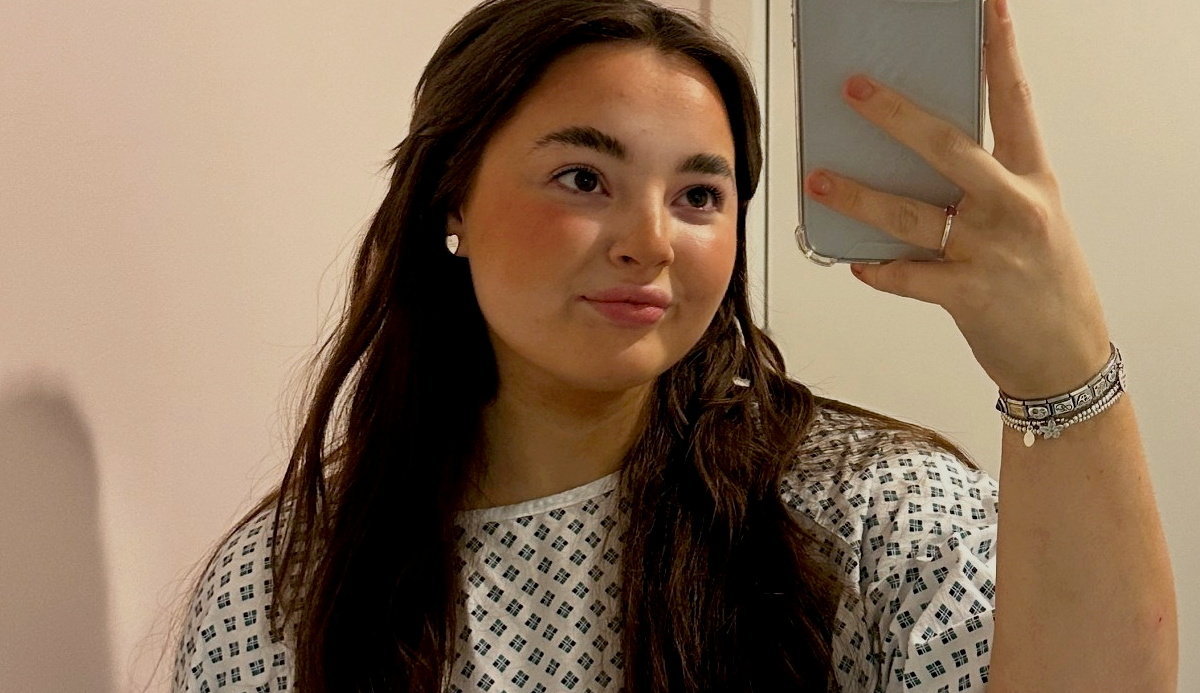
In November 2024, Ayley was told she was in remission. She returned to part-time work, went on holiday and began planning to resume her studies the following year. However, just months later, in March 2025, a routine bone marrow biopsy revealed the cancer had returned.
“I was devastated,” she said. “I felt like everything I went through with my treatment had been for nothing. I’d been saying to my family that I was feeling so well, it was a complete shock.”
Doctors informed Ayley she would need a stem cell transplant, and a donor match was eventually found in Australia. In July 2025 she was admitted to Glasgow’s Queen Elizabeth University Hospital to undergo the procedure, which she described as the hardest part of her treatment journey.
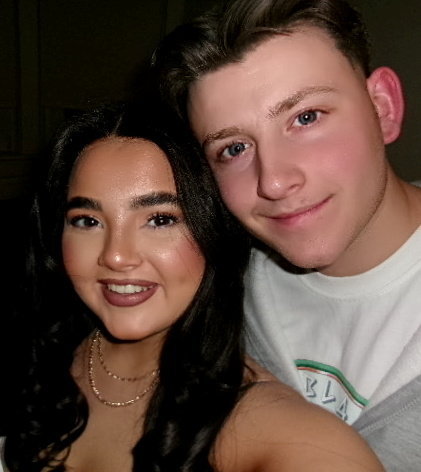
“Going through transplant was honestly the worst thing I’ve ever endured,” she said. “I had ulcers in my digestive tract which led to significant weight loss. I wasn’t allowed out of my room for five weeks, but my mum, boyfriend Riley and my friend Melissa were able to visit. They were my only three visitors allowed.”
via SWNS
After the transplant, Ayley returned home to begin a lengthy recovery period and spent three months isolating. She said even basic daily tasks became difficult, while medication caused painful side effects including swelling and rashes.
Now back in remission, Ayley is planning to travel this summer before returning to university in 2026 to continue her nursing degree. Although she says the experience has completely changed her life, she believes it has also shaped the kind of nurse she wants to become.
“I was supposed to be graduating this year, and I’ve missed countless experiences with friends. I feel so behind,” she said. “But the one good thing to come of it all is that I think it will make me a better nurse. I was really glad I was studying nursing as it made the medical terms so much easier and I could explain everything clearly to friends and family. Every ward I was on, the nurses wanted me to come and join them once I was qualified. So I may actually go into oncology.”
Fiona Hazell, chief executive of Leukaemia UK, said Ayley’s story highlights the importance of recognising the signs and symptoms of leukaemia early. She said: “Many people aren’t aware of the signs and symptoms of leukaemia until they or someone they know is diagnosed. We are so grateful to Ayley for sharing her story and helping to raise awareness of what to look out for.
“Early diagnosis saves lives, so we want to make sure more people are aware of the signs and symptoms, and to contact their GP to ask for a Full Blood Count test if they’re experiencing them.”
If you have been affected by the contents of this article, all University of Glasgow students can access a free confidential helpline on 0800 028 3766 (or use the Wisdom App) to discuss any difficulties they may be facing. Glasgow Caledonian’s student wellbeing support services can be accessed by calling +44 (0)141 273 1393. The University of Strathcylde’s wellbeing service can be contacted via +44 (0) 141 548 3402.
Alternatively, you can contact the Samaritans at any time by calling 116 123, or contact Shout, a 24/7 text messaging service, by texting the word “Shout” to 85258.
Featured image via SWNS

Latest
People are torn about American Horror Story replacing Papa Legba’s actor, despite the tragedy

The new actor has spoken out
Professor Hannah Fry’s pink jumpers from The Celebrity Traitors are almost affordable

Two of her knitwear pieces are from the same shop

Fancy celebrating Oktoberfest? Here are the five best spots in Manchester

The good news is you don’t need to travel all the way to Munich get stuck in with the festivities

Meet Alexandra, founder of LEX. – Newcastle’s answer to Mayfair after dark

Girls just want to have fun (club edition)
New report from University of York exposes hidden poverty in city

The University of York’s Cost of Living Research Group uncovers modern-day deprivation and inequality in the city
I interviewed Christa Pike 20 years ago, and meeting her will stick with me forever

‘She knows she wasted her life’
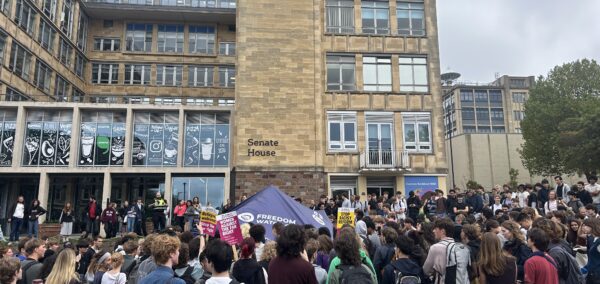
Far-right commentator driven off campus after clash with protesters

Students protested the presence of Montgomery Toms outside a University of Bristol study centre

We were barely born when Madeleine McCann went missing, so why can’t Gen-Z stop thinking about her?
‘Someone the same age as you never got to enjoy life as you have’

‘Am I gonna cry?’: Myha’la just found out who the Traitors are after being brutally banished
In the clip, Myha’la goes through so many emotions
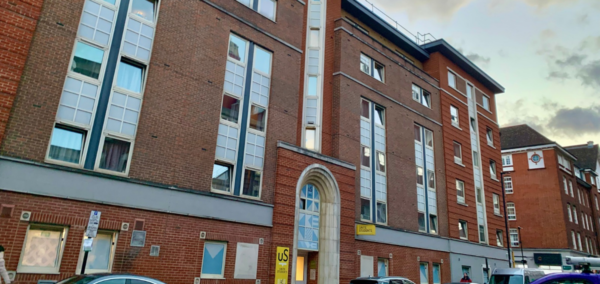
Unite cuts the rent of some student accommodation, including in Nottingham and Sheffield
Unite struggled to fill rooms in some halls
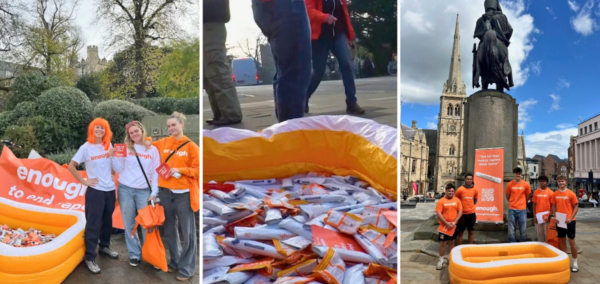
Non-profit Enough distributes self-swap DNA kits at unis, but some students are concerned
Police warned ‘these kits can create false expectations’

Banished Celebrity Traitor Richard E Grant reacts to James and Maya’s roundtable betrayal
The Traitors did not stick together
Looking for a cheap night out in Manchester – here are the best spots the city has to offer

Happy hour spots for when your bank balance is low but a night out is much needed

Bella Ramsey on Celebrity Traitors made me nervous as a queer person, but then came Ross Kemp
They’re already shaping up to be a weapon at the roundtable

Lancaster city centre record store and coffee shop announces its closure
The business owners are ‘passionate about the local music scene’

The Celebrity Traitors rich list: The most loaded celebs to appear on the show, across both series
Some of them probs live in castles already

Yes Celebrity Traitor Richard E Grant is kooky, but the range of his roles already proved that
Turns out I’ve been watching Richard for years and didn’t realise it
The chunky net worths of the Celebrity Traitors’ actors, ranked from not bad to obscenely rich
I will happily accept their appearance fees