

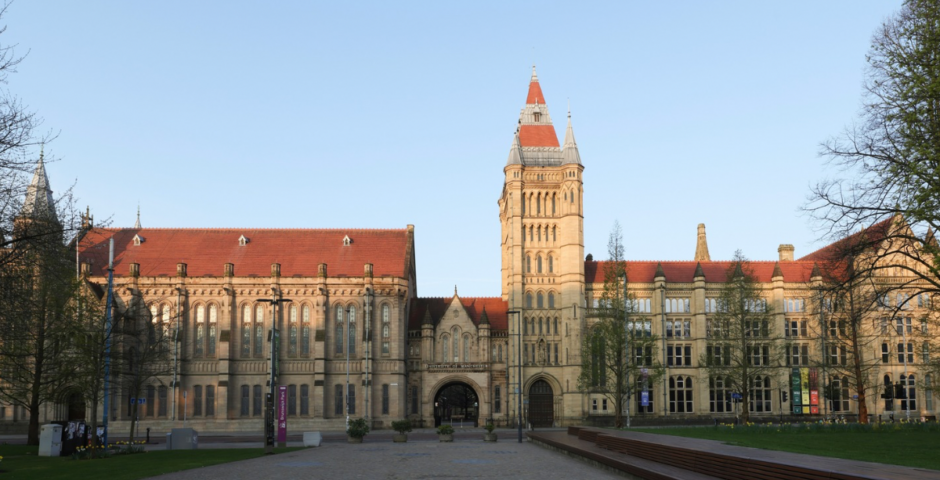
University of Manchester achieves zero landfill goal in a major sustainability win
Now students and staff are encouraged to do their part

The University of Manchester announced all waste from its main campus will be diverted to alternative treatment methods rather than landfill. This is is part of a wider environmental strategy to reduce the university’s carbon footprint and improve resource efficiency.
The university’s non-recyclable waste is now processed through Energy from Waste (EfW) facilities.
After being collected on campus and transferred to a local EfW station, waste is burned under controlled conditions. This generates heat, which is used to power steam turbines and produce electricity.
By-products such as ash and metals are also recovered and reused, ensuring that no materials are sent to landfill.
Waste Co-ordinator, Simon Atkinson, said the university have worked closely with contractors to “recover value from our waste.”
This has been a key goal for the university’s larger environmental sustainability strategy, Our Sustainable Future.


Sarah Choi, Environmental Sustainability Manager, said the achievement is “a huge step in our environmental ambitions and strengthens our commitment to create a more circular, responsible campus.”
While the elimination of landfill marks a significant achievement, the university says its long-term focus is in reducing overall waste to strengthen its circular economy, and building a responsible campus with sustainability embedded.
Students and staff are now being encouraged to play their part by adopting simple habits such as reducing waste, reusing items and recycling correctly, as the university looks to build on its progress.
Sending waste to landfill is widely considered one of the most environmentally damaging waste disposal methods, producing high levels of net greenhouse gas emissions.
Featured Image via Unsplash


Latest

First week back at uni? Here’s everything you need to pack in your bag

Mary Poppins is quaking in her boots…

London university releases statement after professor sentenced for a child sexual offence

Barry Langford was a Professor of Film Studies at Royal Holloway


Young father-of-two died on day he was due to start at University of Glasgow

Young father tragically passes away at 24 years old after suffering a brain aneurysm

Bella Ramsey’s specific acting career gives them ‘an edge’ on Celebrity Traitors (they hope)
Their past roles have prepped them for Missions

12 of The Celebrity Traitors season two cast asked to be Traitors, and six to be Faithfuls
Three celebs couldn’t make up their minds

Maya Jama’s game plan for Celebrity Traitors is to avoid trying ‘too hard’ or ‘overthinking’
This is really devious tbh

Newcastle University buildings evacuated after ‘suspicious item’ found on campus

Police, fire crews, and fire engines arrived at the scene

12 things every Fresher gets wrong in their first few weeks at uni

From wearing your lanyard everywhere to leaving your washing-up until it grows its own ecosystem
Our Celebrity Traitors predictions include Maya Jama turning on her fellow Traitors

Here’s what we think will happen

I’ve just realised that three cast members from Celebrity Traitors were in Game of Thrones

Having flashbacks to Bella Ramsey being crushed by a giant



23 to 70: The ages of the Celebrity Traitors 2026 cast, from youngest to oldest

There’s a huge age range this year

James Blunt was a British Army captain before becoming a singer and joining Celebrity Traitors
He mentioned it on the show

Monster director finally admits why they forced Aileen Wuornos in a show about Lizzie Borden
Despite the name, Lizzie Borden is not the focus of the story

Shows and films you can watch about Aileen Wuornos, where she isn’t thrown into another story

Others tell her entire case, unlike Monster on Netflix

This viral tool lets you customise your Apple Pay cards, and here’s how to do it
You can personalise the entire design

James Acaster could be the Celebrity Traitors’ recruit, as filming reportedly paused for him
It’s not much of a cliffhanger

The ridiculous fortunes of The Celebrity Traitors: Their net worths, from £500K to £50 million
One of them could legit buy the castle three times over