


York SU joins national ‘Pay the Placement’ campaign calling for student nurses to be paid
Student nurses complete over 2,300 hours of unpaid placement during their degree

York SU is backing a national campaign calling for healthcare students to be paid for their placements.
Led by Essex SU, the Pay the Placement campaign is part of wider efforts to address financial pressures.
Students say the financial strain of completing unpaid placements alongside their studies is making them increasingly difficult to sustain.
One student said that taking on additional work to cover costs during placements can lead to “a risk of burnout”.
York Students’ Union has joined the Pay the Placement campaign, which is being supported by students’ unions across the UK. The campaign focuses on the financial pressures faced by healthcare students, who are required to complete thousands of hours of unpaid work while studying.
The campaign aims to highlight the reality of placements and push for fairer support for students balancing work, study and everyday living costs.
The union is encouraging students to get involved as part of a national week of action, raising awareness of the issue and calling for changes at both a local and national level.
What is the Pay the Placement campaign?
via Canva
The campaign centres on the idea that placements are effectively work, and should therefore be paid.
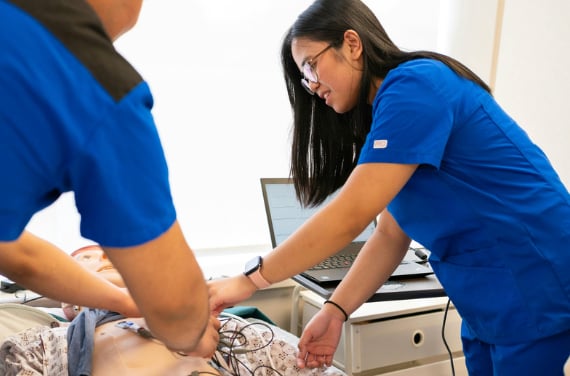
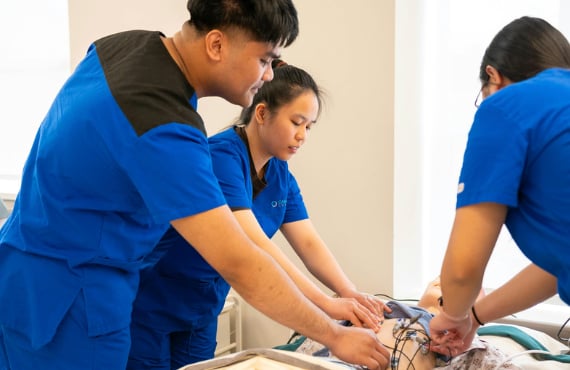
Nursing and healthcare students are required to complete over 2,300 hours of placement during their degree, often working full-time hours in hospitals, clinics and community settings.
Despite this, students are not paid and are still expected to cover costs such as travel, food and living expenses.
York SU has raised concerns around sustainability, warning that the current system is placing increasing pressure on students and, in some cases, contributing to them considering leaving their courses.
According to research conducted by York SU, more than half of student nurses at the University of York are working alongside their degree and placement, often for up to 14 hours a week, despite already being on placement for four to five days.
Even while working, 60 per cent said they felt financially insecure, and over half have considered dropping out due to money pressures.
The impact is not just financial. Around 72 per cent of student nurses said they have not had enough time to take part in university life, including sports and societies.
There are also additional everyday costs, with over half of students doing laundry at least twice a week to keep uniforms and personal items clean.
‘Completely unacceptable’
via Canva
Sam Dickinson, Community and Wellbeing Officer at York SU, said the campaign highlights a wider issue in how healthcare students are supported.
“Student nurses are the backbone of the NHS, and by extension, the country,” he said. “It is completely unacceptable that we place so much expectation on them to uphold vital healthcare services completely for free, and in fact expect them to pay for the privilege.”
He also emphasised the need for more immediate, local support alongside national change.
“I’m calling on local York stakeholders to recognise the significant burden on our student nurses; they need urgent help with cost of living – better compensation and discounts for travel, reimbursement for laundry costs, and help accessing support spaces that they have so little access to given their time commitments.”
‘Placements are difficult to finance’
For many students, placements can place significant strain on their finances.
Tom, a student nurse at the University of York, said balancing placement with earning money can be challenging.



“Placements are difficult to finance,” he said. “Depending on the time worked on placement over a week, it is difficult to earn money as well as being on placement as you’re required to work full time.”
He explained that trying to take on additional work alongside placements can come with consequences. “There is a risk of burnout if you’re working extra shifts to pay bills,” he said.
Tom also highlighted the additional pressures faced by students with responsibilities outside of university.
“I also have children so this is an issue when I am able to work due to parental commitments,” he added.
Placements blur the line between learning and working
Despite the challenges, Tom said placements are a valuable part of his training.
“My placements have been fantastic and have massively helped me gain skills and knowledge that will help me as I develop as a nurse,” he said.
He explained that while students often begin placements as learners, their role can quickly evolve.
“I have been treated as a learner at first, but as time went on I was treated as a valid member of the team and even asked if I would like to work there.”
This reflects a wider point raised by the campaign, that students are often contributing to real patient care, despite not being paid.
Impact on student life
The campaign highlights how placement schedules, which can include long shifts, weekends and irregular hours, make it difficult to take on part-time work or participate in societies and activities.
“As I live off campus, the only time I have to socialise is when I am at uni for that day,” Tom said. “Apart from that it is difficult to socialise as I will be working when I have free time.”
‘It would reduce the number of students leaving’
The Pay the Placement campaign is calling for all healthcare students to receive financial compensation for their placement hours.
Tom said introducing pay could have a significant impact.
“In my opinion, the best option would be to pay student nurses the minimum apprentice wage,” he said. “This would allow students to have a better lifestyle and improve mental health.”
He added that it could also help address retention issues within healthcare courses.
“It would reduce the number of students that remove themselves from the course due to financial burdens.”
What happens next?
The campaign is calling for widespread changes to better support healthcare students.
At a national level, the campaign is pushing for student nurses to be paid for their placement hours, alongside a full review of healthcare student funding led by the Royal College of Nursing.
It is also calling for more immediate local support to help reduce day to day costs. This includes nursing uniform swaps, compensation for laundry costs, and improved support with travel and other living expenses.
Campaigners say these changes are needed to make healthcare courses more sustainable and to ensure students are not forced to choose between completing their degree and managing financially.
Featured image via YouTube



Latest

First week back at uni? Here’s everything you need to pack in your bag

Mary Poppins is quaking in her boots…

London university releases statement after professor sentenced for a child sexual offence

Barry Langford was a Professor of Film Studies at Royal Holloway



Young father-of-two died on day he was due to start at University of Glasgow

Young father tragically passes away at 24 years old after suffering a brain aneurysm

Bella Ramsey’s specific acting career gives them ‘an edge’ on Celebrity Traitors (they hope)
Their past roles have prepped them for Missions

12 of The Celebrity Traitors season two cast asked to be Traitors, and six to be Faithfuls
Three celebs couldn’t make up their minds

Maya Jama’s game plan for Celebrity Traitors is to avoid trying ‘too hard’ or ‘overthinking’
This is really devious tbh

Newcastle University buildings evacuated after ‘suspicious item’ found on campus

Police, fire crews, and fire engines arrived at the scene

12 things every Fresher gets wrong in their first few weeks at uni

From wearing your lanyard everywhere to leaving your washing-up until it grows its own ecosystem

Our Celebrity Traitors predictions include Maya Jama turning on her fellow Traitors

Here’s what we think will happen

I’ve just realised that three cast members from Celebrity Traitors were in Game of Thrones

Having flashbacks to Bella Ramsey being crushed by a giant




23 to 70: The ages of the Celebrity Traitors 2026 cast, from youngest to oldest

There’s a huge age range this year

James Blunt was a British Army captain before becoming a singer and joining Celebrity Traitors
He mentioned it on the show

Monster director finally admits why they forced Aileen Wuornos in a show about Lizzie Borden
Despite the name, Lizzie Borden is not the focus of the story
Shows and films you can watch about Aileen Wuornos, where she isn’t thrown into another story

Others tell her entire case, unlike Monster on Netflix

This viral tool lets you customise your Apple Pay cards, and here’s how to do it
You can personalise the entire design

James Acaster could be the Celebrity Traitors’ recruit, as filming reportedly paused for him
It’s not much of a cliffhanger

The ridiculous fortunes of The Celebrity Traitors: Their net worths, from £500K to £50 million
One of them could legit buy the castle three times over