

My chances of getting a graduate job are slim, so I’ve decided to do a Master’s degree
‘I clearly need a more impressive CV’

If you’re a recent grad who’s struggling to land their first job in their degree field, or a final-year student dreading having to face an increasingly tough job market, the phrase “panic masters” is probably one you’ve already heard hundreds of times.
While jokes about doing a postgraduate degree to avoid facing the reality of graduation and job hunting for another year are nothing new, the idea that completing a master’s degree might be the only way to secure a stable career is becoming increasingly popular.
It’s no secret that today’s graduates are facing a far tougher time in the job market than the generation before them. In 2024, approximately 555,835 undergraduate students graduated in the UK, compared to 357,560 in the year 2000.
That same year, the Institute of Student Employers (ISE) reported just 17,000 openings for traditional graduate roles. These include entry-level jobs at large firms, as well as places on graduate schemes.
Unsurprisingly, competition has become fierce, with a survey of 145 student employers finding that the average employer received 140 applications per graduate job in 2023/24 – a 59 per cent increase on the previous year.
In an attempt to set themselves apart from their hundreds of thousands of fellow graduates, an increasing number of students are now heading back to university to obtain a master’s degree. Enrolments for taught postgraduate courses in the UK rose eight per cent in the year to 2024/25, with especially large rises in fields such as finance and business.
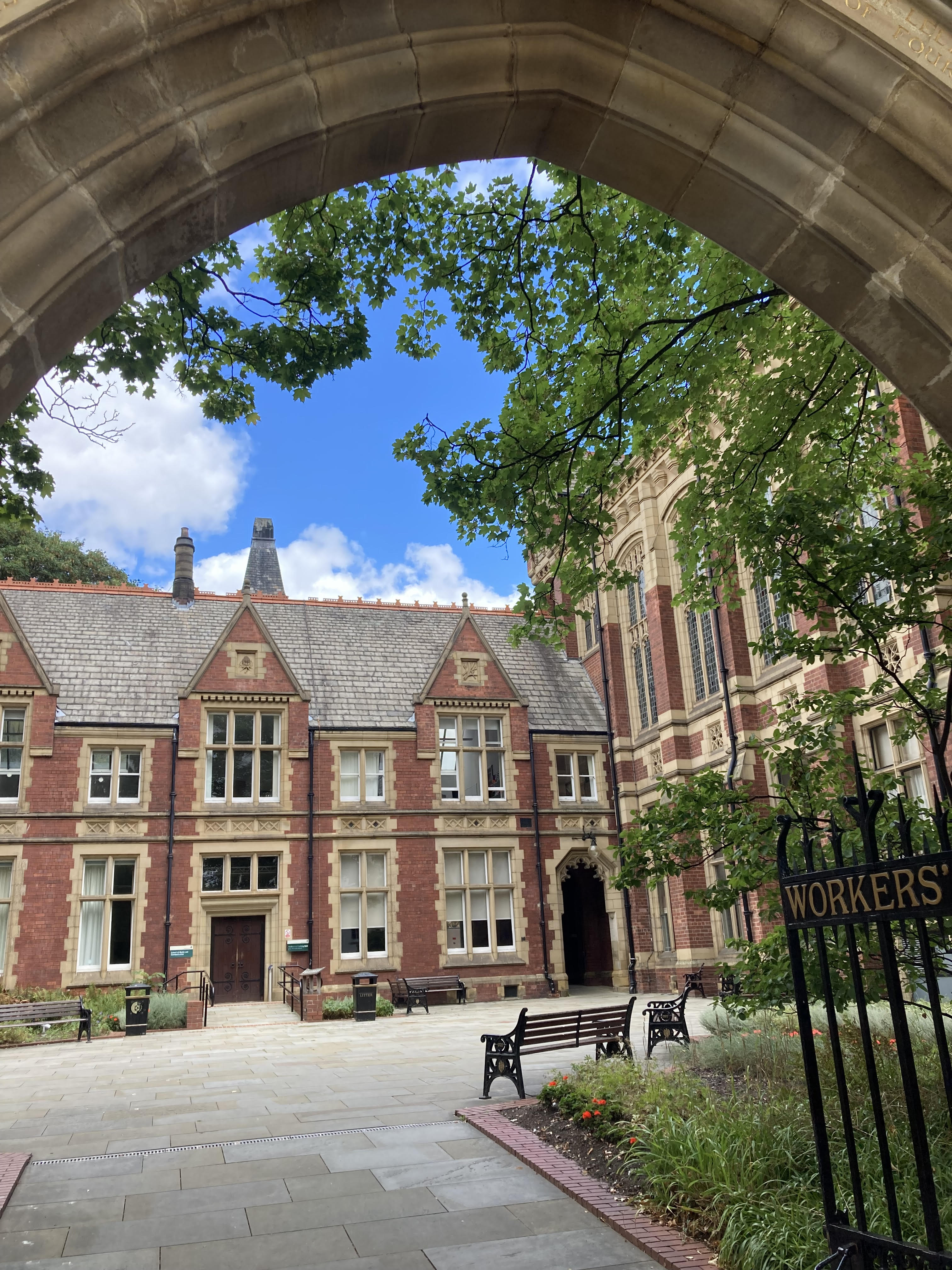
Cameron Weston-Edwards, a 22-year-old politics student at the University of Leeds, is among the students returning to university in hopes of securing a graduate job.
After being rejected from an internship at a historical tour company in rural England, Cameron discovered that the role had been given to a candidate with an MA in History. This was the tipping point that convinced him that a postgraduate degree would be the best way to beat the competitive job market.
“If I’m getting rejected for that, the chances of getting a grad job are slim,” he said. “I clearly need a more impressive CV.”


Cameron has now accepted an offer to study an MA in political communications later this year. It was one of two Master’s programmes that he applied for, and was accepted by. When deciding which place to take up, the main driving force behind his decision was which would be more likely to guarantee a job.
Echoing the thoughts of many other recent graduates, Cameron added: “Employability was definitely the number one factor. A lot of people who do a master’s now do it because of the state of jobs market rather than a personal desire to further their education.”
However, postgraduate study doesn’t come cheap. For example, a master’s degree in Global Political Economy at the University of Leeds will set you back £12,750. And, with government loans for master’s degree courses being capped at a maximum of £13,206 per year, many students struggle to cover living costs while undertaking postgraduate study.
In March, the government announced a major employment drive in response to the mounting UK youth unemployment levels The aim is to unlock over 200,000 jobs for 18-24 year olds through £1 billion in investment.
Speaking on the government’s pledge to support young people in finding stable work, Prime Minister Keir Starmer said:
“Backing young people is one of the most important investments we can make in this country’s future. We are determined to tackle the rise in youth unemployment by expanding practical routes into work, boosting apprenticeships, and giving employers the clarity they need.
“These reforms underpin our ambition to create an economy that works for everyone, closing the skills gap and supporting more young people into meaningful employment.”
For more of the latest news, guides, gossip and memes, follow The Leeds Tab on Instagram, TikTok and Facebook.
Featured image via LinkedIn



Latest
London university releases statement after professor sentenced for a child sexual offence

Barry Langford was a Professor of Film Studies at Royal Holloway



Young father-of-two died on day he was due to start at University of Glasgow

Young father tragically passes away at 24 years old after suffering a brain aneurysm

Bella Ramsey’s specific acting career gives them ‘an edge’ on Celebrity Traitors (they hope)
Their past roles have prepped them for Missions

12 of The Celebrity Traitors season two cast asked to be Traitors, and six to be Faithfuls
Three celebs couldn’t make up their minds

Maya Jama’s game plan for Celebrity Traitors is to avoid trying ‘too hard’ or ‘overthinking’
This is really devious tbh

Newcastle University buildings evacuated after ‘suspicious item’ found on campus

Police, fire crews, and fire engines arrived at the scene

12 things every Fresher gets wrong in their first few weeks at uni

From wearing your lanyard everywhere to leaving your washing-up until it grows its own ecosystem

Our Celebrity Traitors predictions include Maya Jama turning on her fellow Traitors

Here’s what we think will happen

I’ve just realised that three cast members from Celebrity Traitors were in Game of Thrones

Having flashbacks to Bella Ramsey being crushed by a giant




23 to 70: The ages of the Celebrity Traitors 2026 cast, from youngest to oldest

There’s a huge age range this year

James Blunt was a British Army captain before becoming a singer and joining Celebrity Traitors
He mentioned it on the show

Monster director finally admits why they forced Aileen Wuornos in a show about Lizzie Borden
Despite the name, Lizzie Borden is not the focus of the story

Shows and films you can watch about Aileen Wuornos, where she isn’t thrown into another story

Others tell her entire case, unlike Monster on Netflix
This viral tool lets you customise your Apple Pay cards, and here’s how to do it
You can personalise the entire design

James Acaster could be the Celebrity Traitors’ recruit, as filming reportedly paused for him
It’s not much of a cliffhanger

The ridiculous fortunes of The Celebrity Traitors: Their net worths, from £500K to £50 million
One of them could legit buy the castle three times over

The Celebrity Traitors rules explained, as Richard E Grant immediately let slip he’s a Traitor
There’s actually a slightly confusing loophole