

Lost biblical manuscripts recovered by Glasgow University professor
Professor Garrick Allen led a team of academics to successfully recover the pages

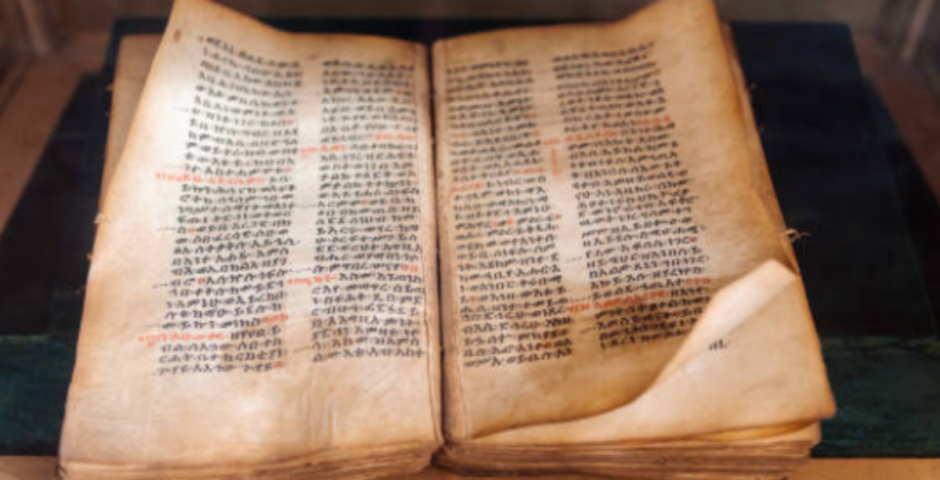
An international team of academics have successfully recovered 42 lost pages of important New Testament manuscripts (Codex H), and the team was led by Glasgow’s very own theology professor, Garrick Allen!
The manuscripts in question were a 6th Century copy of the Letters of St Paul that had been lost for over 700 years, after being dismantled at the Great Lavra Monastery on Mount Athos.
If you’re not studying a Theology degree, you might not be as aware of the importance of St Paul’s writings. Put simply, he authored 13 of the 27 books of the New Testament Bible and is therefore an incredibly important and influential figure in Christian theological history. The letters he wrote (also known as Epistles) had an enormous influence on Christianity and its spread.
Glasgow’s Professor of Divinity and Biblical Criticism explained the process that led to his team’s discovery: “The breakthrough came from an important starting point: we knew that at one point, the manuscript was re-inked.”
This process of “re-inking” is when a medieval monk or scribe traces over the original ancient copy in order to make it legible again. This was a common practice for medieval conservation as it refreshed ancient texts, but it also had a potential to damage the pages.
Professor Allen explained: “The chemicals in the new ink caused ‘offset’ damage to facing pages, essentially creating a mirror image of the text on the opposite leaf – sometimes leaving traces several pages deep, barely visible to the naked eye but very clear with latest imaging techniques.”
In partnership with the Early Manuscripts Electronic Library (EMEL), researchers used multispectral imaging to process images of the extant pages, in order to recover “ghost” text that no longer physically exists, effectively retrieving multiple pages of information from every single physical page. To ensure historical accuracy, the team also collaborated with experts in Paris to perform radiocarbon dating, confirming the parchment’s 6th Century origin.”
So what does the discovery mean?




Not only does this discovery make Glasgow University look impressive, but its also very important for theologians all over the world.
The recovered text offers a unique insight into how the New Testament has evolved and been understood throughout the centuries. We can see how medieval scribes corrected and annotated their sacred texts, as well as how medieval recycling worked – how the scribes repurposed things once they fell into disrepair. The discovery also reveals the earliest known examples of chapter lists for St Paul’s Letters, which differ drastically from how we divide these letters today.
To have discovered such a large quantity of Christian scripture, and to see how it originally looked is a monumental discovery.
A “codex” is a handwritten book format made of bound papyrus or parchment pages. It replaced the old-timey scroll, and looks much more similar to a modern book. This new Codex H will be available to read soon – hopefully they’ll be a copy available on floor 10 of the library.
A digital addition is available already, thanks to the work of Professor Allen, and Dr Kimberley Fowler of the Dutch University of Groningen.
For more of the latest news, guides, gossip and memes, follow The Glasgow Tab on Instagram, TikTok, and Facebook.
Featured image via Unsplash


Latest
First week back at uni? Here’s everything you need to pack in your bag

Mary Poppins is quaking in her boots…
London university releases statement after professor sentenced for a child sexual offence

Barry Langford was a Professor of Film Studies at Royal Holloway

Young father-of-two died on day he was due to start at University of Glasgow

Young father tragically passes away at 24 years old after suffering a brain aneurysm
Bella Ramsey’s specific acting career gives them ‘an edge’ on Celebrity Traitors (they hope)
Their past roles have prepped them for Missions
12 of The Celebrity Traitors season two cast asked to be Traitors, and six to be Faithfuls
Three celebs couldn’t make up their minds
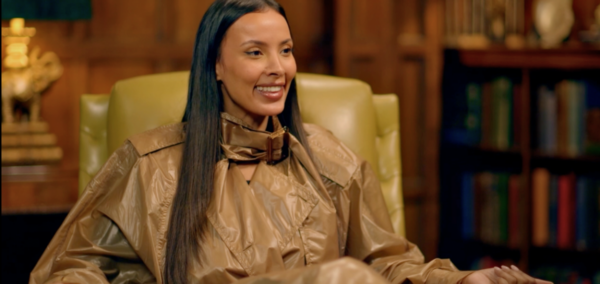
Maya Jama’s game plan for Celebrity Traitors is to avoid trying ‘too hard’ or ‘overthinking’
This is really devious tbh

Newcastle University buildings evacuated after ‘suspicious item’ found on campus

Police, fire crews, and fire engines arrived at the scene

12 things every Fresher gets wrong in their first few weeks at uni

From wearing your lanyard everywhere to leaving your washing-up until it grows its own ecosystem
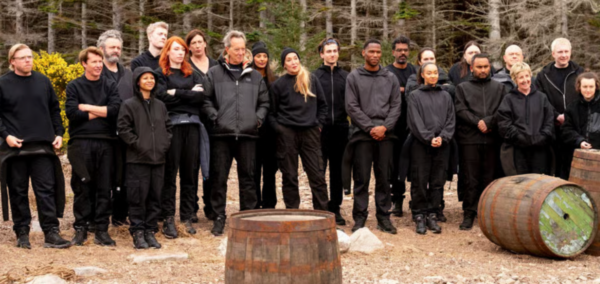
Our Celebrity Traitors predictions include Maya Jama turning on her fellow Traitors

Here’s what we think will happen

I’ve just realised that three cast members from Celebrity Traitors were in Game of Thrones

Having flashbacks to Bella Ramsey being crushed by a giant
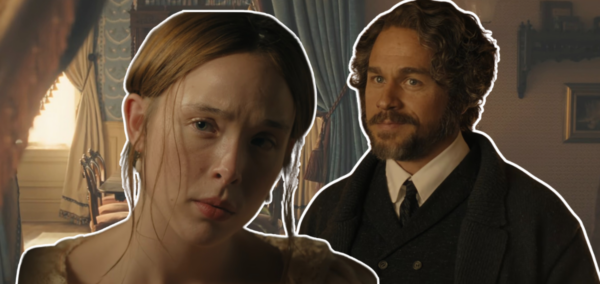


23 to 70: The ages of the Celebrity Traitors 2026 cast, from youngest to oldest

There’s a huge age range this year

James Blunt was a British Army captain before becoming a singer and joining Celebrity Traitors
He mentioned it on the show

Monster director finally admits why they forced Aileen Wuornos in a show about Lizzie Borden
Despite the name, Lizzie Borden is not the focus of the story

Shows and films you can watch about Aileen Wuornos, where she isn’t thrown into another story

Others tell her entire case, unlike Monster on Netflix
This viral tool lets you customise your Apple Pay cards, and here’s how to do it
You can personalise the entire design
James Acaster could be the Celebrity Traitors’ recruit, as filming reportedly paused for him
It’s not much of a cliffhanger
The ridiculous fortunes of The Celebrity Traitors: Their net worths, from £500K to £50 million
One of them could legit buy the castle three times over