University of Sussex overturns record £585,000 fine in High Court free speech ruling
The case stems from Kathleen Stock’s 2021 resignation and ruled the OfS acted unlawfully

The University of Sussex has overturned a record £585,000 fine after the High Court ruled that England’s university regulator acted unlawfully in its investigation.
Last year, the Office for Students (OfS) imposed the fine, claiming the university had breached free speech regulations linked to its trans and non-binary inclusion policy.
The case stems from the 2021 resignation of philosophy professor Kathleen Stock, following protests over her views on gender identity. But crucially, the court did not rule on Stock’s departure itself.
Instead, the judgment focused on the conduct of the OfS, with Mrs Justice Lieven finding the Office for Students (OfS) acted with bias, pursuing Sussex not on the basis of evidence but as part of a wider agenda to send a warning shot across the university sector. The court concluded that the regulator had effectively made up its mind in advance, making its decision unlawful.

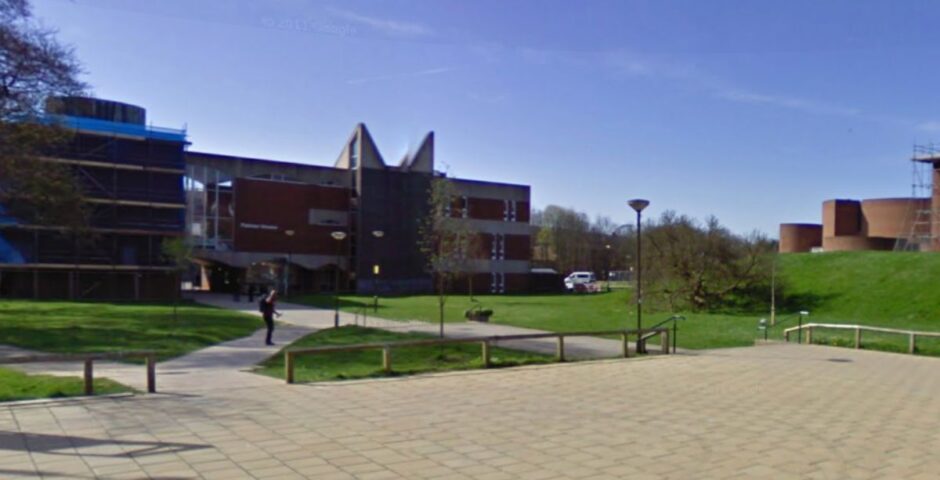
University of Sussex, via Google Maps
Mrs Lieven ruled that the regulator had “a closed mind” to any outcome other than finding Sussex in breach of free speech duties. The judgment further found that the OfS misapplied the very principles it is tasked with defending, including freedom of speech and academic freedom, while overstepping its regulatory powers.
The court decided that the investigation ignored relevant context, including changes made by the university and comparable cases elsewhere. Sussex’s trans and non-binary inclusion policy – central to the OfS case – was also found to be less significant than the regulator had claimed.
University leaders and trade unions were quick to criticise the regulator’s conduct. Sussex vice-chancellor Sasha Roseneil described the judgment as a “devastating indictment” of the OfS.
She said: “We need a regulator that works with the sector, not against it – in the interests of the students of today and of the future. I stand ready to work with the government to find better ways to regulate and support universities in serving the public good.
“Meanwhile, I am delighted that Sussex’s foundational commitments to academic freedom and freedom of speech have been recognised by the high court, and that the OfS’s egregious decision against the university, and the fine it sought to impose, have been overturned.



“The University of Sussex has a proud history of being the place where the most contentious issues of the day are aired – where independent-minded, critical thinkers develop their ideas, and where lively and engaged students work out how they understand the world.”
A statement from the University and College Union by general secretary Jo Grady also condemned the use of the OfS as a “political cudgel” in campus disputes.
The union warned that trust in the regulator has been badly damaged and called for a fundamental rethink of how higher education is governed: “This ruling is a rebuke to the politicians who have wielded the OfS as a political cudgel in campus culture wars. The regulator has lost the trust of the sector, and there now needs to be a complete rethink from government over how it will work to protect higher education.”
The judgment also raised questions over the OfS leadership. Former chief executive Susan Lapworth was singled out for her role in driving the investigation, with the court noting her apparent determination from the outset to make an example of Sussex.
The ruling comes at a time where new legislation has expended the OfS’s powers, and further penalties including fines of up to £500,000 or two per cent of institutional income are set to come into force.
Josh Fleming, the OfS’s interim chief executive, said: “We are disappointed, of course, by this ruling. We will carefully consider the consequences of the judgment before deciding on next steps. We will reflect on the judge’s findings and use them to help inform our future approach.
He said the OfS would “carefully consider the consequences of the judgment before deciding on next steps”.
“Our focus remains on students and the sector, and we are pleased that following our investigation a dozen institutions, including the University of Sussex, have amended policies which restricted freedom of speech.
“As a result, students and academics should feel greater confidence in their ability to engage in the free and frank exploration of thought that characterises English higher education.”
OfS was contacted for comment.
Featured image via Google Maps


Latest

Lizzie Borden’s doctor’s full court testimony, where he recalled finding Andrew and Abby dead

‘His face was hardly to be recognised by one who knew him’

A weapon in the Lizzie Borden case was never found, and it might not have even been an axe

Many different theories were investigated

Lizzie Borden wasn’t right for Monster, and the ‘female rage’ reason they chose her makes it worse
There was so much wrong with it

The full Celebrity Traitors 2026 episode schedule as day change is confirmed
Don’t get caught out when it returns this week

Ryan Murphy picks his favourite American Horror Story season, and it’s a controversial choice

It’s Sarah Paulson’s least favourite

Why the Love Island 2026 Islanders are suddenly posting ‘tart’ on all of Lorenzo’s posts
People think it’s a divide
Former Newcastle student raped in Freshers’ Week speaks out on potential dangers

“I didn’t know what had happened to me… I came home and was very confused”


The 20 easiest UK universities to get into, based on accepted students’ grades

University of Roehampton students have a D and two Cs on average

Here’s what joining these Cardiff Uni societies says about you

Things you need to know before joining a new society
A favourite from the Love Island 2026 cast is getting an All Stars return
A second chance is well deserved

Right, it’s time to lock in: Here are 10 things every Cardiff Uni final year needs to know

It’s never too late to make this year the best one yet

Charli XCX’s viral VMAs reaction wasn’t about Taylor Swift, so here’s what actually happened
They’ve been surrounded by rumours for years
University sued over alleged fraternity gang sexual assault and punishing accused with essays
The members discussed the attack over Snapchat
Here’s what TV show your Cardiff Uni accommodation would feature in

Everyone’s favourite show is finally back for another season

The major celebs who skipped the VMAs 2026 and why, despite having multiple nominations
Ariana Grande was nominated eight times but didn’t attend

All the advice freshers need to survive first year: Love, Cardiff Uni students who survived

From YOLO to locking in, here’s all you need