

Analysis: How viable is Nottingham University’s Malaysia campus amidst job and course cuts?
The university is owed millions of pounds by its Malaysia campus

The University of Nottingham is one of the most prominent Russell group and research driven universities, but it has recently been under significant financial pressure.
Public attention has been drawn to the university’s priorities, specifically its commitments to global campuses, and the quality and stability of the student experience in both UK and Malaysia. Last month, Nottinghamshire Live reported Nottingham University is owed millions of pounds by its Malaysia campus. Meanwhile, hundreds of university jobs were cut in the last year.
So how did the university get to a point of such financial strain?
Universities are in financial trouble all across the UK
Nottingham is not alone in facing financial difficulty. Across the UK, several educational institutions have been hit with rising operating costs, unstable international recruitment and post-pandemic economic pressures.
However, Nottingham’s response has been particularly visible: Reported deficits, proposed restructuring, job losses, and course reductions.
Earlier this year, union members passed a motion of no confidence in the university’s vice-chancellor and other senior leaders, citing “shocking financial financial decisions” as the reason. The unions referenced job cuts and the purchase of Castle Meadow Campus as contributing factors to the vote.
The Malaysian campus: Global vision or financial liability?

via Wikimedia Commons
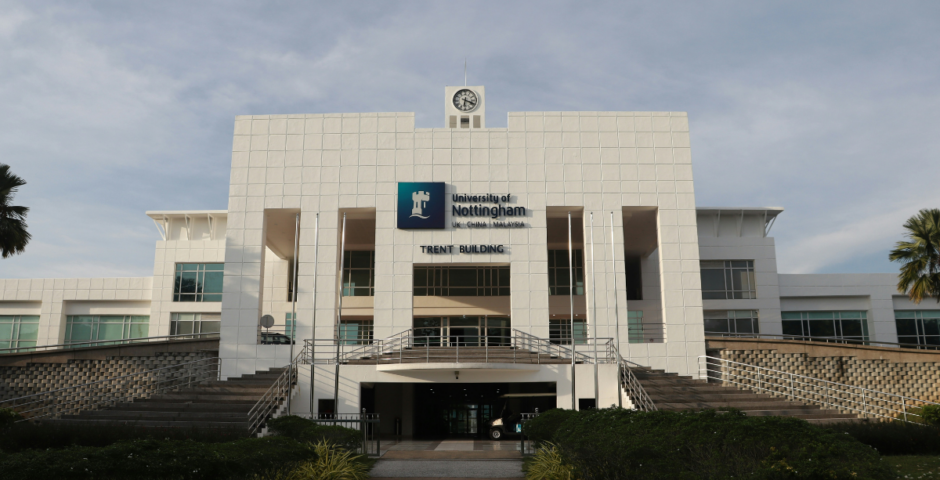
Nottingham has promoted itself as a “global university” with its Malaysian campus positioned as a flagship for international reach. The campus in Semenyih offers UK accredited degrees and markets itself as delivering education at an arguably lower cost within a multicultural environment.
Yet overseas campuses are expensive. They require significant operational funding, carry high administrative overheads, and depend heavily on student recruitment. They are also exposed to currency fluctuations and regional economic instability.
In a period where the university is cutting costs at home, the continued positioning of the Malaysia campus as a strategic strength demands closer examination particularly if the campus is no longer growing.
According to NottinghamshireLive, in a financial statement for the year ending in July 2025, the university recorded £5.1 million in “doubtful debts”, which refer to “overdue” historic management fees that are yet to be paid by its Malaysian campus.
Decline in student enrolment
Nottingham’s latest financial statement did not publish student numbers for Malaysia. However, one impact report commissioned for the campus’ 25th anniversary suggested enrolment in 2024 stood at 4,056 students. The figure represents a significant drop in the earlier years. The university’s 2016 financial statements recorded 4,666 students in Malaysia, and 2017 recorded 4,881.



Notably, in 2021 the university reported 5,200 students while announcing plans to buy out its joint venture partners. This move, presented at the time as evidence of confidence in its transnational educational model.
The shift is striking: From an expansion narrative in 2021 to declining enrolment figures in later statements.
Course cuts and student experience
Financial pressure has already translated into academic change. Nottingham has announced course discontinuations and suspensions of courses, restructuring within faculties, and job losses among academic and professional services staff .
In previous rounds of change, disciplines such as music and certain language programmes have been among those affected.
For students, course closures are not merely administrative decisions. They effect the university experience they are paying for, in both the UK and Malaysia.
A spokesperson for the University of Nottingham explained its overseas campuses bring “wider benefits to the university and [its] global community.”
However, it is still important the university prioritises stability, transparency and delivering optimum academic experience to students.
A University of Nottingham spokesperson said: “The University of Nottingham Malaysia, like other international branch campuses, pays an annual management fee to the UK campus based on student enrolments and shared global academic resources. Any accrued management fees are being managed and settled through a structured and planned financial arrangement, reflecting long-term financial planning and reinvestment.
“UNM continues to demonstrate healthy and sustainable growth. Between 2022 and 2025, student enrolments grew by an average of 8 per cent annually, reflecting the confidence in UNM’s educational offering.
“It is important to look at the wider benefits that our overseas campuses bring to the university and our global community – the University of Nottingham was a pioneer in transnational education when we opened our campus in Malaysia, which celebrates has celebrated its 25th anniversary this year, and our global outlook is what continues to differentiate us in the UK higher education sector.
“We understand the concerns being raised by staff, students and trade unions but the government has been very clear it expects universities to manage their own finances and focus on areas of strength and we are responding to this to ensure the University of Nottingham remains a world-leading institution long into the future.
“The University of Nottingham has a global reputation built on 150 years of excellence and we are determined to ensure that it continues to be one of the best universities in the world for many decades to come.”
Featured image via Unsplash
Latest

After *that* ending that wasn’t in the book, Mike Flanagan reveals plans for Carrie season two

Stephen King is involved!

Bake Off’s Nigella Lawson says her voice sounds the way it does due to a ‘slur’, not drinking

People keep commenting on it

Four big celebrities rejected roles as judges or presenters on The Great British Bake Off

Gordon Ramsay said no to being a judge

The Great British Bake Off’s Molly Chauhan outlines how the tent was made more accessible
Her workbench has a space for her wheelchair

Celebrity Traitors could have SEVEN Traitors, as BBC mural hints at a series of betrayals
A former Traitor reckons it’s about to get seriously messy

Settling in: Here are five ways you can get ahead on your course

Freshers is out, academic comeback is IN

The frantic 911 calls placed during and after Christa Pike’s failed execution have been released
It took first responders 30 minutes to get in there

William Chapman named as man who entered tiger enclosure at Yorkshire Wildlife Park
The council has released a new statement

The ultimate match day guide: Where to go when the big game rolls around

Have a cheeky pint at one of these spots for the next football game

University of York alumni compete in European Para Fencing Championships

The 2026 Para Fencing European Championships take place over 6-11 October

Cardiff clash: Two matches, two wins for Cardiff University

Cardiff University dominates at Cardiff Arms Park, securing two victories against Cardiff Met men’s and women’s rugby

Jury hears UWE student made pizza and played online games after allegedly killing housemate

Prosecutors say Zack Coughlan allegedly stabbed his housemate 30 times and waited eight hours to call 999

Popworld York is closing down

Popworld York is closing this October, its successor Replay will open on October 29th



The absolute best day you could have as a Bristol Uni student

The type of 24 hours to make you re-evaluate your belief in the second-year curse.

Seven things I wish I knew before coming to York

Want to be in-the-know about everything York? Here’s your go-to guide to make the most of living and studying in York.


10 costume ideas to start prepping for Halloween in Exeter before everything sells out

Avoid the last-minute scramble for a Halloween costume with these ideas

Celebrity Traitors’ Myha’la responds as some claim she was banished because she’s Black
She spoke to the ‘unconscious racial and cultural bias’ that ‘exists in this game’

Sheffield’s ‘Man with the Pram’ honoured with Sheffield legends star outside City Hall

John Burkhill has received a star for years of dedication to fundraising