Almost 80 UK universities to sign up to safeguarding scheme built by mum after her daughter died at uni
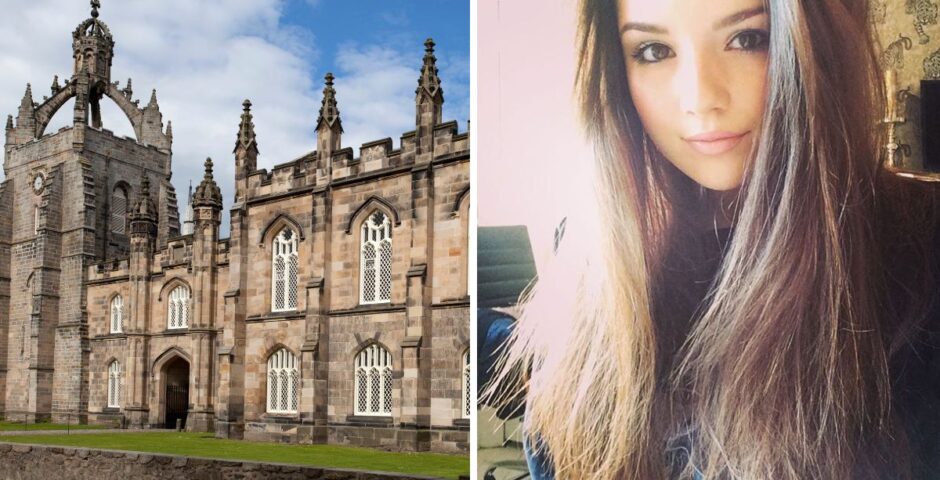
Emily Drouet died by suicide after an abusive relationship whilst at University of Aberdeen

Almost 80 universities have shown interest in piloting a new safeguarding scheme following the death of an Aberdeen student who took her own life.
Emily Drouet died in 2016 after an abusive on-off relationship with a fellow student.
Her mother, Fiona, has since campaigned for universities to reshape the ways they respond to gender-based violence.
The framework, known as “EmilyTest”, is currently being used in five universities, including the University of Manchester, the University of Warwick and, the University of East London and Birmingham City University.

via University of Aberdeen
Leading up to her death, Emily showed signs of distress, she stopped attending lectures and reported concerns about her “angry” boyfriend and her mental health to university staff.
Fiona says Emily’s cries for help were ignored, and the law student took her own life one week later. She is now driving a national effort to reshape the ways universities respond to gender-based violence.
Ms Drouet launched the “EmilyTest” framework in Scotland after her daughter’s death.
EmilyTest Charter was launched in 2021 as a gender-based framework for colleges and universities in Scotland, challenging them to assess whether safeguarding systems, policies and training would have saved Emily’s life.
The charter sets standards for prevention, intervention and student support, free of “victim-blaming” language.
It also emphasises the importance of safeguarding among all who come into contact with students, not only academic staff.
Fiona said since her daughter’s death, Aberdeen University had “held their hands up” and transformed its practices, passing the test in 2024.
Angus Milligan, 21, was staying in the same hall of residences Emily and had visited her room unannounced on the day she died, March 18, 2016, her mother said. He admitted assault and threatening behaviour but was spared jail.



Ms Drouet said university staff “didn’t know how to respond safely to a disclosure,” unaware of how to understand the level of risk her daughter was facing.
“Devastatingly, that had the worst possible outcome for Emily. It was horrific, what unfolded,” said Fiona.
Nick Edwards, director of people at the university, said: “We, and many other institutions, are on a journey to do bettie and have been humbled to work alongside Fiona and her team.” He added that the university has committed to “continually learning in this area and enhancing our support for victims and survivors.”
Rachel Sandby-Thomas, registrar of the University of Warwick said the process helped the university “really scrutinise” its policies and processes to ensure they worked “in real scenarios and not just meet the minimum expected by regulation”
Anglia Ruskin University (ARU) was the second institution in England to pass the charter. Fiona said it was “not a tick-box exercise” but a rigorous framework designed to drive “meaningful cultural change and lasting improvements in practice.”
The Office for Students’ E6 registration, which applied to all universities in England came into force last year. It requires higher education providers to implement clear policies, reporting systems, staff training and student support arrangements to prevent and respond to reports of harassment and sexual misconduct.
The Department for Education said the EmilyTest complemented these requirements.
Jacqui Smith, the minister for skills, added: “Emily’s story was a devastating tragedy, and one that highlights the importance of making sure young people can get help when they need it most.
“I welcome the work being down through the EmilyTest to help universities build safety campuses…We are absolutely clear that abuse and harassment have no place in universities or colleges, and we will continue working closely with providers to keep students safe throughout their education.”
If you are an Aberdeen student and this article has affected you in any way, support is available through the University of Aberdeen Student Advice & Support service, which offers guidance on wellbeing, mental health, and academic concerns.
You can also contact Breathing Space (Scotland) on 0800 83 85 87 for confidential out-of-hours support, or reach Samaritans at any time on 116 123 if you need someone to talk to. Both services are free and available 24/7.
For further mental health support and information, Mind provides helpful resources at mind.org.uk, and Shout offers 24/7 text support by texting SHOUT to 85258. If you are in immediate danger or need urgent help, please call 999.

Latest

Lizzie Borden’s doctor’s full court testimony, where he recalled finding Andrew and Abby dead

‘His face was hardly to be recognised by one who knew him’

A weapon in the Lizzie Borden case was never found, and it might not have even been an axe

Many different theories were investigated

Lizzie Borden wasn’t right for Monster, and the ‘female rage’ reason they chose her makes it worse
There was so much wrong with it

The full Celebrity Traitors 2026 episode schedule as day change is confirmed
Don’t get caught out when it returns this week
Ryan Murphy picks his favourite American Horror Story season, and it’s a controversial choice

It’s Sarah Paulson’s least favourite

Why the Love Island 2026 Islanders are suddenly posting ‘tart’ on all of Lorenzo’s posts
People think it’s a divide
Former Newcastle student raped in Freshers’ Week speaks out on potential dangers

“I didn’t know what had happened to me… I came home and was very confused”


The 20 easiest UK universities to get into, based on accepted students’ grades

University of Roehampton students have a D and two Cs on average
Here’s what joining these Cardiff Uni societies says about you

Things you need to know before joining a new society
A favourite from the Love Island 2026 cast is getting an All Stars return
A second chance is well deserved

Right, it’s time to lock in: Here are 10 things every Cardiff Uni final year needs to know

It’s never too late to make this year the best one yet

Charli XCX’s viral VMAs reaction wasn’t about Taylor Swift, so here’s what actually happened
They’ve been surrounded by rumours for years
University sued over alleged fraternity gang sexual assault and punishing accused with essays
The members discussed the attack over Snapchat
Here’s what TV show your Cardiff Uni accommodation would feature in

Everyone’s favourite show is finally back for another season

The major celebs who skipped the VMAs 2026 and why, despite having multiple nominations
Ariana Grande was nominated eight times but didn’t attend

All the advice freshers need to survive first year: Love, Cardiff Uni students who survived

From YOLO to locking in, here’s all you need