

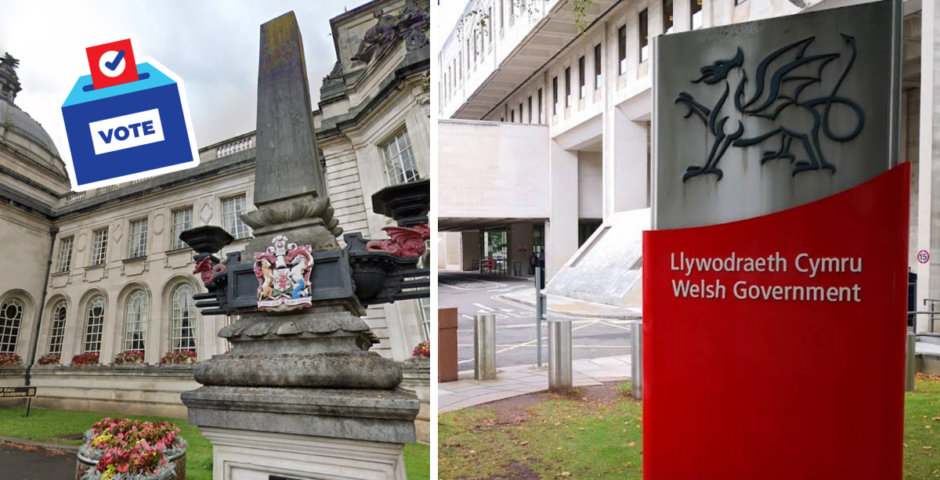
Cardiff Uni study finds 60 per cent of Welsh voters are clueless on new May election system
‘Young people were the group who suffered the largest decline in political enfranchisement’

A study led by a Cardiff University professor has found that the political knowledge of Welsh votes, specifically concerning the upcoming May election, is very limited.
Conducted in February 2026, a YouGov survey revealed there were significant gaps in public knowledge on Welsh devolution. In other words, there is a lack of understanding regarding which political responsibilities lie with the Welsh Government, and which lie with the UK Government.
The research was led by Stephen Cushion, a professor based at Cardiff University’s School of Journalism, Media and Culture.
In regard to policy making, 69 per cent of respondents were either wrong or unaware of which body was responsible for certain policymaking, such as taxation, with 45 per cent misidentifying most policies as the responsibility of the Welsh government.
58 per cent misidentified or did not know that the UK government controls broadcasting in Wales. 51 per cent of respondents were unclear on which governing body was responsible for promoting economic growth within Wales, with 30 per cent incorrectly naming the UK Government.
The study looked further into social care, health and education. 81 per cent were incorrect or unsure of how social care is delivered, with only 19 per cent correctly identifying local councils as responsible. One in three were unaware that sectors such as health and education are a Welsh Government responsibility.
But why are there gaps in public knowledge?
Issue one: Complexity of devolution

Info via Institute for Fiscal Studies
Despite Wales having a devolved government for over 25 years, there is still remaining public confusion over its system of government. It can impact democratic accountability between the Welsh Government and UK Government, making it harder for voters to identify who is responsible for certain key policies.
Many of the responsibilities are split between the Welsh Government and the UK Government, with certain political areas mistakenly attributed to one or the other. Health and education are fully devolved to the Welsh Government, which some may assume is under the control of the UK Government. Transport is mostly devolved, but many policies remain UK-wide, such as major road funding or railway franchising. Some may mistake Wales for being responsible for its own broadcast services and media regulation, but this is fully reserved for the UK Government.
Issue two: Limited education

The Cardiff University report revealed knowledge of the new electoral system remains poor.
- Only seven per cent of people could identify the Closed List system
- 18 per cent were under the impression it was First Past the Post
- 13 per cent believed it was Additional Member System
- Four per cent the Single Transferable Vote
- 58 per cent claimed they did not know which system was used
These statistics are striking – most significantly, how over half of Welsh voter respondents claim to be unaware of which electoral system was even used. This lack of awareness is staggering, with this also extending to Welsh political figures:
The Welsh Reform leader, Dan Thomas, was only recognised by ten per cent of respondents, compared to Nigel Farage, who was recognised by the majority of 94 per cent. This discrepancy could be explained as a reflection of Farage’s greater media visibility, personal brand as a controversial character and longer career length.
Issue three: Uninformed young voters
Discussion over young people and their political involvement has remained a longstanding and somewhat controversial issue across modern history. According to the House of Commons Library, the current voting age is 18 for UK-wide elections and 16 in local elections across Wales and Scotland.
A recent GOV UK policy paper discusses the passing of the Representation of the People Bill 2026, entailing the possible extension to the right to vote at 16 during general elections across the UK. However, it is seen that young people have a lower turnout in UK elections, despite engaging deeply over issues including cost of living, mental health & wellbeing, and climate change.
Intergeneration Foundation reported on the impact of the switch in the electoral register in December 2015: “Young people aged 18–34 were the group who suffered the largest decline in political enfranchisement following the switch to Individual Electoral Registration (IER)…”



Evidence shows that there is low confidence regarding the voting system, with 46 per cent of young people feeling not well enough informed to vote. Nation Cymru research demonstrates that less than half of young people in Wales are interested in politics, with only 62 per cent claiming to be well-informed on the democratic process. Why is this?
Cuts to educational funding, such as children’s centres in disadvantaged areas, have disrupted key efforts in teaching young people politics on both local and national scales. With rising popularity in digital platform usage, political behaviour has been displayed more so through online activism and petition sign-ups than council meeting attendance and or physical action.
Issue four: Lack of media coverage
As UK-wide news dominates media outlets, national issues such as Welsh politics often get under-reported or overshadowed. Findings from the Cardiff University report revealed that only 10 per cent of people use Wales-produced media sources for Welsh news, with 46 per cent of people relying on UK news outlets for any updates in Wales.
Regarding this dilemma, Stephen Cushion explained: “It is often unclear that a story is just about England; it reads as if it applies to the whole of the UK. In Covid, broadcasters and media had to be more specific in reporting on the nations, but that’s fallen back a bit now…”
Many policies that predominantly concern Welsh residents are considered not sensational enough to alert UK-wide attention, such as policy changes in transport or local businesses. Social media dynamics may also impact engagement through targeted advertisements and amplified algorithms. Those who do not actively engage with politics are less likely to receive election material.
Media fragmentation, oversaturation and declining media literacy generate inconsistent news coverage. The likelihood of information being misinterpreted with a single glance is at an all-time high.
As detrimental as this all may seem, all is not lost! The Cardiff Tab conducted its own representative poll of the awareness surrounding the election.
The Tab’s survey on Cardiff students’ political knowledge

Considering the issues at hand, The Cardiff Tab’s survey results were found to be a satisfactory surprise. 64 per cent of respondents were aware of the upcoming election in May, and 67 per cent of respondents have registered to vote.
Despite challenges to public understanding, efforts have been made to engage and educate young people on Welsh politics through workshops, outreach programs and educational initiatives. Ceredigion County Council held a My First Vote Tour, raising awareness amongst pupils and education communities on their right to vote in the Welsh elections in 2026. Sessions held all over the country have been successful, such as in Ceredigion secondary schools, the county’s Disability Forum, Coleg Ceredigion, Aberystwyth University students and many more.
A pupil at Ysgol Gyfun Penglais and Member of the Welsh Youth Parliament for Ceredigion commented on their experience: “Our session on learning about voting rights for young people was a great experience for us to think critically and discuss how significant young people who vote can be… I was grateful for the opportunity to expand my knowledge of how the new voting system would work in a practical way.”
As well as social change, proposed legislation aims to improve democratic engagement, most notably amongst young people. The Electoral Commission has said that if Parliament approves the Representation of the People Bill, they will make it their priority to ensure “all newly enfranchised voters know how to register and exercise their right to vote.”
Such initiatives indicate perseverance in improving political engagement, not only in Wales but across the entire UK.
So what happens now?
If you live in Wales –even as a student, you are eligible to vote in the upcoming Welsh Government election, taking place on Thursday 7th May 2026. You can register here.
Most people vote at their local polling station; you can find this by entering your postcode, and it will display the address of the closest polling station with all accessibility information. For students living at a term-time address, a poll card will be sent with all poll station information. It is also possible to vote via post; however, postal votes must be applied for in advance.
To learn more, check the Welsh Government site detailing all the voter registration info here, with further information on Welsh elections available here.
For more of the latest news, guides, gossip, and memes, follow The Cardiff Tab on Instagram, TikTok, and Facebook.
Featured image via Google Maps



Latest

14 types of students you’re guaranteed to meet in Freshers’ Week

There’s the one that takes it way too far, the first-time drinker and the one you wish you’d never met



Canon events every Fresher experiences in their first year kitchen

From being woken up at 4am to a whole ecosystem growing in the sink

126 student flats rejected after 160+ objections

Plans to turn former care home in Cotham into accommodation for 126 students have been rejected by Bristol councillors


‘Watching out for spiking is just normal’: Staying safe on a night out in Leeds

Crime risks rise after dark but in Leeds, the night is still ours.

Have you had your Blank Street yet? A deep dive into Leeds’s matcha obsession

An in-depth investigation into Leeds’s obsession with matcha

‘Pain, sadness and anger’: Vice-Chancellor’s message to students after Arday’s Death

An email sent to students this afternoon outlines what the Uni’s upcoming independent review will look like and warns of the “unacceptable rise in racist, hateful and abusive attacks” on social media against members of the Cambridge community

If you have these seven things in your university room, I’m afraid you’re a posh girl

4. White linen trousers

There was a second woman at Lily Phillips’ ‘gloryh*le’ stunt, but her job was so much worse

The videos are… unique


Calling all writers and content creators: The Nottingham Tab wants you!

Come along to our open meeting on Monday 21st September at 6pm at the Playwright

What happened to Brandt’s Boys? Their content was always insane, but their downfall was MESSY
Straight boys do the oddest things…

Rhi has *finally* spoken about why she and Jeff split up after MAFS, and I feel so sad for her

She spoke about cheating and said it wasn’t an amicable end

Who’s the daddy? These three men face daunting reality they might now have a baby with Bonnie Blue
I mean, you got yourself into this situation

Six surprising universities are selected by education experts as the best in the UK in 2026
Only two Russell Group universities are nominated for University of the Year

With youth unemployment above one million, experience is the differentiator
For everybody dreading the post-grad job hunt


Man from ‘hot’ arrest video starts jarring new venture after posting his now-viral nudes
He’s really making use of his 15 minutes of fame

These are all the TOWIE cast members who are posting steamy content on OnlyFans

One of them was offered £150k to sleep with a guy