

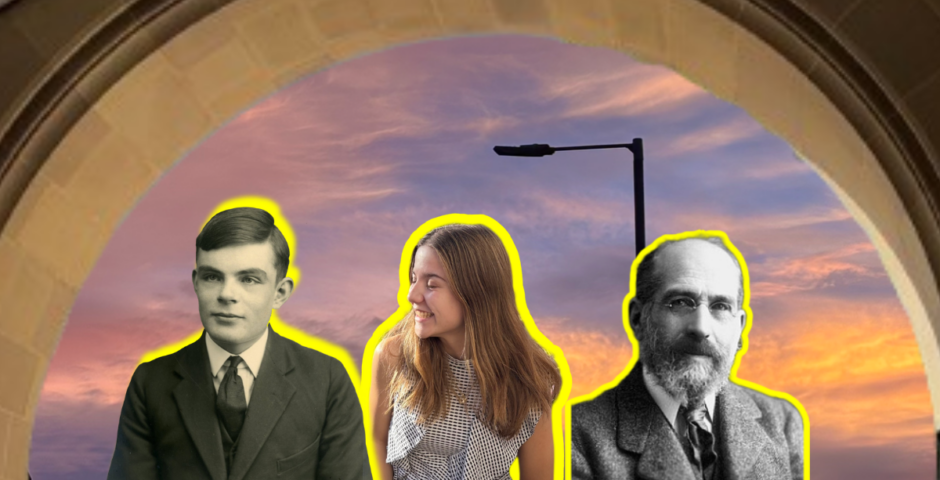
From Crawford to Turing: the stories behind UoM’s building names
You’ve walked past them loads, but how many names do you truly know?
Whether you’re a fresher dashing from one end of campus to the other or a tourist trying to get ‘the shot’ in front of the famous arch, names like Stopford, Nancy Rothwell and Kilburn are bound to ring a bell.
But have you ever stopped to wonder who all these buildings are named after? Here’s the stories behind them:
1. Nancy Rothwell
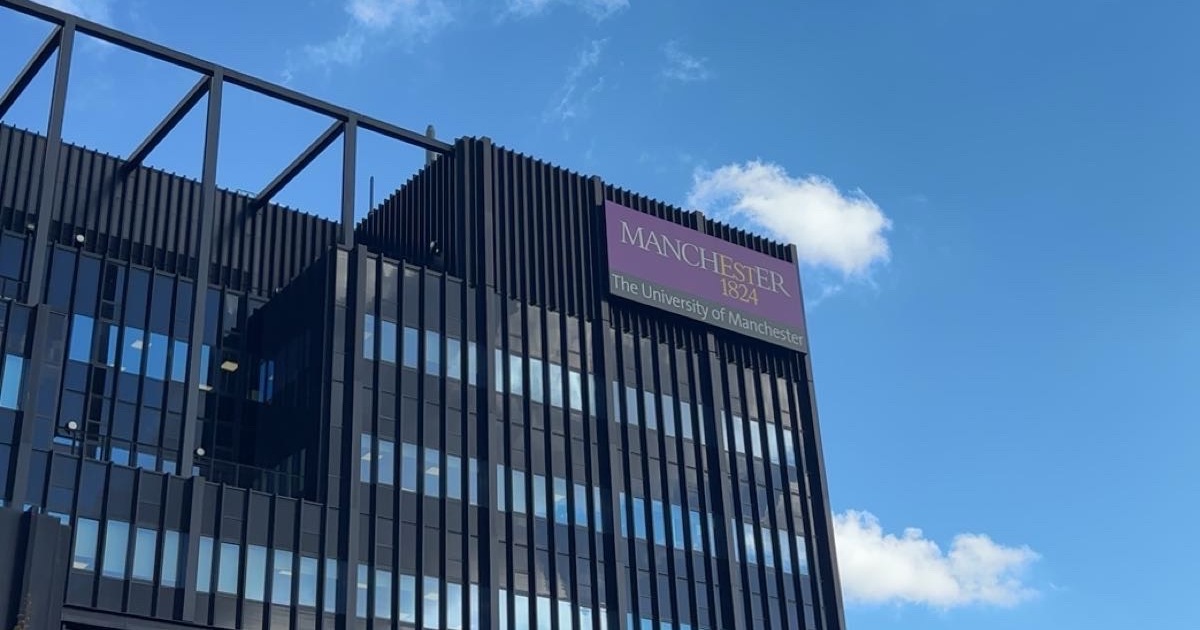
Professor dame Nancy Rothwell is a British physiologist and academic leader that served as the first female president and vice-chancellor of the university from 2010 to 2024 and is a voice to be reckoned with in neuroscience.
She currently serves as a principal investigator for the Brain Inflammation Group, a group whose research spans the whole translational pipeline from discovery science to clinical application.
However, her time at the university is somewhat weighed down by controversy.
In November of 2020, 19-year-old Zac Adnan experienced racial profiling on the way back to his student accommodation in Fallowfield. Adnan explicitly described being told that university security guards expressed he “looked like he didn’t belong” on university grounds, and that they accused him of dealing drugs.
Rothwell came under fire for how she handled the situation, refusing to meet with him while the investigation was undergoing. This air of student uproar casts an interesting, layered cloud over the building.
Rothwell did comment at the time, saying she had been “very, very concerned” by the incident and had “apologised to the student for the distress that he felt.”
2. Crawford House
She is tall, red-brick, and brutalist – Crawford comes from none other than the Earls of Crawford who served as administrative leaders of the university and shaped it’s historic library collection.
David Lindsay, the 27th Earl of Crawford (1871-1940) served as chancellor of the University of Manchester until his death.
Anyone with even a slight World War hyperfixation might be reading along with raised eyebrows, however, David Linsday refused an offer as Viceroyalty of India and instead enlisted as a private in the Royal Army Medical Corps; a practically unheard of decision.
His peers and fellow highly-esteemed, university educated men were commissioned as officers, but Lindsay ultimately swapped out the Indian palaces for work at the clearing station’s operating table.
An operating table that saw tragedy so vast, he is quoted as having developed resentment for men of his rank.
I can’t help but be amused by the significance and historic richness coating this building, knowing that my associations with it as a student are almost purely overheated lecture theatres.
3. Kilburn

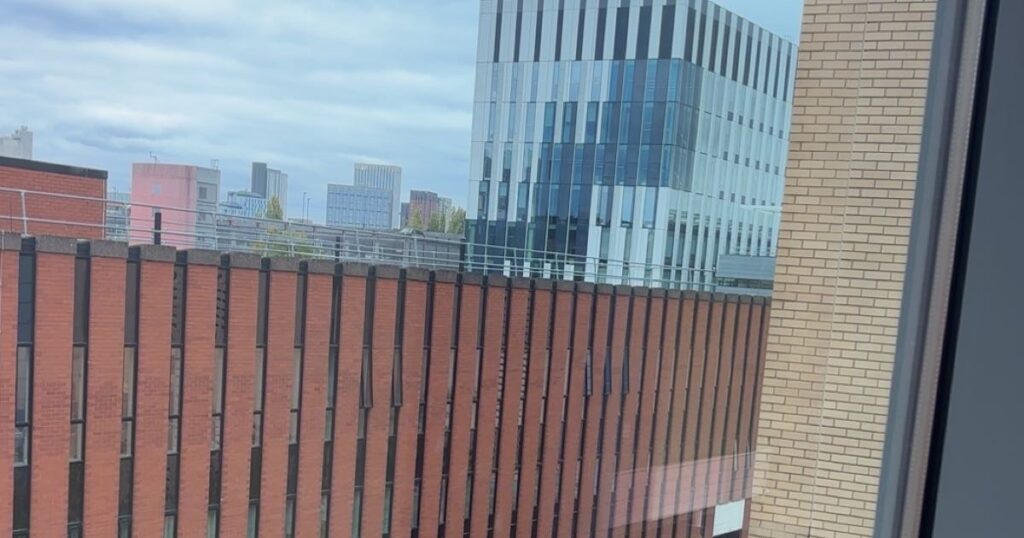
I’ll level with you, Kilburn might not be the most majestic piece of art. Tom Kilburn, the building’s namesake, was all but plain however, making significant strides in computer programming.
His greatest achievement was the creation of the world’s first electronic stored program computer – the Manchester Baby. While it wasn’t built to be a practical computing engine, it was the first truly random-access memory.
This Baby laid the groundwork for the first, commercially available general-purpose computer.
It’s no secret however, that Kilburn’s wartime efforts jolted his passion awake. He worked on radar at the Telecommunications Research Establishment in Malvern and gained experience designing and debugging electronic circuitry.
The amount of computing talent truly concentrated in Manchester becomes even more apparent when I turn to stare at the Alan Turing building.
4. Turing
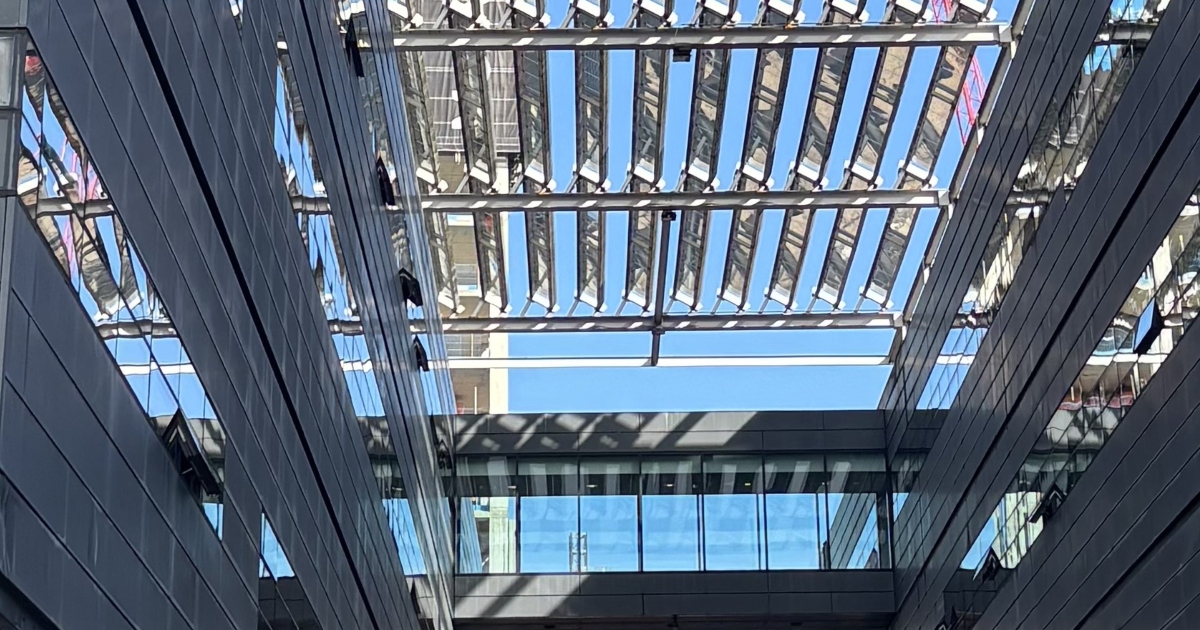
Manchester graduate, Benedict Cumberbatch, admittedly crosses my mind far too often here, and Alan Turing hardly needs my measly introduction.
The father of theoretical computer science, the man behind the Turing machine and Turing test, the man credited with shortening the Second World War by anywhere between 2-4 years.
In 1948, Turing joined Max Newman’s team at the University of Manchester, contributing to the early Manchester computer developments, but later turning his focus towards artificial intelligence and mathematical biology.
Turing was fascinated by DNA; he used the early computer to investigate how a group of cells and chemicals worked and intertwined themselves to grow into the complex, natural shapes our bodies rely on.
5. Schuster
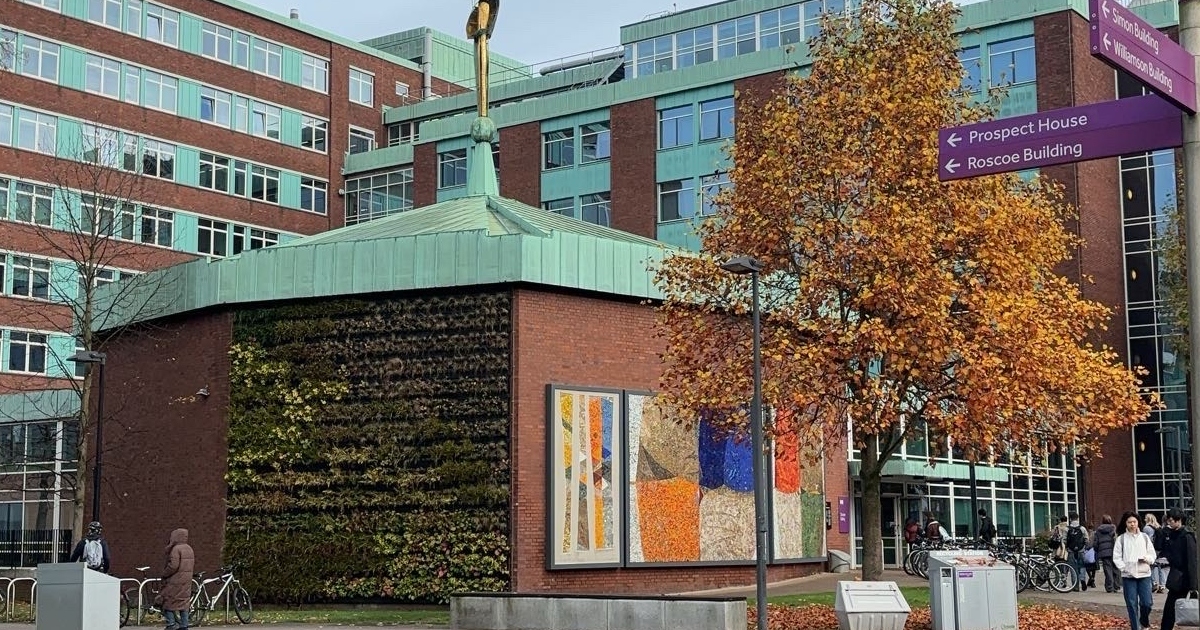
Up the street, we see the Schuster building; home to the department of Physics and Astronomy.
Training under and working with Roscoe, Maxwell and Rayleigh, Sir Arthur Schuster, was appointed to the Beyer Chair of Applied Mathematics at Owens, and fought to open his own designed laboratory in 1900.
Schuster is probably most well-remembered however, for his periodogram analysis – a practical tool for identifying statistically important frequencies.
(Hopefully), this exploration of Manchester history has been eye-opening. Turns out that a stroll up campus can teach you the pub-quiz trivia you need, all before the ice in your coffee melts.


Latest

‘She is phenomenal’: Traitor Hannah Fry has realised that she’s related to her co-star

‘I cannot tell you how much I admire her’
From Crawford to Turing: the stories behind UoM’s building names

You’ve walked past them loads, but how many names do you truly know?
‘Students not getting what was promised, regardless of strikes’: Strikers speak out

The UCU strikes have reached their third week, but is the administration budging? The Edinburgh Tab asked strikers their opinions firsthand
Joe Lycett has opened up about being bisexual, after addressing it on Celebrity Traitors

It comes after years of people making assumptions about him
Nottingham among three universities with whole campuses for sale due to financial pressures

The Russell Group uni is selling a site it spent nearly £80m on
Oops! James Acaster’s friend appears to drop hint about his ‘downfall’ on The Celebrity Traitors

He also shared exactly what type of player his friend is
Lol, Celebrity Traitors’ Joe Lycett did actually legally change his name for political activism
A Traitor at heart, even to his own name

Stella and Filip’s MAFS breakup turns messy as she’s ‘deeply sad’ over his ‘manosphere’ beliefs
He said we are currently living in a ‘war on men’
Rob Beckett was happy to be murdered on Celebrity Traitors because he desperately needed a break
He’s ready for a day off

Celebrity Traitor Hannah Fry speaks out after banishment, exposing the error James and Maya made
Maya and James might have exposed themselves
A guide to the best Black History Month events happening in Birmingham

From poetry, theatre, dance and music, here’s how to celebrate Black History Month in Birmingham this October
Save the date! The Celebrity Traitors finale is almost here, and it’s the longest episode EVER
It’s basically a Celebrity Traitors movie!
King Kenny is obvious, but so many of The Celebrity Traitors cast don’t use their real names
Miranda Hart made the right call
Celebrity Traitors star Romesh Ranganathan’s family lost their home when he was a teenager
He had a difficult upbringing
7 things to do in York now that Autumn has arrived

It’s officially cosy season, here’s how to embrace it
Hazing isn’t only a problem at US universities – UK students have ‘initiation rituals’ too
A University of Cambridge student allegedly caught fire

Nigella refusing to take smaller bites on Bake Off is more important than you might think
It’s a refreshing change for women
Stumped on which Birmingham societies to get involved in? Let’s break it down

There are over 300 societies at the UoB student guild, so how come you have no idea which one to join?
Hallo-week is back: Bristol’s best Halloween events 2026

A guide to all of Bristol’s best Halloween events