‘People think I’m a dumb blonde’: Meet the lecturer redefining what ‘academic’ looks like
Ashley Collar recently submitted her PhD and told The Tab she wants to ‘challenge the idea that intelligence has a particular appearance, voice or personality’

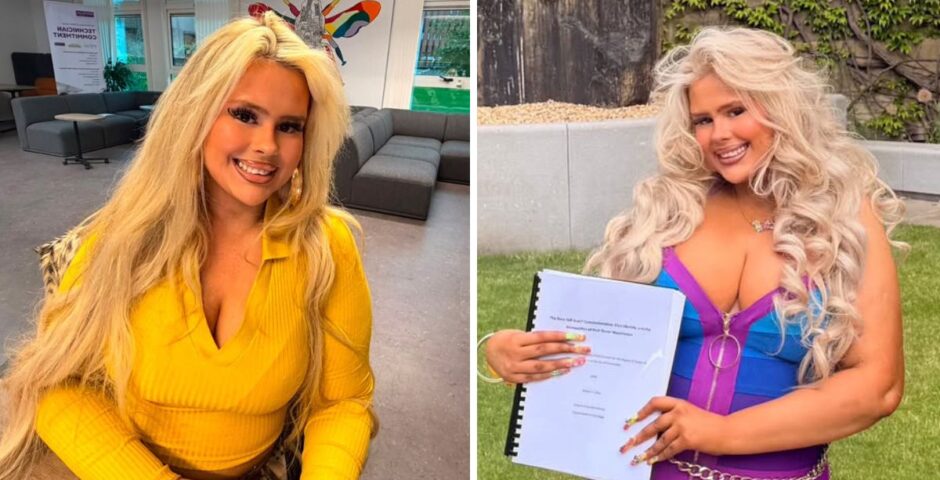
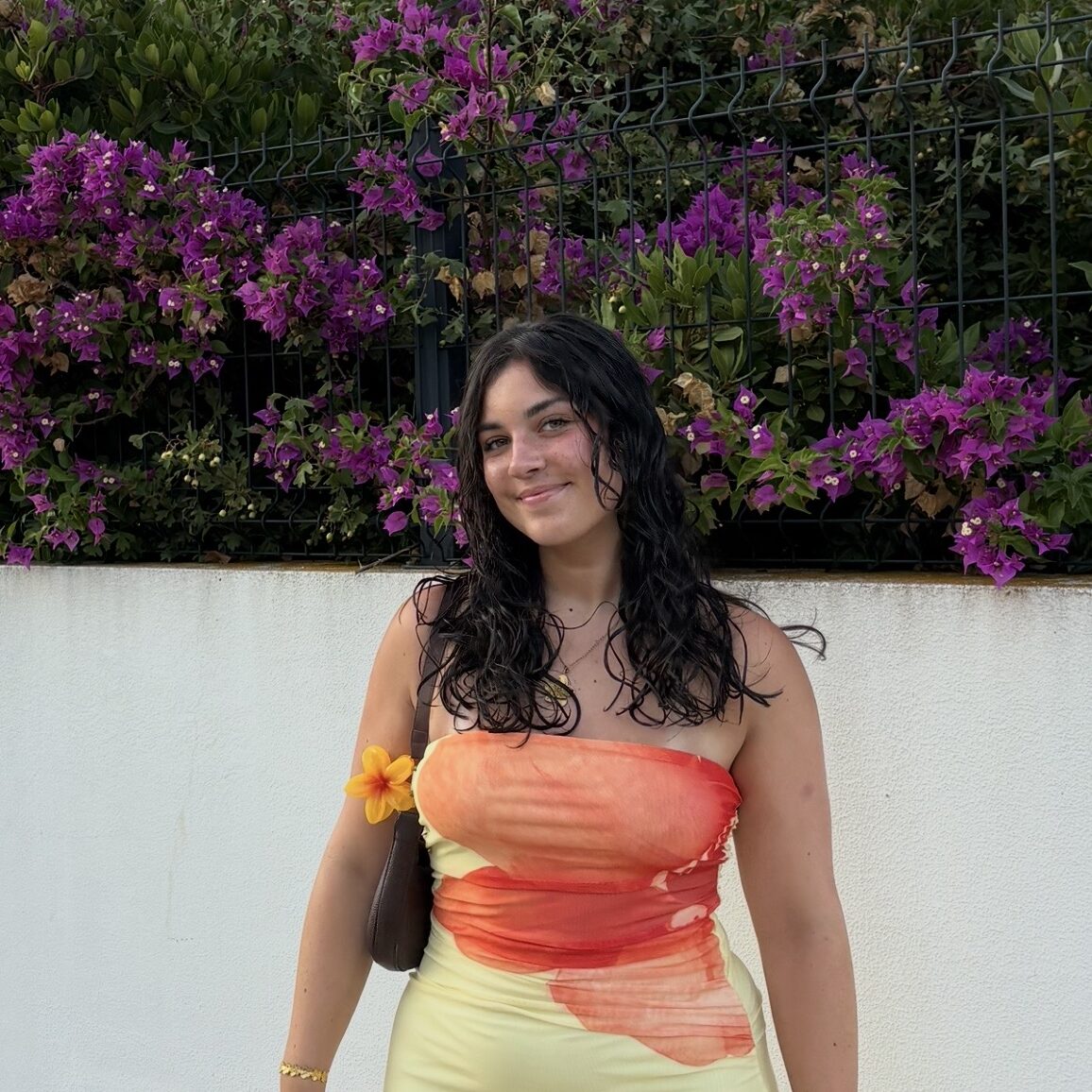
You may have seen Ashley Collar, aka @theblondeacademic, on your TikTok FYP – or even sitting in your lecture. A proudly council-estate-raised, hyperfeminine, neurodivergent lecturer, sociologist and researcher, Ashley has recently submitted her PhD at the University of Manchester.
Across TikTok and Instagram, Ashley shares what it’s like to navigate academia as a working-class, neurodivergent woman who doesn’t fit the traditional academic mould. Inspired by the likes of Beyoncé, Zara Larsson and Elle Woods, she’s challenging the idea that academics have to look or act a certain way – proving that you can wear rollers, love pink and still be an academic weapon.
Ashley spoke to The Tab about making academia feel more accessible, embracing femininity and why being clever and being feminine have never been opposites.
‘I want to challenge the idea that intelligence has a particular appearance, voice or personality’
@theblondeacademic
When we asked Ashley what people assume wrongly about her as an academic, she highlighted the traditional idea of an academic who “spends every minute of their life reading, writing, and working on their career.” She said: “Academics are also allowed to have interests and identities outside their work.”
“I love going out for a boogie, watching television, shopping, and making TikToks and other social media content. None of those things undermine my intelligence or how seriously I take my work,” Ashley said.
“People also sometimes assume that I am a ‘dumb blonde’, which is partly why I have started trying to reclaim that label. Women already face significant structural barriers within academia, but there is an additional level of scrutiny placed on women who are visibly feminine.
“People frequently comment on my appearance and accent, often in ways that seem intended to undermine or question my merit and credentials. Rather than allowing those assumptions to make me change myself, I want to challenge the idea that intelligence has a particular appearance, voice or personality.”
‘This kind of misogyny exists everywhere’
@theblondeacademic Exactly why I won’t stop posting, I must be doing something right! #uni #dr #phd #lecturer #academia
When asked about some of the hateful comments she had received, Ashley told The Tab: “I have experienced my appearance being sexualised in ways that suggest people find it unbelievable that someone who looks like me could achieve academically. It can feel as though femininity and intellectual ability are viewed as incompatible.”
She described some of the assumptions and comments she had faced during her time in academia: “I have [even] had people question whether my written work was genuinely mine or suggest that it must have been ghostwritten.”
Ashley argued that even within disciplines considered liberal or progressive, people often hold harmful assumptions about women in academia: “It is unfortunate, but this kind of misogyny exists everywhere.”
‘I genuinely feel most at home in the classroom’
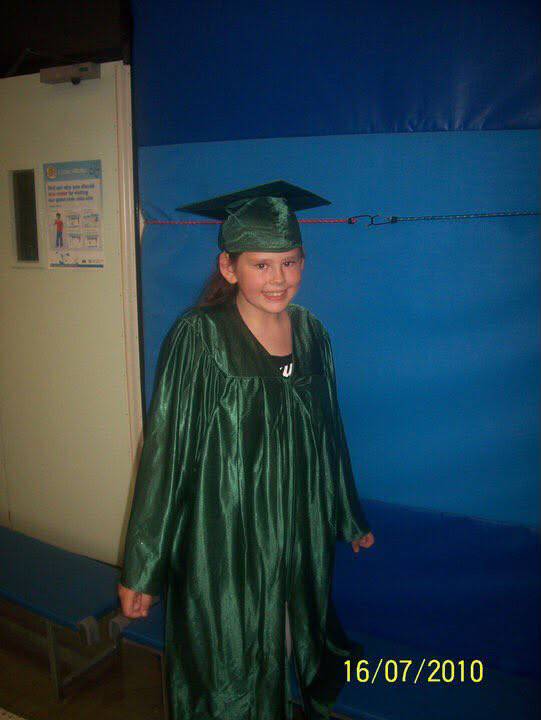
Ashley told The Tab that the most rewarding part of her academic journey has been her interactions with students through teaching: “I have always wanted to be a teacher, so teaching has consistently been my main passion, even more so than research.
“I love stepping into a classroom and leaving with new knowledge that has been formed through conversations with my students. Teaching is never a one-way process. I am constantly learning from students, reconsidering my own ideas and reflecting on how I can improve my teaching practice.”
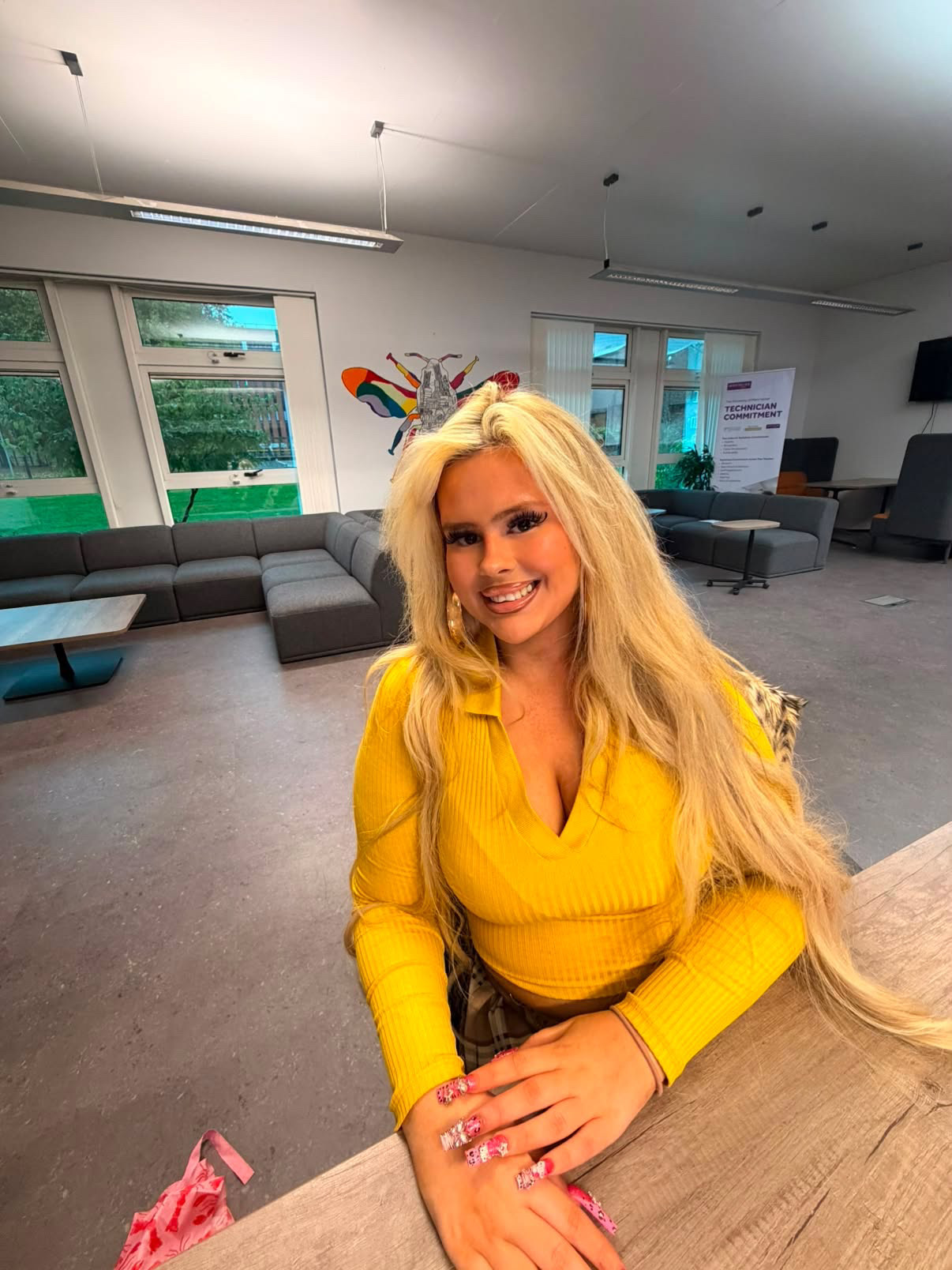
She also highlighted the unique immediacy of teaching: “You can see the moment when a student begins to understand a difficult concept and then uses it to think critically about the world around them. Research can be incredibly rewarding, but it can also be a long and sometimes tedious process. In teaching, you often see the impact of your work unfolding directly in front of you.”
Ashley said of her experience teaching: “I genuinely feel most at home in the classroom. I have sometimes experienced a sense of non-belonging within the research world because I do not see myself as overly theoretical or interested in appearing intellectual for the sake of it. I am much more interested in using my own lived experiences, and those of others, to facilitate meaningful conversations.”
Most Read

‘Personally, I value authenticity, so I dress for myself’
@theblondeacademic
When asked why she challenges expectations about how lecturers should look and dress, Ashley told us: “Academics are employed because of their knowledge, skills and ability to teach, research and contribute to their field. As long as someone is committed to their work and professional development, I do not see why their clothes, makeup or personal style should be treated as a problem.”
She also suggested that “students often relate strongly to lecturers who look or sound a little different from what they expected”, and highlighted the importance of self-expression in reflecting the diversity of student populations: “Seeing an academic who is authentic and comfortable being themselves can help students recognise that they do not need to erase parts of their identity to belong or succeed within higher education.”
‘Much of what I do stems from wanting better opportunities for people with backgrounds like mine’
@theblondeacademic Long video sorryyyyy #phd #manchester #uni #sociology #diva
Ashley’s research is shaped by her lived experiences and a desire to challenge “patterns of injustice and inequality” in higher education.
Growing up on a council estate in a large working-class family inspired her focus on widening opportunities for underrepresented students. She is particularly interested in the experiences of working-class and neurodivergent students, as well as the “hyperscrutiny” faced by hyperfeminine women in academia. She also hopes to explore the underdiagnosis of neurodivergence in Black communities in future research.
Ashley told us that the central theme of her work is that it asks who is being excluded, whose voices are overlooked, and how inequalities are reproduced.
‘Rather than allowing imposter syndrome to swallow you up, try to channel it into something positive and productive’
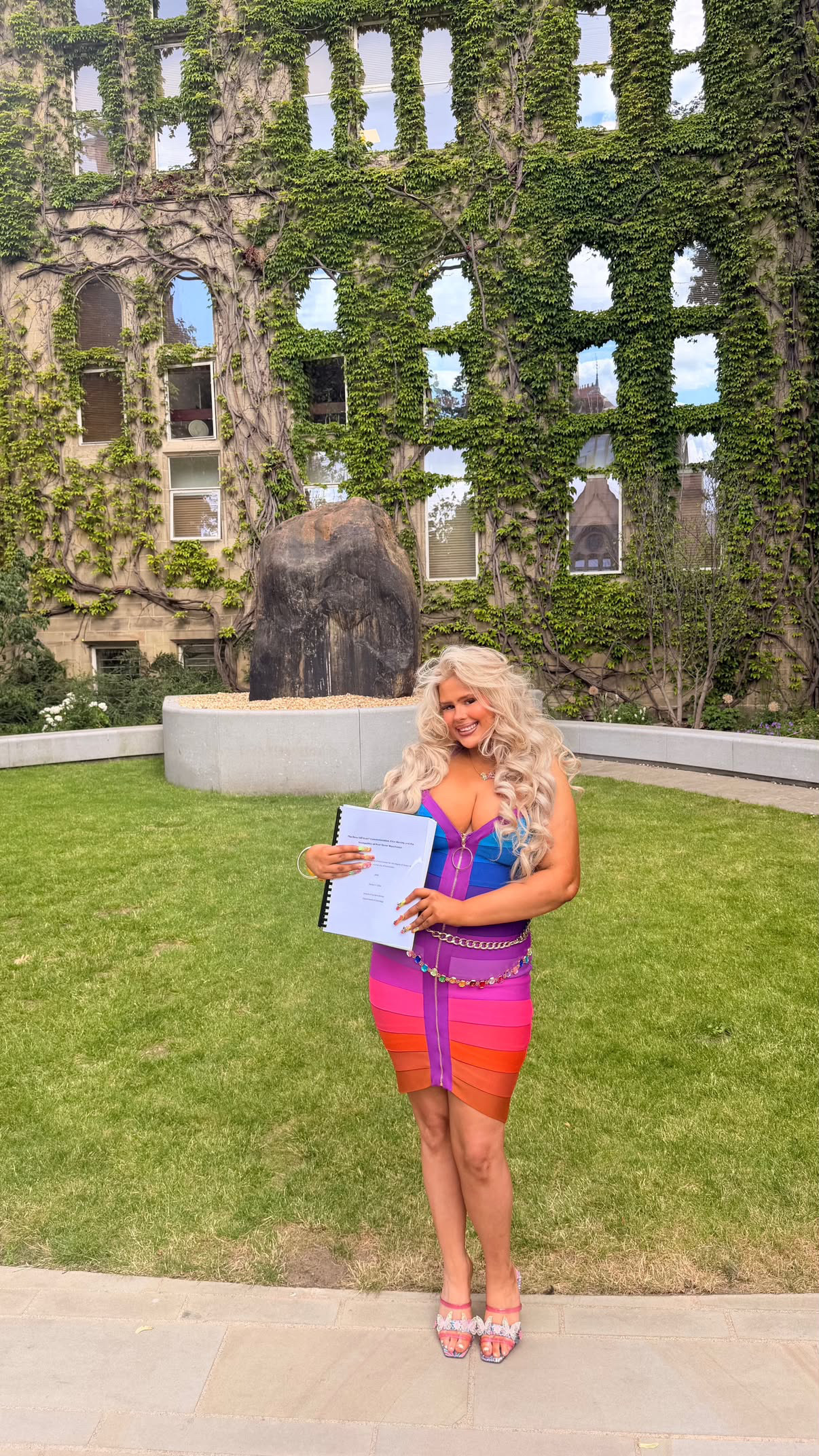
On imposter syndrome (particularly when experienced by working-class and neurodivergent students), Ashley said: “When you enter spaces that were not historically designed with people like you in mind, it can be easy to interpret that discomfort as evidence that you do not belong.”
Her advice for working-class and neurodivergent students was “rather than allowing imposter syndrome to swallow you up, try to channel it into something positive and productive.”
For Ashley, sharing her experiences online helped her find community with people who felt similarly: “There is something powerful about realising that what feels like an individual insecurity is often connected to much wider structural inequalities.”
‘Imposter syndrome is not the only barrier’
Despite the prevalence of imposter syndrome within these groups, Ashley highlighted other barriers: “Working-class and neurodivergent students are also less likely to have been taught how to ‘play’ the academic game. They might not know which opportunities exist, who to speak to or which questions they are allowed to ask.”
She encourages students to book meetings with tutors and make the most out of office hours: “You could discuss something you found interesting in class, ask about an issue in the news or talk about an area of research that interests you. Lecturers usually really enjoy these conversations, and we remember the students who take the time to engage with us.”
She highlighted the opportunities these relationships sometimes bring, including additional support, research experience, references, careers advice, or postgraduate study: “Do not assume that other students naturally know more than you. In many cases, they have simply had greater access to the unwritten rules.”
Ashley’s (beautiful!) PhD acknowledgements included the lines: “For every working-class kid who was underestimated, overlooked, or told they would not make it. May you always remember you were never lacking ambition, only access.”
For more, like The Tab on Facebook.

Latest
Missing 13-year-old found in Manchester city centre after eight day search

Police have confirmed the teenager is safe and well
Who Lizzie Borden’s sister Emma was and if they were close, because Monster gets it all wrong

She never got married for a start
The real life Lizzie Borden house is still standing today, so here’s what it’s used for

It’s one of the most visited true crime landmarks
What Lizzie Borden was actually like in real life, according to the people who knew her
Monster keeps describing her as ‘plain’
Was Lizzie Borden in love with her maid Bridget? The real life theory around her sexuality
People dug up notes and have tried to prove the theory for decades
Calling all aspiring journalists! How to join The Bristol Tab

Come to our open meeting on the 28th of September at 8pm at The Beckford (In Senate House)
Stop what you’re doing: The King’s Tab is looking for new writers AND content creators

Come to our open meeting on Thursday 1st October, 5pm at The Vault!
Channelling your broke uni student lifestyle
Not everything needs to be accompanied by a £5 iced latte, here’s how to be more mindful
The York Tab is recruiting new writers and we want YOU!

Open meeting Monday 28th September, 6pm in SLB/004!
Here’s who the uncle in Monster: The Lizzie Borden Story was, and what Netflix makes up

John Morse really did stay in the Bordens’ house
Er, Lizzie Borden’s meeting with the actor Nance O’Neil was nothing like Netflix’s Monster
Their paths didn’t actually cross for another 14 years
With 600 alleged killings, this minor character in Lizzie Borden should have been the Monster

HUGE missed opportunity
Did Andrew Borden have a stutter? Charlie Hunnam breaks down accent and voice in Netflix show
The actor has fully explained it
Elektrik Warehouse responds to alleged ‘crowd crush’ concerns at Shoshi event

‘It was just lucky nothing insanely bad happened’
Uni of Edinburgh confirms 25 days of strike action over five weeks, affecting Welcome Week

Am email sent to Edinburgh University students read ‘staff are not obliged to tell us if they plan to take part, which means we cannot tell you who is or is not’

There’s a really smart way to hack your Spotify Wrapped results for 2026 – before it’s too late
The cut-off for data tracking is very soon!
Meet OnlyFans’ gay ‘golden boy’ Ashton, and the thirsty clip that’s earned him 33 MILLION views
The clip is seconds long, but it leaves an impression
Real-life significance of Lizzie Borden’s period and if she suffered from menstrual problems
It’s a big part of Monster: The Lizzie Borden Story
My straight boyfriend does gay OnlyFans, but I’m scared he’ll leave over one thing he keeps saying
He replied, ‘It’s always been my rule since day one: If the cameras are on, it’s not gay’