
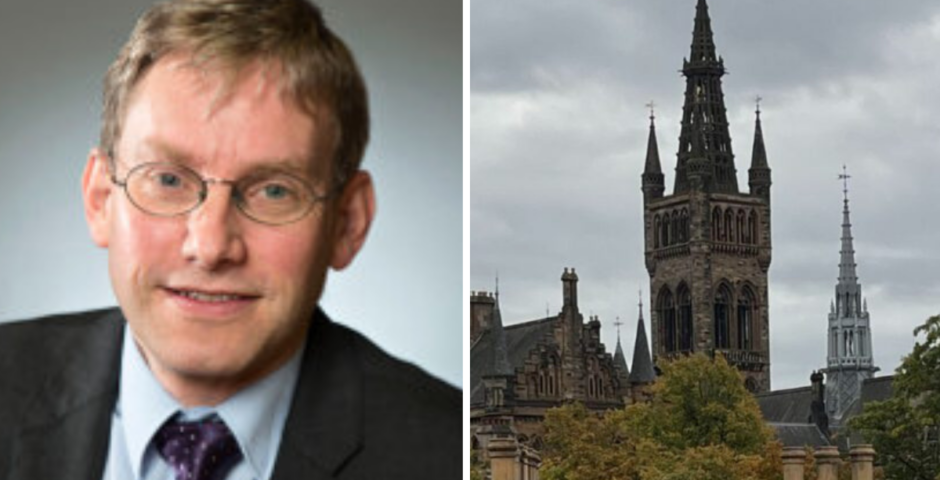
Glasgow University principal defends his £319,000 salary in financially trying times
‘I applied for a job, got a job offer, and said yes’

The University of Glasgow’s principal has defended his high salary in a new interview with The Herald.
Professor Andy Schofield received a pay increase upon becoming principal, meaning he now earns £319,000 per annum.
This is in an environment that faces “tough choices” according to Schofield, this often alludes to redundancies on the horizon.
This comes at a time when the Scottish higher education sector has seen strikes and boycotts, often resulting in many universities cutting staff and courses.
The University of Glasgow itself has largely avoided tough financial cuts so far. However, in the interview, Professor Schofield explained he is not able to rule out “tough choices” in the university’s future. It appears that vacancies are already being left unfilled, and staff are being asked to reduce costs as much as possible.

via Unsplash
It must be considered: Is the pay discrepancy fair in these circumstances? When asked this directly Professor Schofield said: “I suppose what I would say is, like any job I applied for, they said this is the pay, and then you say yes or no. I’ve never negotiated a salary in my life. If someone says, ‘This is what we think you’re worth,’ I’ll say yes or no.
“It’s unusual for someone to be doing a job they applied for, and then for the employer to say tomorrow we’re going to pay you less than what we paid you today.
“But you can always do that at points of change. And that’s not to say that at points of crisis, institutions might put pay freezes in place. During the pandemic, for periods of time, leaders took cuts — that’s what I did — for a short time.”
He then concluded: “There’s no good answer, other than I applied for a job, got a job offer, and said yes. If the world changes around me, then you make your own judgments.”
While this is a frank response, it cannot be ignored that such a large salary comes on the tail of financial savings throughout the university, especially with the principle admitting “tough choices” could be on the horizon.


Professor Schofield then turned to the question of investments in universities and what they can deliver. His believes that University of Glasgow is one of Scotland’s largest drivers of economic growth, one that doesn’t upsell that point enough.
“If there were a magic wand one could wave for the nation, you’d see that economic growth would unlock an awful lot. Statistically, universities are one of the best generators of economic growth.”

Schofield wants the university to be at the forefront of social justice, science, health and medicine, focused on working with local businesses, colleges and other universities as well as pushing international collaboration. He believes it is this vision that explains investment in leadership.
While this may be the case, for individual staff members, especially those losing contracts it must feel frustrating to see a six figure salary, raising some ethical questions about leadership salaries.
On the financial pressures, Schofield explained: “It’s the job that I have of balancing the books and making sure that a university that’s 575 years old this year has another 575 great and glorious years ahead of us.
The University of Glasgow and Professor Schofield have been contacted for comment.
For more of the latest news, guides, gossip and memes, follow The Glasgow Tab on Instagram, TikTok, and Facebook.
Featured image (before edits) via Bham physics under Creative Commons Attribution-Share Alike 4.0



Latest

The full 911 call Mica Miller made before she died, as bits got cut from Death of the Pastor’s Wife

Dispatch tried to ring her back multiple times

Is JP Miller still a pastor after Death of the Pastor’s Wife? Inside his new reality

JP is awaiting trial, but he’s not stopped preaching

The best Liverpool societies to join in September as a student with no hobbies

Because unfortunately, crashing out over your situationship doesn’t count as an extracurricular
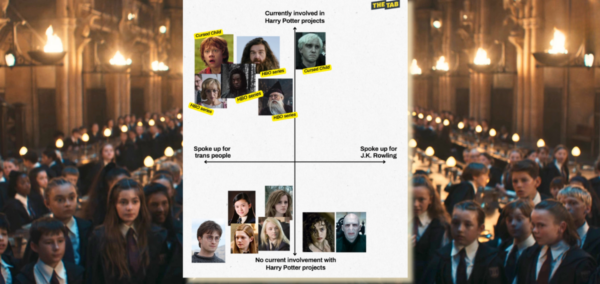
A matrix of where the OG Harry Potter film cast stand on the new show and on JK Rowling

i need a visual aid to keep track of this

Lost Village 2026: The only UK festival that’s totally worth getting drenched for

Can I go back to dancing on bouncy cars in the forest?


Sick of vodka and lem? Here’s everything else you can be drinking this Freshers’ Week

It’s time to get creative with our pre-drinks

Don’t want to waste your York Freshers’? Here’s everything NOT to do
How to be a silly little fresher without seriously regretting your life decisions

I found the men in Lily Phillips’ ‘gloryh*le’ stunt, and they have *very* x-rated backstories
Not one of the men being called ‘The Juicy Santa’

Wait, does everyone have this very same scar? People are only just realising where it comes from
Why does it look the same on everyone?
University of Oxford offer holders lose High Court challenge to ‘visa brake’

The policy prevents nationals from Sudan, Afghanistan, Cameroon and Myanmar from applying for student visas

Four brand new storylines in the Harry Potter series that weren’t in the books or films
They’ve never been seen before


‘It ain’t over till it’s Dover’: Dover Castle to close at the end of October

One person described the closure as an end of an era

As Freshers’ Week approaches, here are five things NOT to do as a Leeds fresher

DON’T. BUY. THE. WRISTBAND.
‘Make stuff’: Toff is called out for posting massively out of touch and ‘icky’ job advert
It’s basically 50 ambiguous jobs all in one, with no listed salary

Side-by-side shots of the Harry Potter trailer and OG films have exposed infuriating details
Harry Potter and the Why Are We Doing This is just a few months away
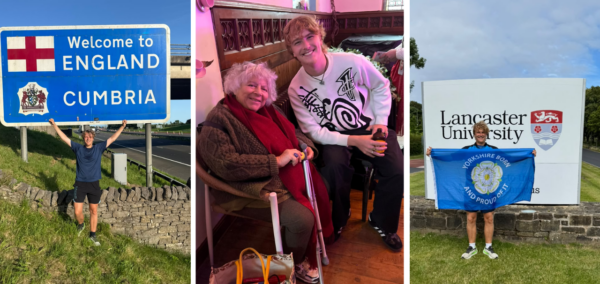
Uni of York student Rafe Coleman-Chadwick officially becomes youngest person to run the UK
Rafe told us about the challenges, as well as garnering support from celebrities like Miriam Margolyes and Rob Rinder

People have spotted the one major problem with HBO’s new Harry Potter, as the trailer releases

No, it’s not JK Rowling