
Here’s exactly what the merger with Cranfield University could mean for KCL students
No, the universities name will not be changing

Yesterday, King’s College London (KCL) announced its plans to merge with Cranfield University in Bedfordshire.
The proposed merger will be implemented from August 2027 to create a UK university tailored for an evolving world, with enhanced opportunities and resources for students, as well as a focus on inter-disciplinary courses.
Although I would have graduated by then, I can’t help but think about the impacts that this could have on current first year students as well as incoming freshers.
So, here’s what the merger between King’s College London and Cranfield University could mean for you as KCL student.
Will it impact my current modules?
In an email sent to students and staff, the university stressed that the merger will have no effect on the content of your course or the degree you graduate with.
Will some of the universities departments and staff be relocated to Cranfield?
At the time of writing, the university has emphasised that no changes will happen for the time being. However, King’s has not ruled out the possibility of moving some staff there in the future, as they explained that they are still “in the early stages of this proposed merger” but that any changes will be “considered carefully and thoroughly, and over time.”
Will the universities’ names change?

King’s College London (KCL)
A big question I’m sure we all have is whether the university will change its name. Despite previous university mergers, such as ones between City University London and St George’s in London resulting in name changes, King’s has explained that there will be no such changes to the institution. Instead, it said: “The name of King’s College London is not changing. On merger Cranfield will become a constituent part of King’s, using the King’s name and branding.”



The university explained that this is because of “Cranfield’s unique heritage and longstanding specialisms are globally recognised and King’s is committed to safeguarding and celebrating these going forward.” So it looks like it’s just Cranfield that is getting the name change!
Who is going to be running the merged universities?
King’s has confirmed that Professor Shitij Kapur will continue as vice-chancellor and president of King’s College London. Meanwhile Professor Dame Karen Holford, chief executive and vice-chancellor of Cranfield University, will lead Cranfield until the merger is completed in August 2027.
How will the merger benefit me?
According to the university, King’s students will benefit from “world-leading facilities and capabilities in areas such as advanced manufacturing, bio renewables, water security and aerospace – including access to specialist environments and equipment that are rare within UK universities.”
The two universities coming together will also “expand opportunities for interdisciplinary learning, collaboration and exposure to industry, helping to prepare our students for a wider range of careers and enabling us to contribute even more strongly to the challenges facing society and the wider world.”
If you study engineering, then you’ve really struck gold as Cranfield Universities engineering department is ranked fifth in the UK and 55th in the world for engineering, mechanical and aeronautical studies as per the QS World University rankings by subject 2026.
Still have questions about the merger? You can read the full guidance here.
For more of the latest news, guides, gossip, and memes, follow The King’s Tab on Instagram, TikTok, and Facebook.
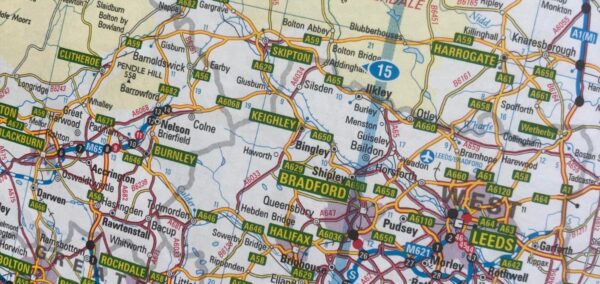
Featured image via Google Maps and Unsplash



Latest

Lizzie Borden’s doctor’s full court testimony, where he recalled finding Andrew and Abby dead

‘His face was hardly to be recognised by one who knew him’

A weapon in the Lizzie Borden case was never found, and it might not have even been an axe

Many different theories were investigated

Lizzie Borden wasn’t right for Monster, and the ‘female rage’ reason they chose her makes it worse
There was so much wrong with it

The full Celebrity Traitors 2026 episode schedule as day change is confirmed
Don’t get caught out when it returns this week


Ryan Murphy picks his favourite American Horror Story season, and it’s a controversial choice

It’s Sarah Paulson’s least favourite

Why the Love Island 2026 Islanders are suddenly posting ‘tart’ on all of Lorenzo’s posts
People think it’s a divide
Former Newcastle student raped in Freshers’ Week speaks out on potential dangers

“I didn’t know what had happened to me… I came home and was very confused”


The 20 easiest UK universities to get into, based on accepted students’ grades

University of Roehampton students have a D and two Cs on average


Here’s what joining these Cardiff Uni societies says about you

Things you need to know before joining a new society

A favourite from the Love Island 2026 cast is getting an All Stars return
A second chance is well deserved

Right, it’s time to lock in: Here are 10 things every Cardiff Uni final year needs to know

It’s never too late to make this year the best one yet

Charli XCX’s viral VMAs reaction wasn’t about Taylor Swift, so here’s what actually happened
They’ve been surrounded by rumours for years

University sued over alleged fraternity gang sexual assault and punishing accused with essays
The members discussed the attack over Snapchat

Here’s what TV show your Cardiff Uni accommodation would feature in

Everyone’s favourite show is finally back for another season

The major celebs who skipped the VMAs 2026 and why, despite having multiple nominations
Ariana Grande was nominated eight times but didn’t attend

All the advice freshers need to survive first year: Love, Cardiff Uni students who survived

From YOLO to locking in, here’s all you need