

Review: Medea
‘Stronger than lover’s love is lover’s hate. Incurable, in each, the wounds they make’

Medea will always have a special place in my heart, if only because it was the sole element of my personal statement that my Cambridge interviewers briefly lowered themselves to acknowledge before returning to their preferred hobby of staring at me in silence.
So when the opportunity arose to review this production, I was embarrassingly quick with my hand in the air. Some people peak academically. I seemingly peak in taking up opportunities to discuss infanticidal women. (What else is an English degree for?)
I scarcely know where to begin, because this production was one of those rare performances in which every element seemed to feed parasitically and beautifully off the others. Strip one component away, and the entire thing collapses like a fresher after four 1441s in K-bar.
The music, the staging, the performances, the costumes, the lighting: All of it worked in horrifying, intoxicating, but still horrifying, harmony.
via Anna Gungaloo
I’ll begin with what I genuinely consider the co-lead of the show: The extraordinary live music, written and performed by Rich Mandal. I had been told before arriving at Cambridge that I would encounter a range of talent. Still, there is something profound about someone not only composing an entire score but then conducting and then performing it live within the production with absolute precision.
Surrounded by the immensely talented musicians, the band occupied centre stage both literally and emotionally, and rightly so. The atmosphere of this production depended upon them. Every scene throbbed with tension because of that music: sultry, haunting, seductive. Threatening in the way all the best Greek tragedies ought to be. Mandal’s score was the collective pulse of the play itself.
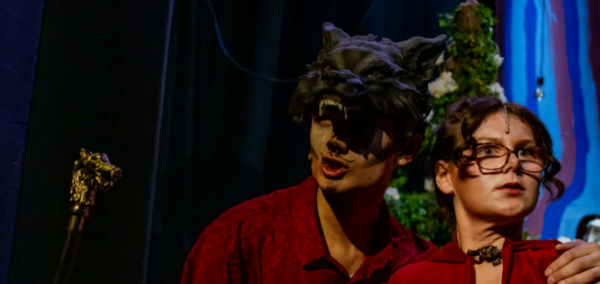
Then, of course, there was Medea (Mina Strevens).
via Anna Gungaloo
Well, goodness me.
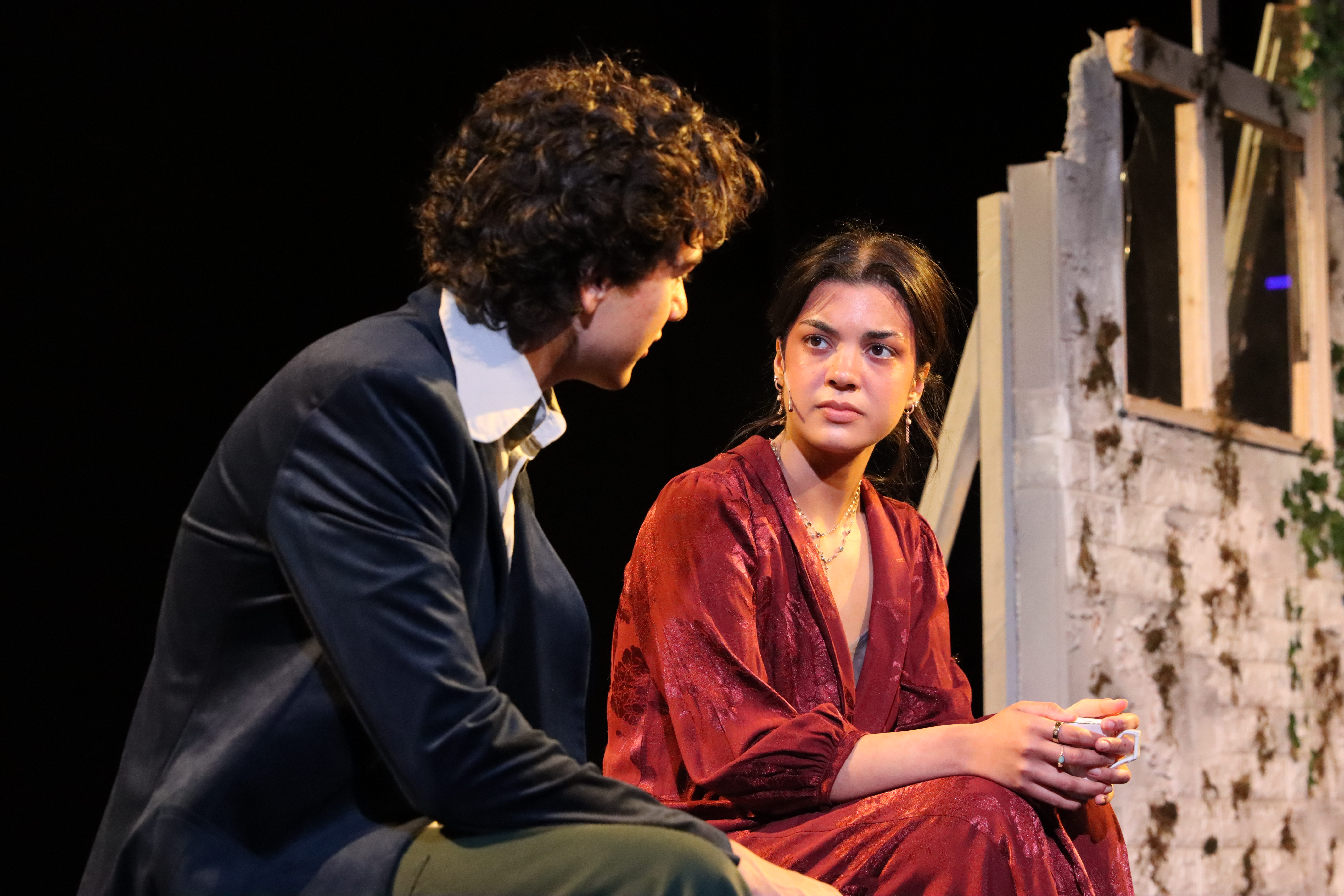
The moment Strevens stepped out in that scarlet silk dressing gown at the beginning, I think the entire audience gasped, and collectively wondered why Jason had ever left her in the first place.
His loss, frankly.
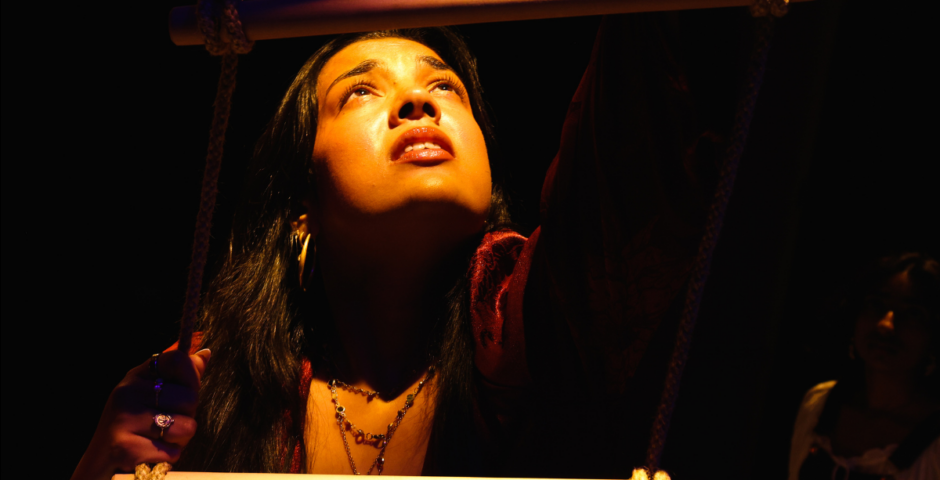
Mina Strevens’ performance was magnetic: Seductress one moment, terrifying the next, and then suddenly so emotionally raw. You almost came to resent her for making you sympathise with someone plotting the murder of her own sons. Strevens managed the impossible task of preserving Medea’s haughty grandeur whilst still allowing flashes of genuine vulnerability to emerge beneath it. This is not an easy role. Medea cannot merely be played as “mad”; she must be intelligent enough that the audience understands precisely why everyone around her fears her. This actress understood that perfectly.
Amidst an already exceptional cast, she held the stage with observable confidence. There are performers you leave the theatre remembering, and then there are performers you leave slightly irritated by because you realise you may never be that talented yourself. She belongs firmly in the latter category.
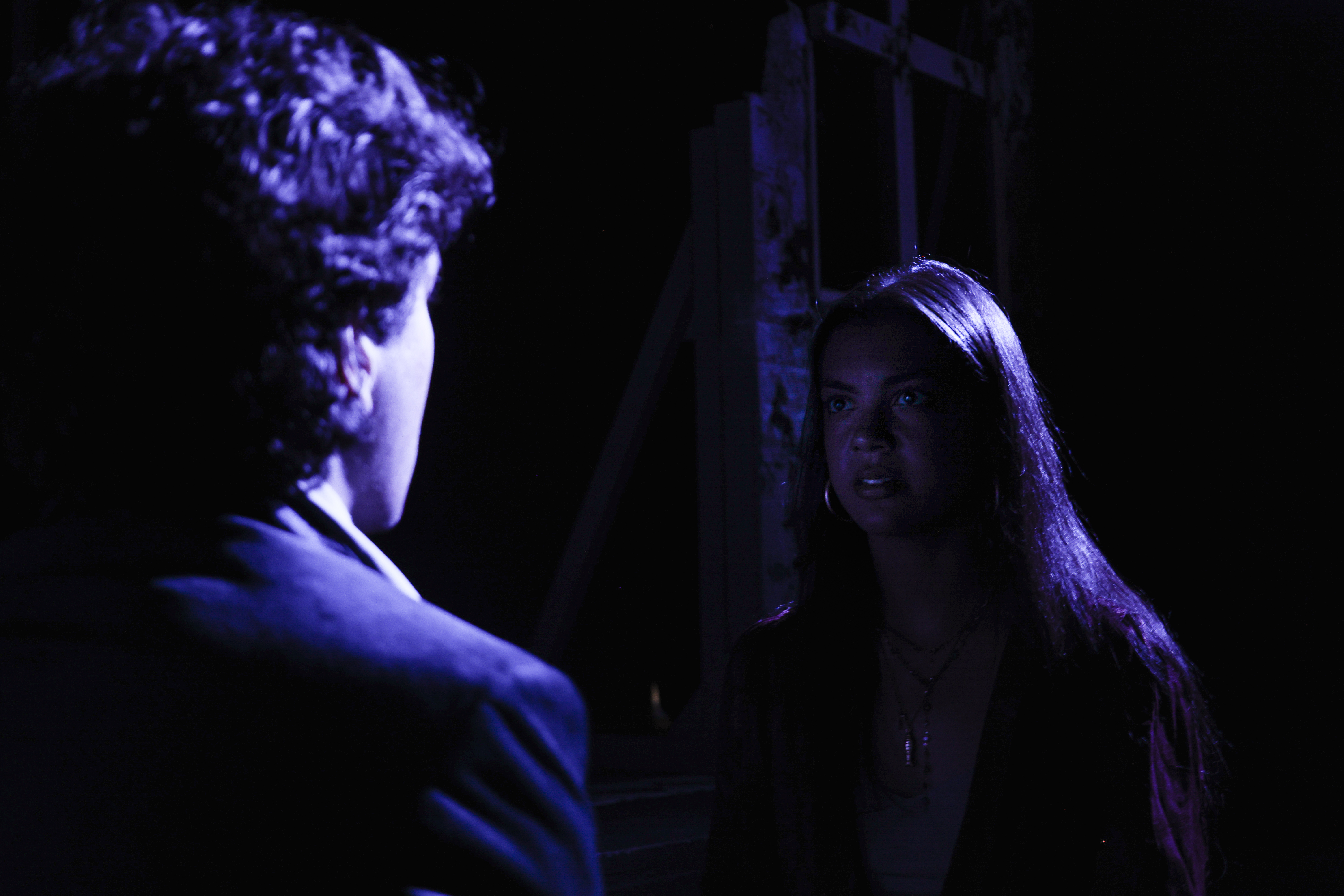
Jason, played by Will Atiomo, deserves enormous praise as well. During the interval, my friends and I were genuinely startled to discover this was his first Camdram credit, because he performed the oily confidence of someone who has been emotionally devastating women for years, unnervingly well. His Jason was manipulative, arrogant, sinister, and somehow still charismatic enough that you understood why Medea once loved him. It is a deeply difficult balance to strike. Jason cannot simply be played as a pantomime villain, much as Medea cannot just be mad.
I believe the tragedy only works if there remains something faintly attractive about him, some remnant of the charm that once convinced Medea to betray her home. This performance captured that dynamic perfectly. You hated him, but you also were drawn to him, which made you hate him all the more.
via Aya Krystonovic
The chorus were magnificent throughout. What a way to open the show. Their presence loomed constantly behind the action, less a traditional Greek chorus and more a collective organism of gossiping women. Vocally and physically, they carried enormous portions of the production’s emotional weight, and did so excellently.



It is frankly shocking that this is the work of a fresher directing an ADC mainshow. Some people spend their first year at Cambridge learning how to use a washing machine, whilst others reinvent classic Greek tragedies. (I was unfortunately in the former.)
Dhyan Ruparel’s decision to place the band centre stage was inspired, because it transformed music into something inescapable and integral to the bloodstream of the play. Likewise, the continual physical presence of the chorus created a suffocating atmosphere in which Medea never seemed entirely alone, always being watched and judged.
The adaptation itself was superb: Sharp, emotionally intelligent, and deeply aware of the strange eroticism and power dynamics running through Euripides’ text. Ruparel clearly understood that Medea is not merely about revenge. It is about humiliation, pride, spectacle, performance and desire. It is about what happens when someone decides that being feared is preferable to being pitied.
Finally, visually, I must take my hat off to lighting, stage managers and costuming; this production was almost offensively beautiful.
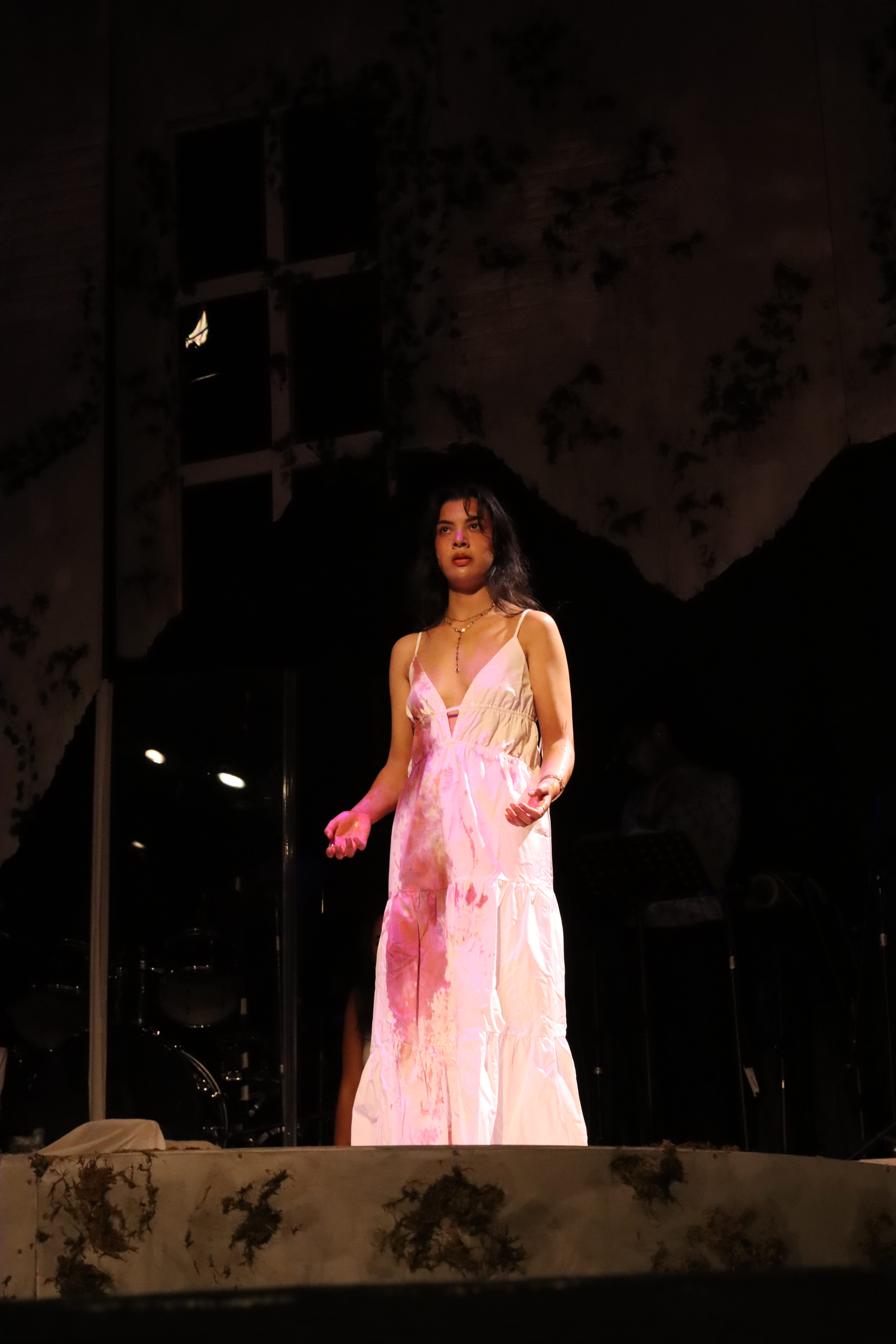
The lighting design deserves special praise, particularly after the wedding sequence. The simulated fireworks were a genius idea that was so well executed. And then the costumes. That transition from Medea’s scarlet silk gown into the elegant silver evening dress felt like foreshadowing to the poisoned bridal gown to come. The transition was so smooth it boarded into dance.
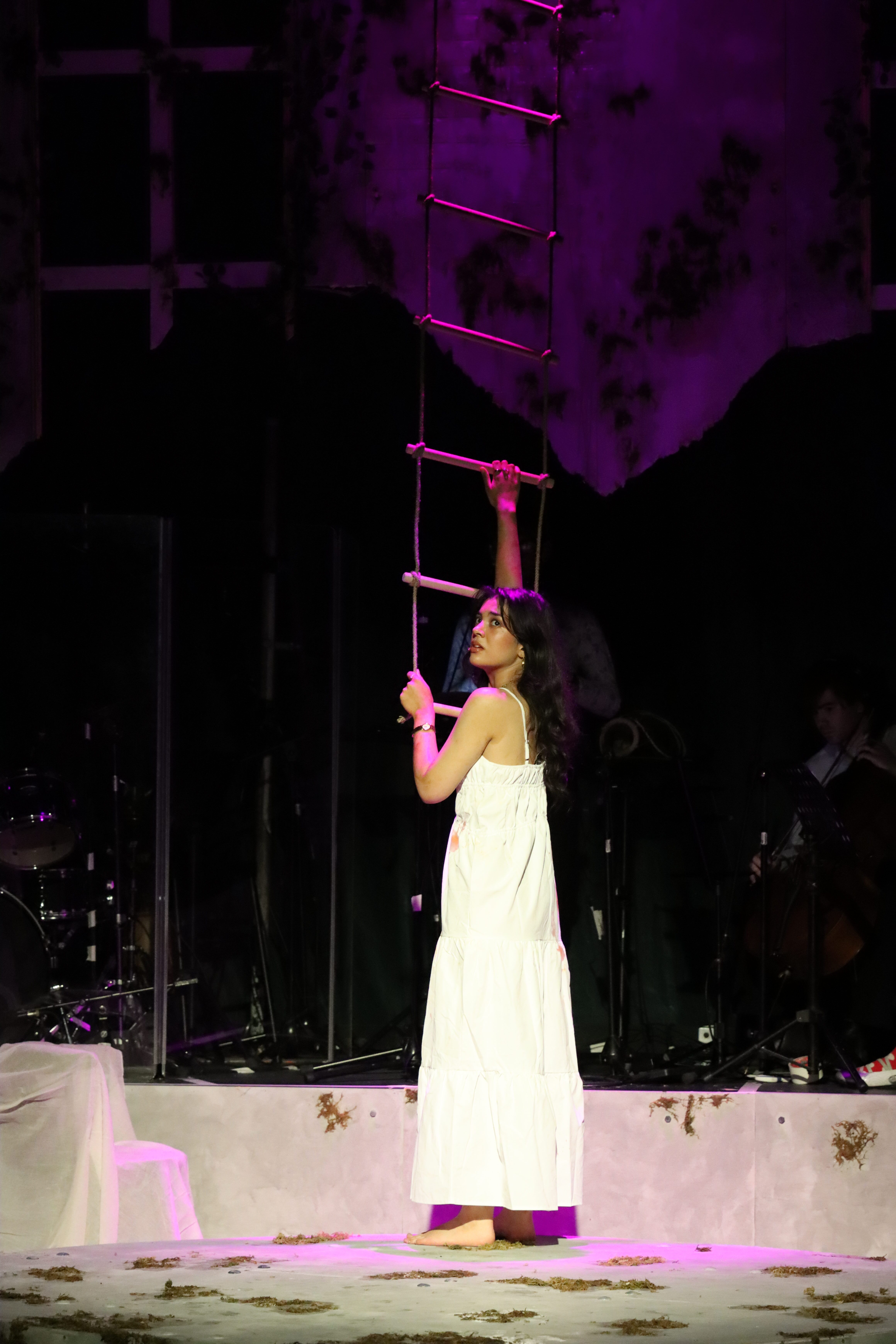
via Anna Gungaloo
If I were to offer one criticism, it is perhaps less a flaw than a matter of personal allegiance to Euripides himself. This production worked incredibly hard to render Medea sympathetic, and succeeded wholly in that endeavour. By the final act, I was alarmingly close to morally supporting the murders purely so Jason could not reclaim the children. The production embraced Medea’s fury, her intelligence, even her cruelty, and demanded that we respect it.
Which is precisely why I found the ending somewhat baffling.
The portrayed grief-induced breakdown, perhaps even implied suicide, felt strangely at odds with the rest of the production’s interpretation.
For me, the terrible magnificence of Medea has always resided in her refusal to apologise. Euripides does not give us a repentant woman crushed by guilt. He gives us something far more disturbing: A woman who wins! Medea murders her children, the princess, and Creon, then escapes divine punishment entirely in a dragon-drawn chariot, denying Jason even the right to bury their sons.
It is, to my mind, one of the most horrifying endings in drama precisely because it refuses moral comfort. Jason is finally stripped of his self-righteous composure and forced into genuine emotional devastation, while Medea remains terrifyingly composed. When he calls her monstrous, she does not deny it. She actually invites him to continue, not merely punishing Jason, but annihilating his fantasy of himself as reasonable and morally superior.
Earlier, he disguises his selfish ambition. By the end, all that rhetoric collapses into naked, raw and ugly grief. Medea exposes him not simply as cruel, but as ordinary: Another man shocked to discover that the woman he humiliated and disregarded possesses a command powerful enough to destroy him. And Euripides refuses us the satisfaction of a clean judgment. The gods do not intervene to condemn Medea, actually, if anything, they facilitate her escape.
I felt this production came extraordinarily close to capturing that terrifying grandeur, but ultimately softened it in its interpretation of the conclusion. Personally, I wanted Medea triumphant. Horrific, yes. Evil, perhaps. But utterly unapologetic. I do not think we got that; we got something still very good and interesting, but a very different interpretation from the original play’s ending. This left Medea still, somehow, defined by men’s influence on her life, rather than seeing her fly off on her dragons into the sunset. (Not saying she deserves a happy ending, just interesting to ponder how it changes the play to deny her one?)
Still- five stars from me!
For sheer production value, creative ingenuity, amazing performances, and remarkably confident direction, this, without question, is the best ADC mainshow I have seen in Cambridge. Congratulations to everyone involved. A genuinely exceptional production.
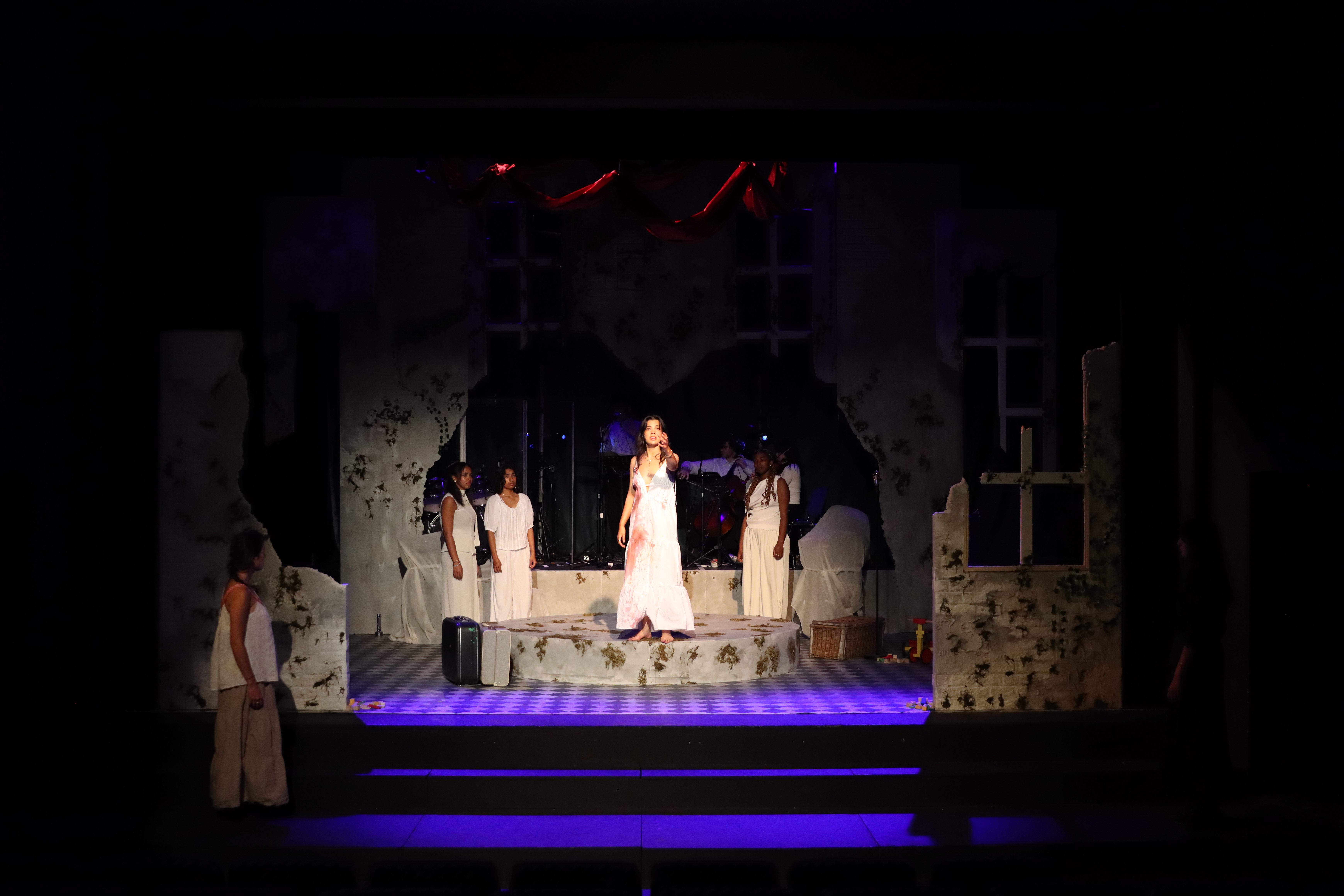
via Anna Gungaloo
Medea is still showing until Saturday 9th at the ADC Theatre – grab your tickets here!
For more of the latest news, guides, gossip and memes, follow The Cambridge Tab on Instagram, TikTok, and Facebook.
Featured image via Aya Krystonosic
Latest

This viral tool lets you customise your Apple Pay cards, and here’s how to do it

You can personalise the entire design

James Acaster could be the Celebrity Traitors’ recruit, as filming reportedly paused for him

It’s not much of a cliffhanger

The ridiculous fortunes of The Celebrity Traitors: Their net worths, from £500K to £50 million

One of them could legit buy the castle three times over

The Celebrity Traitors rules explained, as Richard E Grant immediately let slip he’s a Traitor
There’s actually a slightly confusing loophole
Celebrity Traitors’ Richard E Grant lost his wife to cancer after epic 38-year love story
She passed away in 2021

AHS 13’s Leslie Grossman explains jarring way all the seasons connect, and I’m even more confused
Sarah Paulson alone is playing five characters from different seasons

Gypsy Rose describes being ‘in disbelief’ as details of partner Ken Urker’s death are shared

The investigation is ongoing

Celebrity Traitors producer shares if Richard E Grant really slipped up with Traitor reveal
I was on the edge of my seat

Mum of Christa Pike’s victim wants killer to face same fate as her daughter in raw message
‘If I could have gotten in that room’

The latest we know about Christa Pike’s condition in hospital, one day after failed lethal injection
She has been left with ‘blistering and burning’ on her arm

Gypsy Rose Blanchard releases statement as partner Ken Urker is found dead aged 34
They share a child together

There are co-star dating rumours about A Different World’s fittest star, Cornell Young IV
There’s gonna be about a million disappointed people

Hannah Fry revealed her plan to stay ‘mischievous’ during Celebrity Traitors season two
‘I’m toxically competitive’

Where Miranda Hart has been as she returns to TV on Traitors, from health issues to new husband
It’s such fun to have her back on our screens

Where the brainy Celebrity Traitors cast went to university, plus what they studied

Of course loads went to Russell Group universities

Lizzie Borden never married, despite speculation about her relationship with Nance O’Neil
Netflix explored her relationships with women



As Christa Pike’s execution fails, her accomplice boyfriend is living a totally different life
He gave an interview from prison in 2026

Christa Pike is one of eight people in US history to survive execution by lethal injection
She is being treated in hospital

When will Georgia Toffolo realise no matter how many times she pretends to be relatable… she’s not?
She’s posted yet another video about money