I’m an Edinburgh grad with THREE degrees – but got rejected 200 times before finding a job
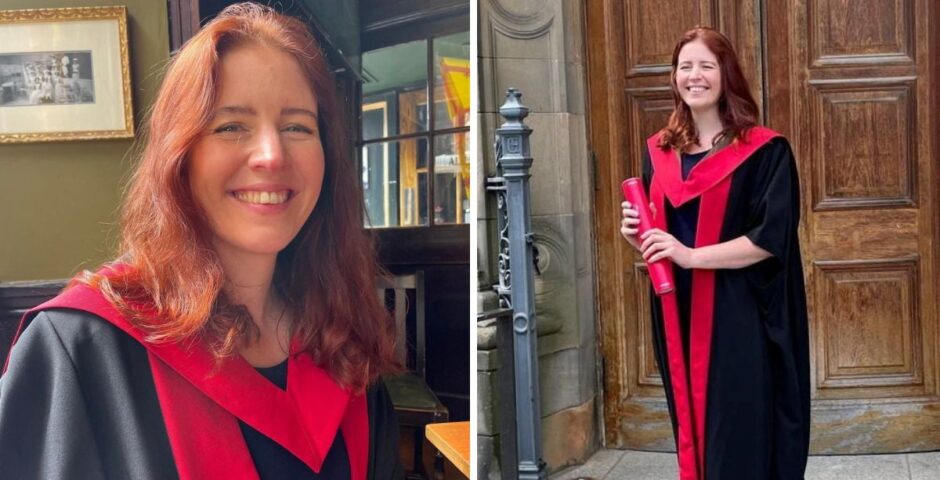
Sarah graduated with a PhD in 2024 and described her gruelling job hunt

An Edinburgh-based woman with three degrees has spoken out about feeling “betrayed” by the job market after it took 16 months and more than 200 applications to land an entry-level role – forcing her to juggle a second job to “make ends meet.”
Sarah Dallas, 32, graduated with a PhD in bio-engineering from the University of Edinburgh in July 2024, having completed her master’s in the same subject and achieving a 2:1 in her undergraduate degree in animal sciences.
She was looking to pursue a career in academia before switching to become a scientist and was told during her studies – which has now left her saddled with £75,810 in student debts after borrowing £47,787 – she was “on the correct pathway.”
But despite her impressive credentials, Sarah became “frustrated” after being knocked back for jobs.

Sarah applied for hundreds of jobs, via SWNS
Within 16 months of graduating, she sent over 200 job applications to various roles – from entry-level to senior specialists – and says 90 per cent of hiring managers “never bothered” to get back to her.
But when they did, she was told she was “overqualified” for junior positions, yet “lacked the industry experience” required for more senior roles – and it meant she relied on a part-time freelance gig for income.
In November 2025, Sarah finally landed an entry-level lab technician job earning £28,500 a year – while keeping her freelance shifts to “make ends meet” – as the salary is “not enough” to cover her living costs.
Despite this, Sarah said: “I have no regrets about doing my PhD. It was genuinely interesting.
“But more should be done to make students more aware about their use in the job market. There is some disillusionment that getting a PhD means you are guaranteed a career. But it doesn’t – especially in the sciences where industry experience seems more valued than academics.”
“It’s tough out there,” she added.

It took 16 months for Sarah to land a role, via SWNS
Sarah began her bio-engineering PhD in November 2018 with ambitions of building a career in academia, but over the course of her five-year doctorate, she “quickly realised” that teaching roles offered little long-term stability and turned her focus to industry-based positions in science, hoping it would be a stronger career path.
However, after graduating, Sarah has “struggled to secure a single role in her field, all the while her loan has grown to over £75,000 after £28,023 in interest has been added.
“At first, I was applying for jobs advertising for a masters and PhD,” she said.
“But I would get rejected because I lacked industry experience. So after a while, I started applying for more entry-level roles which only required an undergrad [but] I still kept getting rejected because I was too overqualified.
“Hiring managers didn’t want to take a flight risk and I felt like my expertise were being devalued.”
Over the course of 16 months, Sarah applied to over 200 jobs – from science communication to simple lab work.
She said only 10 per cent of hiring managers were “bothered” to reply, with only three resulting in an interview.

She now works as a lab technician, via SWNS


During this time, she worked as a freelance editor for a science journal – earning up to £600 a month – meaning she relied on multiple overdraft accounts to finance her life, leaving her £8,000 overdrawn.
But it wasn’t until November 2025 that she finally secured her first job as an entry-level lab technician.
“It’s a gruelling process,” Sarah said.
“I got ghosted so many times from my applications and you spend hours putting it together. I even asked to shadow for a bit unpaid just to have some industry experience, and no one took me up on that.”
She added: “You invest all this time and money and it’s hard not to feel defeated.
“I was lucky I made some connections during my PhD which helped get my foot in for my new job. Essentially nepotism got me there in the end.”
Sarah now earns around £1,800 per month as a lab technician.
However, she says the money is “completely swallowed up” by her expenses – including £1,025 on rent, £500 on bills, and £300 towards repaying her overdraft she accrued during her job-hunting stint.
As a result, she has to work at least 40 extra hours each month at her freelance job to “make ends meet.”
The additional £600 she earns goes towards food and other living costs, leaving her able to save just £50 per month.
She only repays £37 a month on her postgraduate loan and has since paid back £95.
“It’s not how I’d imagine my life as a 32-year-old to be honest,” Sarah said.
“My main job’s income is swallowed up on bills and debts while my freelance money is for actual living.”
She added: “I’m grateful to be in the job I have now – and it’s great I now have a fighting chance.
“But I still need to work an additional three hours a day on top of my regular nine-to-five just to get by. More needs to be done to make students aware of the reality of getting a job post graduating.
“I’m not one to discourage people diving into their passions. If you want a PhD, go for it.
“But please do some research on your fields job market and if industry or work experience is required.
“You will thank me for it.”
Featured image via SWNS

Latest

Lizzie Borden’s doctor’s full court testimony, where he recalled finding Andrew and Abby dead

‘His face was hardly to be recognised by one who knew him’

A weapon in the Lizzie Borden case was never found, and it might not have even been an axe

Many different theories were investigated

Lizzie Borden wasn’t right for Monster, and the ‘female rage’ reason they chose her makes it worse
There was so much wrong with it

The full Celebrity Traitors 2026 episode schedule as day change is confirmed
Don’t get caught out when it returns this week

Ryan Murphy picks his favourite American Horror Story season, and it’s a controversial choice

It’s Sarah Paulson’s least favourite
Why the Love Island 2026 Islanders are suddenly posting ‘tart’ on all of Lorenzo’s posts
People think it’s a divide
Former Newcastle student raped in Freshers’ Week speaks out on potential dangers

“I didn’t know what had happened to me… I came home and was very confused”

The 20 easiest UK universities to get into, based on accepted students’ grades

University of Roehampton students have a D and two Cs on average

Here’s what joining these Cardiff Uni societies says about you

Things you need to know before joining a new society
A favourite from the Love Island 2026 cast is getting an All Stars return
A second chance is well deserved

Right, it’s time to lock in: Here are 10 things every Cardiff Uni final year needs to know

It’s never too late to make this year the best one yet

Charli XCX’s viral VMAs reaction wasn’t about Taylor Swift, so here’s what actually happened
They’ve been surrounded by rumours for years
University sued over alleged fraternity gang sexual assault and punishing accused with essays
The members discussed the attack over Snapchat
Here’s what TV show your Cardiff Uni accommodation would feature in

Everyone’s favourite show is finally back for another season

The major celebs who skipped the VMAs 2026 and why, despite having multiple nominations
Ariana Grande was nominated eight times but didn’t attend
All the advice freshers need to survive first year: Love, Cardiff Uni students who survived

From YOLO to locking in, here’s all you need