
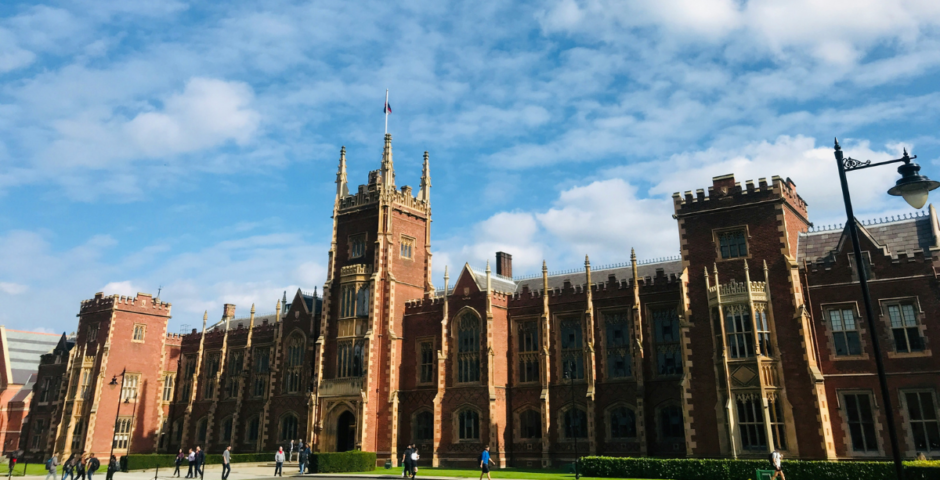
Ranked: All 24 Russell Group universities by how much of their income they lost last year
At the worst-affected Russell Group university, the deficit is almost 10 per cent of total annual income

Out of 24 Russell Group universities, at least seven of them ended last year with a financial deficit.
Although the Office for Students reported some improvement in the financial performance of universities in 2024-25, many institutions are still struggling.
Data published by Higher Education Statistics Agency (HESA) showed combined income of higher education providers rose from £52.5 billion in 2023-24 to £53.9 billion in 2024-25, while the total expenditure rose from £43.4 billion to £53.1 billion.
The HESA data also revealed which UK universities have the highest deficits in proportion to their total income. This arguably gives us a better indication of how universities are coping financially than looking at the surplus or deficit figure itself.
While having the largest deficit does not necessarily indicate an institution is suffering the most (they may just have had more costs that particular year), the data is still very enlightening.
Based on HESA’s data, here’s a list of all 24 Russell Group universities and how much their surplus or deficit (including pension adjustments) made up of their total income for the academic year 2024-25. Restructuring costs are included in expenditure in HESA figures.
While the University of Nottingham’s financial accounts for 2024-25 were not published at the time of HESA collating the findings, the result has been calculated using the same method.
Russell Group university surplus/deficits last year as percentage of total income (including pension adjustments)

University of Nottingham, via Unsplash
24. London School of Economics – 9.2 per cent surplus
23. Imperial College London – 6.6 per cent surplus
22. University of Glasgow – 6 per cent surplus
21. University of Manchester – 5.9 per cent surplus
20. University of Bristol – 5.7 per cent surplus
19. Queen Mary University of London – 4.9 surplus
18. University College London – 4.6 per cent surplus
17. University of Oxford – 4.2 per cent surplus
16. University of Warwick – 3.7 per cent surplus
15. King’s College London – 2.9 per cent surplus
14. University of York – 1.7 per cent surplus



13. University of Edinburgh – 1.4 per cent surplus
12. University of Southampton – 0.9 per cent surplus
11. University of Exeter – 0.3 per cent surplus
10. University of Birmingham – 0.2 per cent surplus
9. University of Liverpool – 0.2 per cent surplus
8. University of Sheffield – 0.1 per cent surplus
7. Newcastle University – 0.4 per cent deficit
6. University of Leeds – 0.8 per cent deficit
5. University of Cambridge – 0.9 per cent deficit
4. Durham University – 1.6 per cent deficit
3. University of Nottingham – 8.9 per cent deficit
2. Cardiff University – 9 per cent deficit
1. Queen’s University Belfast – 9.8 per cent deficit
Responding to the data from both the Office for Students (OfS) and the Higher Education Statistics Authority (HESA) on higher education sector finances, Vivienne Stern MBE, Chief Executive of Universities UK said: “Through the skilled workforce and the innovations they produce, universities have a key role to play in the country’s future success, but this analysis illustrates how the financial situation facing our world-class institutions remains extremely challenging.
“Universities are working hard to ensure their long-term stability, making tough decisions to control costs and looking for ways to do more with less , and we are seeing many examples of major transformation. The decision to increase fees in England in line with inflation was the right thing to do to begin to address the challenge, and government should be congratulated for grasping the nettle, but the task is not yet complete.
“Indeed, changes to visa policy, the introduction of a tax on international students and increased pension and national insurance costs have added to the pressure. We also fear that DFE is about to cut grant funding to English universities to support the cost of wider teaching. They should not do that.
“Universities can be real drivers of economic renewal but if we want a world-class system which delivers for students, employers and communities across the country, we need a serious conversation how degrees are funded and whether the government’s share matches the value universities deliver for wider society.”
For more like this, like The Tab on Facebook.
Featured image via Unsplash



Latest

Lizzie Borden’s doctor’s full court testimony, where he recalled finding Andrew and Abby dead

‘His face was hardly to be recognised by one who knew him’

A weapon in the Lizzie Borden case was never found, and it might not have even been an axe

Many different theories were investigated

Lizzie Borden wasn’t right for Monster, and the ‘female rage’ reason they chose her makes it worse
There was so much wrong with it

The full Celebrity Traitors 2026 episode schedule as day change is confirmed
Don’t get caught out when it returns this week


Ryan Murphy picks his favourite American Horror Story season, and it’s a controversial choice

It’s Sarah Paulson’s least favourite

Why the Love Island 2026 Islanders are suddenly posting ‘tart’ on all of Lorenzo’s posts
People think it’s a divide

Former Newcastle student raped in Freshers’ Week speaks out on potential dangers

“I didn’t know what had happened to me… I came home and was very confused”


The 20 easiest UK universities to get into, based on accepted students’ grades

University of Roehampton students have a D and two Cs on average


Here’s what joining these Cardiff Uni societies says about you

Things you need to know before joining a new society

A favourite from the Love Island 2026 cast is getting an All Stars return
A second chance is well deserved

Right, it’s time to lock in: Here are 10 things every Cardiff Uni final year needs to know

It’s never too late to make this year the best one yet

Charli XCX’s viral VMAs reaction wasn’t about Taylor Swift, so here’s what actually happened
They’ve been surrounded by rumours for years

University sued over alleged fraternity gang sexual assault and punishing accused with essays
The members discussed the attack over Snapchat

Here’s what TV show your Cardiff Uni accommodation would feature in

Everyone’s favourite show is finally back for another season

The major celebs who skipped the VMAs 2026 and why, despite having multiple nominations
Ariana Grande was nominated eight times but didn’t attend

All the advice freshers need to survive first year: Love, Cardiff Uni students who survived

From YOLO to locking in, here’s all you need