


King’s College London student activist group criticises proposed merger with Cranfield Uni
KCL Stands for Justice shared its thoughts in an Instagram post

A King’s College London (KCL) student activist group has criticised the university’s proposed merger with Cranfield University in Bedfordshire.
In a statement posted to its Instagram account, KCL Stands For Justice, a King’s student group focused on pro-Palestine activism, criticised Cranfield University’s perceived ties with the Israeli military.
The postgraduate science and technology research university is among the founding partners of the newly established Technology and Growth Alliance, a defence partnership that includes major arms manufacturers, which has been reported to sell weapons and arms equipment to Israel.
KCL Stands For Justice also noted that, last year, Cranfield University reported an £8.2m deficit, marking a £37.2m drop from the previous year, which KCL would absorb following the merge of the two universities.
The group questioned how King’s can justify taking on “millions in debt” from what they call a “failing defence hub” while many King’s staff members “struggle to afford to live without second jobs” due to low pay and living costs in London.
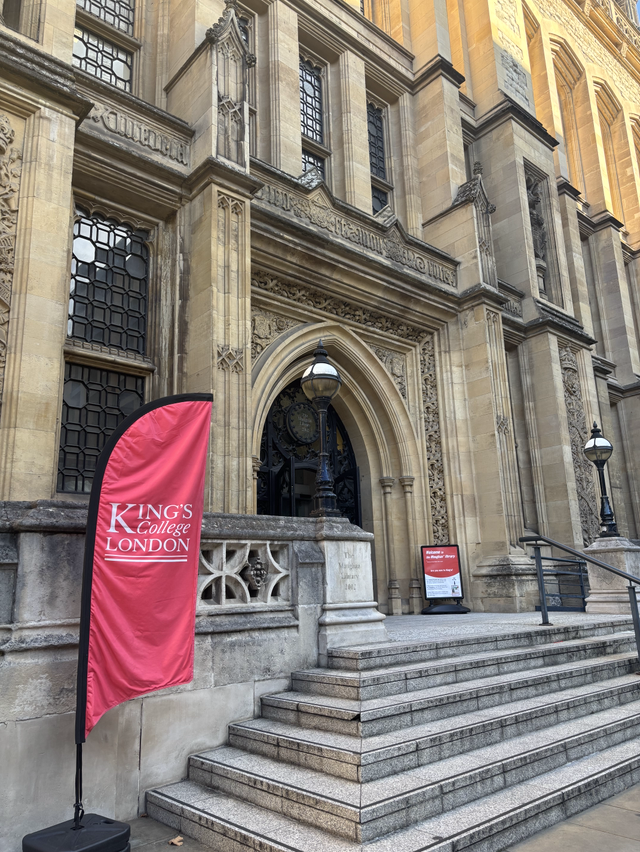
King’s College London
While KCL explained the merger is “not expected to require additional funding,” it indicated that it may cause some staff to lose their jobs or for their jobs to be “restructured” in the future.
Specifically, it said there may be “some areas [that are] identified which could be structured more efficiently.” Whether this will lead to job cuts, and which areas would be most affected, remains unclear for now.
KCL Stands For Justice’s final criticism was the lack of communication with students about the merger. It argued the deal for the merger was made “at a private dinner” between King’s College London’s vice-chancellor and president, Professor Shitij Kapur, and Karen Holford, Cranfield University’s vice-chancellor, without students being informed.



A spokesperson for King’s College London said: “The proposed merger with Cranfield University is driven by academic opportunity and would create a distinctive institution equipped to address some of the most significant challenges facing society and the UK. Security, defence and resilience are major societal challenges and for decades King’s has been a world-leading centre supporting the UK’s safety and prosperity.
“The proposed merger with Cranfield University would add to this, creating new opportunities for students, staff, research, and innovation, while strengthening the UK’s capabilities in areas including engineering, technology, energy and resources, and defence. We have always carried out this work within legal and ethical frameworks, and will continue to do so.
We are following established processes and carrying out robust due diligence to ensure the proposal is financially, legally, academically and reputationally sound, and aligned with the strategic objectives of both universities. We informed our staff and students of the proposition as soon as we were able, and have already begun engagement across our communities, including town halls, leadership briefings and opportunities for questions and discussion. Those conversations will continue throughout this process.
“The quoted figures are over-simplifications of the full financial picture which is net positive: The liabilities held by Cranfield are offset by assets, and a proposed merger would generate unique opportunities for the sustainable future of both organisations. King’s already devotes the highest proportion of income to staff pay of all Russell Group universities in London, and the proposition is designed to drive more growth, innovation, and resilience.”
A spokesperson for Cranfield University said: “Formal and detailed council and executive discussions took place before the Memorandum of Understanding was signed. Students, staff and our community were then informed of the proposed merger as soon as was possible.
“Cranfield is continuing to deliver an ambitious change programme which is designed to improve our financial sustainability. The proposed merger is predicated on growth and investment, creating a global university from two institutions with complementary strengths.
“There are several further legal and regulatory steps for us to undertake before the formal merger can occur, and a full consultation exercise with colleagues and trade unions will take place. We will be keeping students informed as the proposed merger progresses.”
Professor Shitij Kapur, Professor Karen Holford, and The Israeli Embassy have been contacted for comment.
Featured image via Google Maps
Latest

35,000 Partake in the Great Scottish Run through Glasgow

Recreational runners joined elite athletes to partake in the busiest Great Scottish Run to date

Beyond the payslip: The reality of working alongside university

From exhausting shifts to unforgettable experiences, student jobs are anything but predictable

Closures expected at Leeds Bradford Airport due to staff strikes

Those striking include air traffic control personnel and security staff

Dumped for Mr Bean to marriage of ‘trauma’: A nosy look at The Celebrity Traitors’ love lives

Joanne McNally is having a gay baby

The strict rules on Celebrity Traitors lead to rumours escalating, as per Richard E Grant

‘You’re kind of infantilised’

Assigning each Durham college a dream holiday destination

From beaches to big cities: This guide has you covered

We went charity shopping in Manchester – these are our top picks

For when your wardrobe needs a refresh but your bank balance says otherwise

You’re obvs not a celeb, but the most common jobs on The Traitors show a clear trend
Quitting my job right now, I WILL be on season five

Maya Jama explains her ‘stupid’ choice to recruit James and Hannah on The Celebrity Traitors
‘It was too late at that point’

Cambridge and Newcastle among universities to change deals with Turnitin over concerns on AI
Students feared their work being used to train AI models

Come to our open meeting: The Cambridge Tab is looking for new writers and video journalists

Come to our open meeting on Friday 16th October, 5pm at The Maypole

Celebrity Traitors cast ‘at each other’s throats’ as insiders spill on tense unaired moments
The cameras stopped rolling, and the drama went into full throttle

House-hunting already? The fresher’s guide to the student neighbourhoods in Leeds

A pub near your house? What’s not to like?

Smallville’s Tom Welling drops hilarious response after his reflection exposed… a bit too much
Not quite the Superman reveal people were expecting

Shop adds context to whether the model bird Kelly Clarkson tried to buy was really for sale
Viral photos show a $15,000 price tag next to Molly the mechanical bird

The Edinburgh Tab wants you as a Social Editor: Terminally online people, assemble

Applications close on October 16th at 11.59pm

Yorkshire zoo confirms fate of Altai the tiger after he killed a man who climbed into enclosure
Witnesses claim he wanted to ‘play’ with the predator

Spend smart, party hard: Your ultimate guide to surviving first year on a student budget

The broke freshers’ guide to a brilliant year

From Soho to Shoreditch: Here’s the ultimate guide to student nightlife in London
All the treasures London has to offer