
Wait, could Sophie have just lied all along in Bridgerton? The nobility drama explained
Was she really their cousin?!
If you’ve just finished season four of Bridgerton and you’re sitting there thinking, “Hang on… could Sophie have just lied this entire time?”, you’re not alone.
Between the dowry, the will, the whole “distant cousin” reveal at the Queen’s ball, and Posy casually calling them “cousins”, it’s all a bit… chaotic. So let’s break down what actually happened, and what it meant in Regency society.

Netflix
First of all: Does the dowry legitimize Sophie?
Short answer? No. Yes, Lord Penwood left Sophie a dowry in his will. But in Regency England, illegitimacy wasn’t something you could just fix with money. Being born out of wedlock was everything. If you were a “bastard”, you were legally and socially illegitimate, full stop.
The only real way to legitimize a child at that time was if the parents married (and even then, it was complicated and highly dependent on circumstances). A father couldn’t simply declare a child legitimate after the fact in his will.
So while the dowry proves that Lord Penwood loved Sophie and made provisions for her future, it does not make her legitimate. It doesn’t give her a title. It doesn’t magically make her noble. It doesn’t erase her birth status.
In the book version, she’s described more as a “ward”, a girl under his protection, rather than officially acknowledged as his daughter.

Netflix
So what was with the “distant cousin” story?
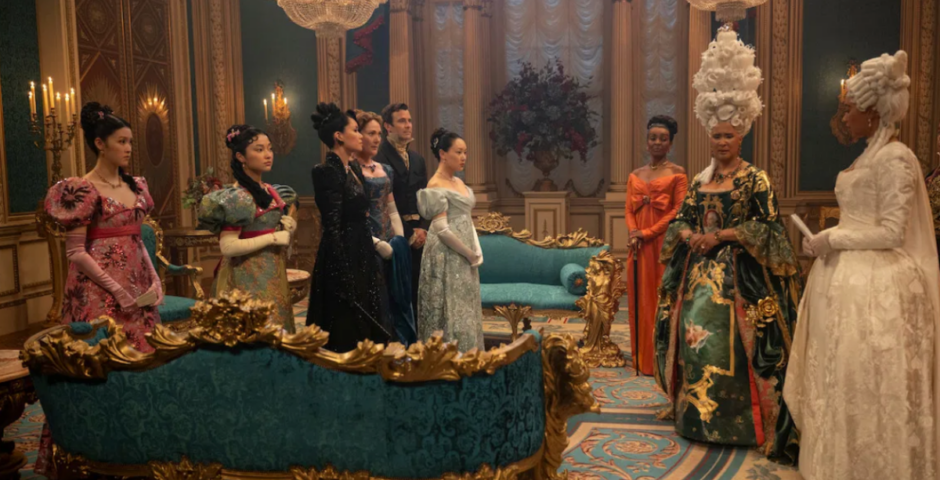
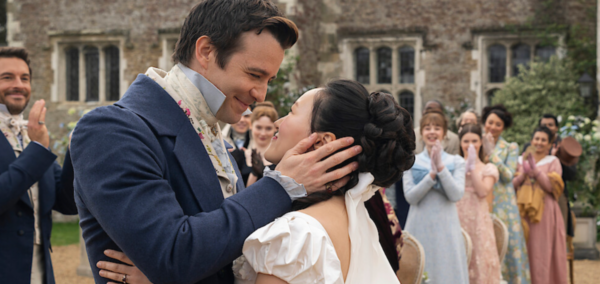
Yes. They were lying. At the Queen’s ball, the Bridgertons introduce her as Miss Sophie Gun, the late Lord Penwood’s cousin’s daughter, a distant relation who’s spent most of her life in the country and has just arrived in Mayfair.
That story was carefully constructed to give her respectable social standing. If she’s the daughter of an earl’s cousin, she’s technically of gentle birth. Not titled, not “Lady Sophie”, but respectable enough to marry into the aristocracy. They essentially present her to the ton under a false identity.
Araminta even backs up the story, because the Bridgertons are holding her previous crimes over her head. If she exposes Sophie, they expose her.
Sophie is still Lord Penwood’s illegitimate daughter, so Posy is her step-sister.
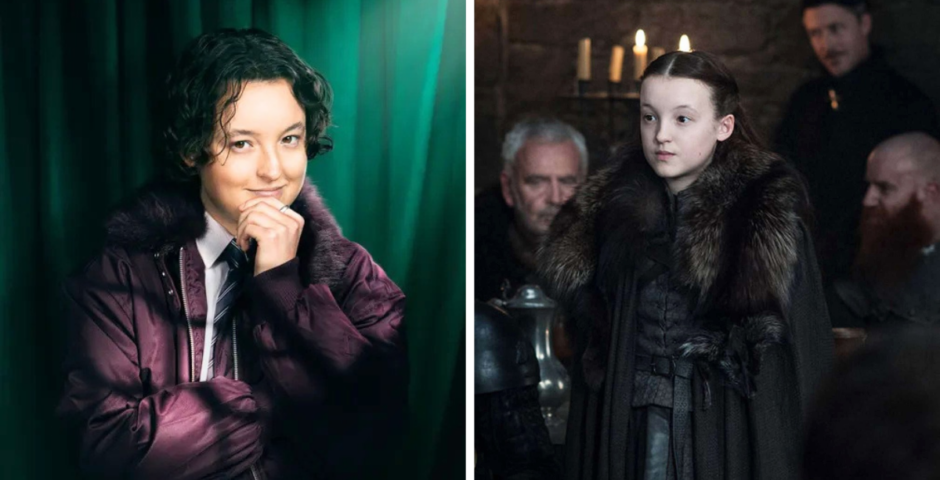


When Posy says they are “cousins”, she’s leaning into the lie and accepting the new public version of their relationship. And when Sophie makes the “we were and will always be sisters” comment, she’s acknowledging that privately, their bond hasn’t changed.

Netflix
Why does illegitimacy matter that much?
Being the biological daughter of an earl meant absolutely nothing if you were born outside marriage. Society wouldn’t care that she was Penwood’s blood.
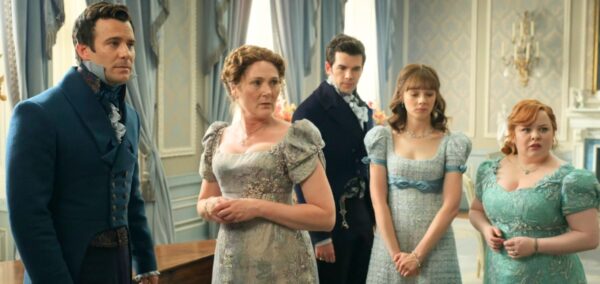
If it got out that Benedict knowingly married a maid and a bastard, both he and the entire Bridgerton family could be socially shunned. That’s why the lie is so crucial, not for romance, but for survival within the ton.
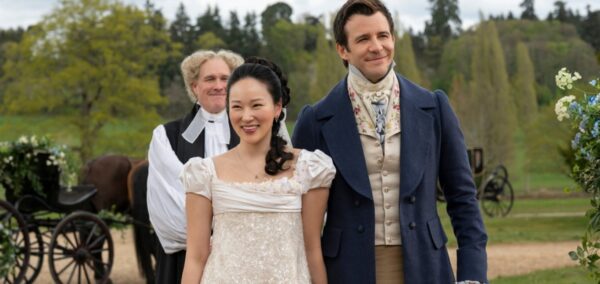
Now that she’s married into the Bridgertons, questions are far less likely to be raised. She’ll be treated as a noblewoman by association.
What about the Queen?

Netflix
Queen Charlotte absolutely clocks that something suspicious is happening, but she’s charmed by the spectacle, and by the argument that Benedict is ready for marriage. There’s also a delicious underlying tension: If she wants to win her wager against Lady Whistledown (aka Penelope Bridgerton), she may need to allow this match.
After scrutinizing Sophie, the Queen ultimately declares she “would have made a wonderful diamond”. That’s effectively royal approval. Once the crown accepts her, society follows.
So… could Sophie have just lied all along?
Not exactly. She couldn’t legitimize herself. But with the right story, the right allies, and the Queen’s blessing, she could be presented as legitimate. In Regency society, perception was everything.
For all the latest Netflix news and drops, like The Holy Church of Netflix on Facebook.
Featured image credit: Netflix
Latest
19-year-old Manchester woman spent £2k on matcha in a year leaving her with acne and severe migraines

‘I know addiction is a strong term to use, but it was a truly unbelievable experience’

In defence of those of us still watching Made in Chelsea

Forgive a girl for wanting a weekly dose of Chuggs
Celebrity Traitors star Hannah Fry has a ‘mathematically rigorous’ plan to catch Traitors

She developed ‘the most statistically perfect approach’ for the show
University of Nottingham restructuring plans approved after staff strikes last week

The second phase of Future Nottingham 2 is going ahead
Cardiff University students outraged over a meme page’s ‘disgusting’ confession post
Students are urging each other to boycott Cardiff Uni Banter

Edinburgh Uni principal Sir Peter Mathieson announces he’s stepping down at end of his term

The principal and vice-chancellor of the University of Edinburgh will depart at the term’s completion, leaving in 2028

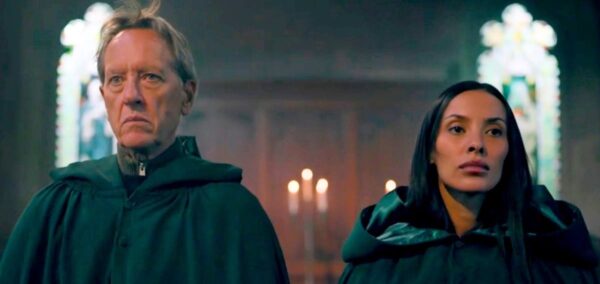
Celebrity Traitors 2026 week one theories: A secret Traitor in the mix and Julie to be recruited

Two episodes in and I’m already invested

Gypsy Rose Blanchard says last phone call with partner Ken Urker was about family dispute
‘He was deeply distressed by the situation’

London student who filmed viral video of Gillian Anderson scolding fans defends her
Gillian Anderson told off ‘distracting’ theatregoers

No! Celebrity Traitors editing moment has people convinced about who is getting banished

Dear Claudia Winkleman, please intervene

Are you an aspiring journalist or content creator? The Liverpool Tab wants you!

Come to our open meeting on Tuesday 6th October, 6:30pm upstairs in The Fly, Hardman Street!
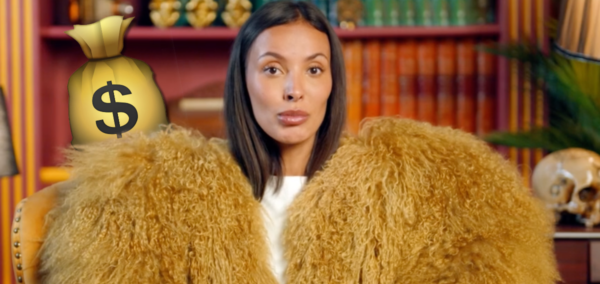
We’re just two episodes in, but already Maya Jama’s Celebrity Traitors wardrobe costs thousands
One coat cost more than my entire closet

Here’s which Leeds Uni society each Gilmore Girls character would join

What if Rory, Lorelai, and the rest of Stars Hollow’s residents swapped Connecticut for Leeds?

The Verity film removed one of the Crawford children from Colleen Hoover’s original book

‘That’s the best change we could have made’
Celebrity Traitors’ Celia Imrie gave a wise warning to Richard… which he evidently ignored
They spoke before he went on the show; maybe he should’ve written it down?
This year is slightly different, so here is the episode schedule for Celebrity Traitors this week
The timings for episodes three and four are very precise

Prosecutors allege money was ‘root cause’ of Hong Kong influencer Abby Choi’s murder
The trial has just begun after she was killed in 2023

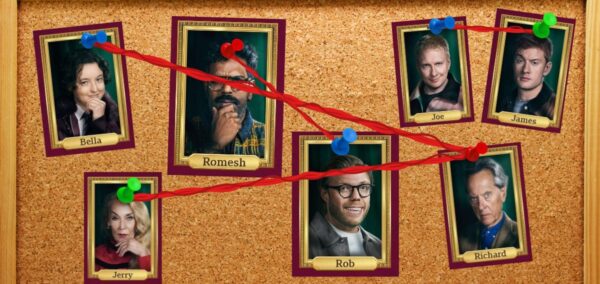
Rob Beckett reveals his connections to the Celebrity Traitors cast, from Romesh to Joe Lycett
‘Everyone wants to be on it’