Burning buildings and thousands of arrests later: How the violent riots in France actually started
Students have suffered ‘war like’ injuries
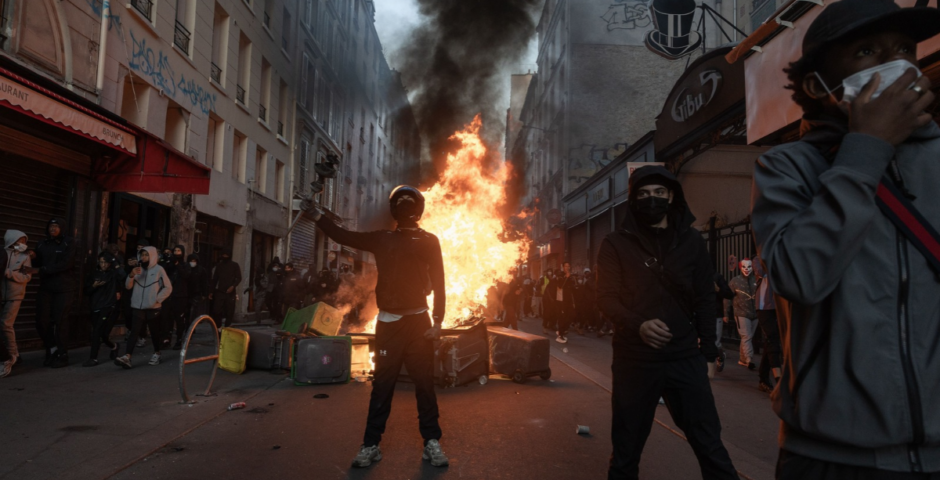
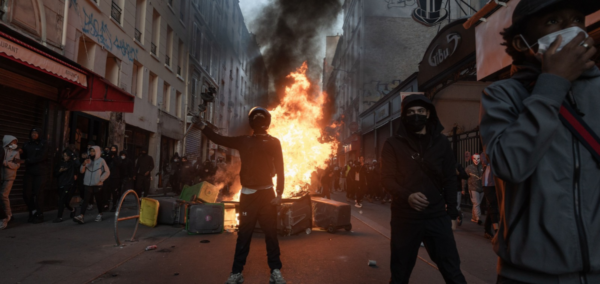
Twitter has been engulfed with pictures and videos of the riots in France, but amidst burning property, police confrontations, and AI-generated misinformation, it’s difficult to understand how the chaos even started.
The protests have been going on for weeks, but they’ve spiralled into something completely different to what was initially intended.
The riots in France started with student protests
Credit: Guillaume Pinon/ZUMA Press Wire/Shutterstock
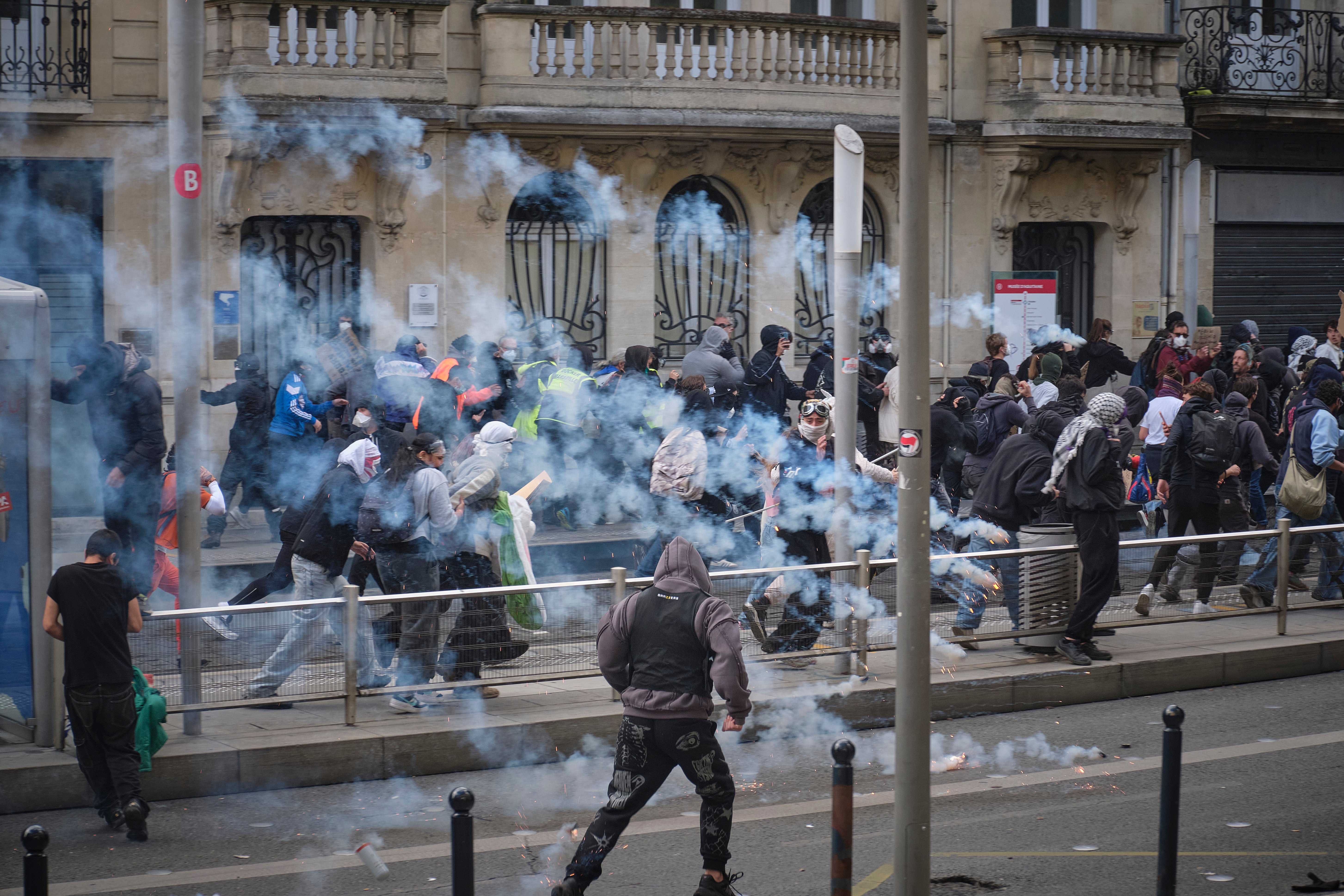
In mid-September, students in Creteil, near Paris, began protesting over the education system. Specifically, they protested over the lack of teachers and rat-infested facilities, with media outlets exposing rats, collapsed ceilings, leaks, and broken furniture in dilapidated schools. Conditions were particularly foul in lower-income neighbourhoods.
Though the protests initially started in Creteil, they quickly spread to other Paris suburbs and then the rest of the country. Even smaller towns and regions had class strikes, blockades and demonstrations, leading many schools to close following damage to property or attacks on staff.
Things took a turn more recently
Credit: Ethan Fowler/JNA via ZUMA Press Wire/Shutterstock
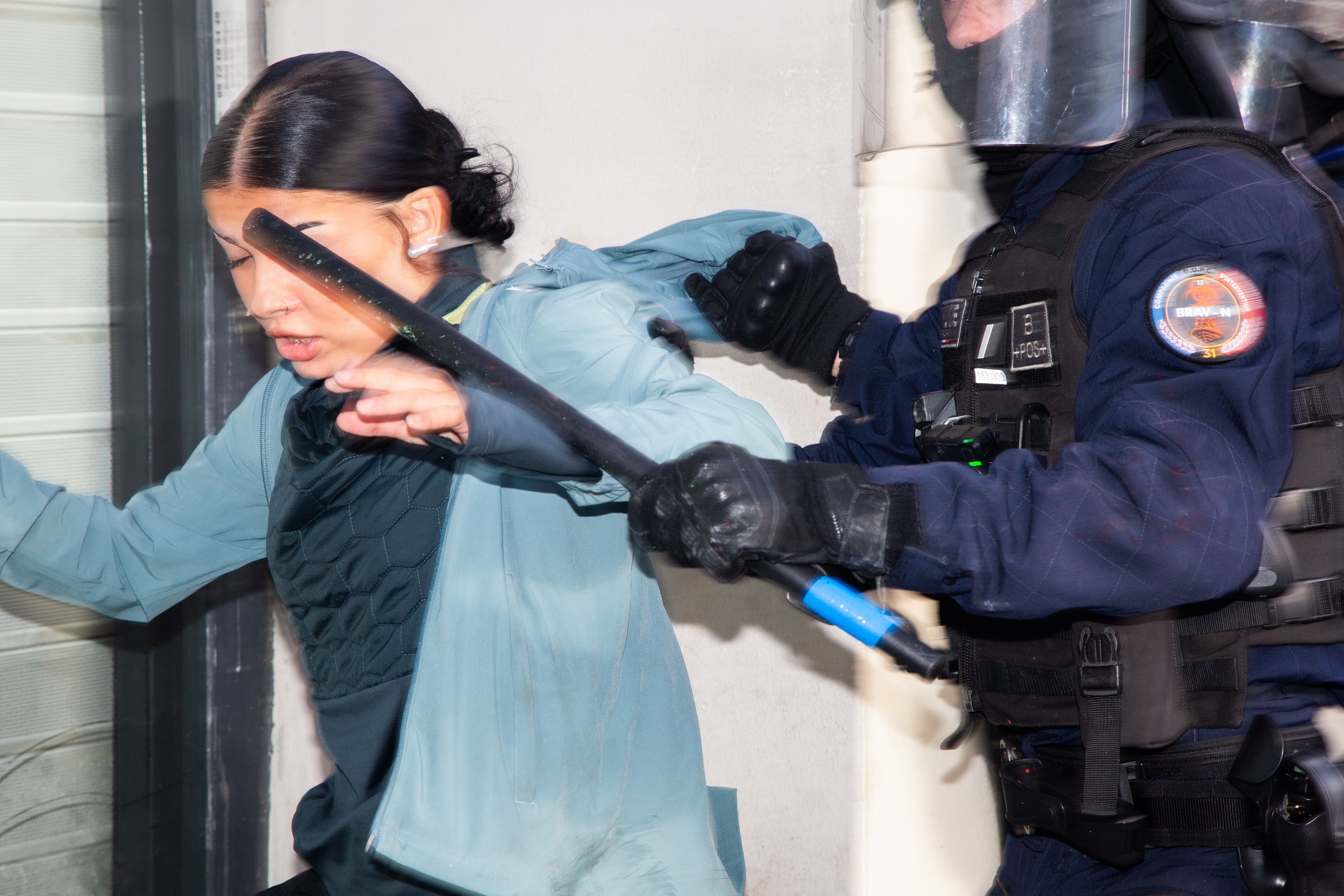
In late September and early October, the protests became increasingly violent. The police used tear gas, batons, and other crowd-control weapons to disperse crowds, and it resulted in a number of serious injuries.
One kid, age 15, lost his hand to a police stun grenade on October 5, with his lawyer saying: “His injuries resemble war injuries.”
Another student, 14-year-old Eden, suffered two fractures to his jaw and the loss of his teeth from a grenade launcher shot.
There have been reports of excessive force across the country, with six students experiencing “significant injuries” and four being “mutilated” by explosive weapons.
Since the protests started in September, 6,773 students have been arrested. Around 1,000 were released without charges, 2,190 were facing legal action, and almost 2,000 were handed an alternative to further legal action.
There are now multiple groups protesting, with multiple agendas
Credit: Jerome Gilles/NurPhoto/Shutterstock
More recently, the protests took on multiple new meanings as they became full-on riots. What began as protests about the education system have seen 500,000 French people take to the streets, from Marseille to Lyon.
One group are workers and trade unions, with the General Confederation of Labour (CGT) backing its members and demanding lower prices and higher pensions and wages. Similarly, members of the Gilets Jaunes have reignited their 2018 protests to demand economic equality.
Following what many deemed police brutality against the protesting students, even more people, including teachers and parents, joined the demonstrations. Environmentalists have also been protesting, as have some right-wing groups, “troublemakers from far-left fringe groups”, anti-war campaigners, and those simply seeking to riot, loot, and cause chaos.
At first glance, the various causes don’t seem to be connected, but they all carry one theme: Anti-government.
The chaos has been widespread
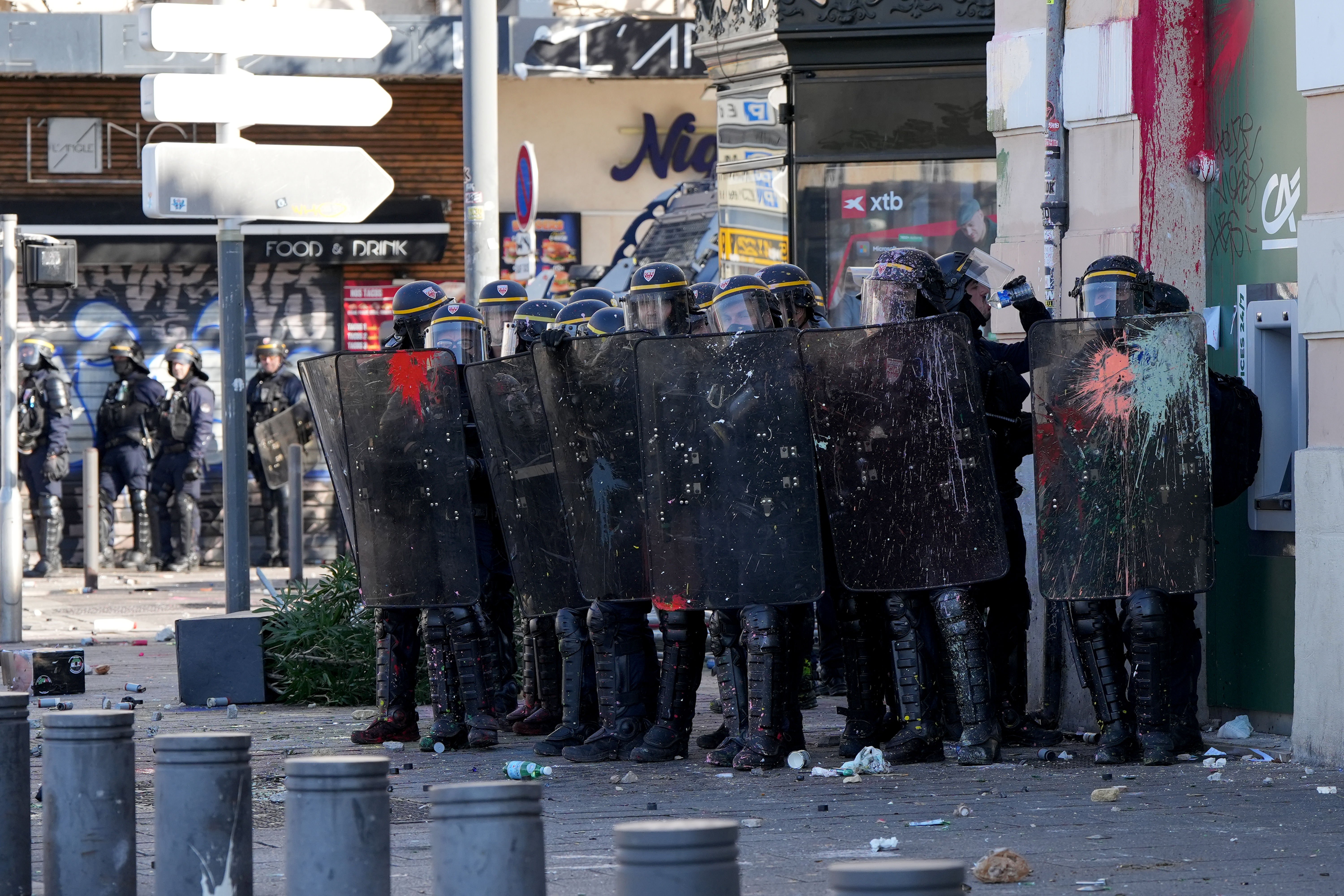
Credit: Alain ROBERT/SIPA/Shutterstock
Though most people have been involved in peaceful protests and demonstrations, it’s hard to ignore the rampant violence across France right now.
For instance, Rioters in Marseille stormed the town hall, painting “A” for anarchy on the wall, and fireworks are being shot down the street at police officers in Paris. In response, police forces have employed tear gas, water cannons, and riot gear in fierce clashes quickly going viral on social media.
In Lyon, protesters set fire to the tourism office; a 19th-century town hall was burned down in Limoges, and there has been looting across the entire country. There have been several hundred million euros in property and retail damage.
At the same time, the riots have found life in social media spaces. On TikTok, you’ll find young people posing with riot police, taking selfies next to fires, and doing TikTok dance trends as fights happen in the background. There’s even a protester dressed as the Pink Panther who has gone viral.
Naturally, it’s also given way to a flurry of misinformation. AI-generated images are also going viral, with one showing two old people in their underwear after being “robbed” by young protesters. It’s fake.
Speaking of the government, how has it responded?
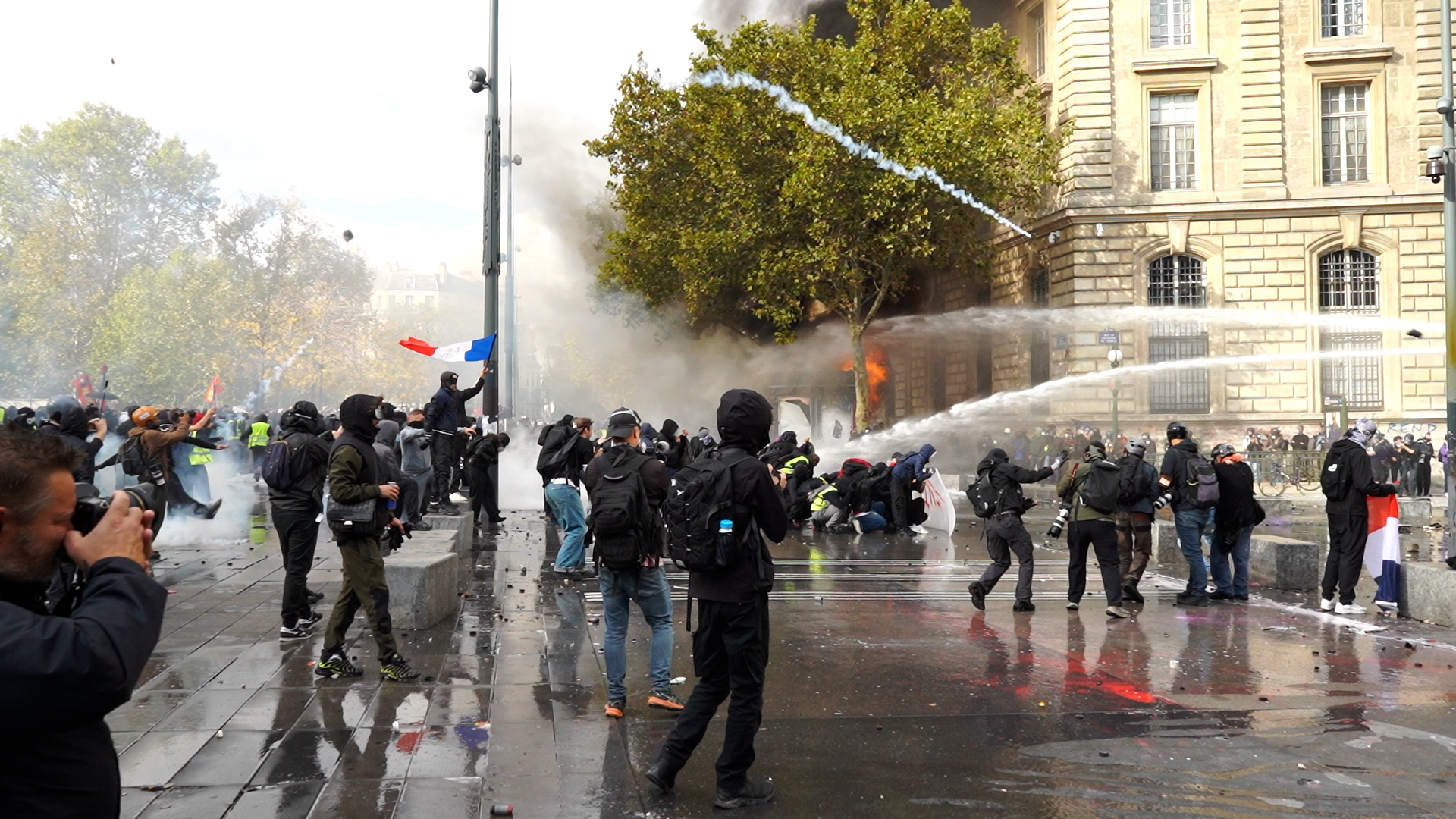
Credit: SWNS
The political landscape in France right now is not too dissimilar to what’s happening on the streets, though many politicians have condemned the violent actions of rioters.
“Nothing justifies it, nothing explains it, nothing excuses it,” President Macron said, slamming the “unrestrained violence” of the riots. “Those who looted will have to pay for the damage, and those who sought to bring down the Republic will be held accountable.”
Despite his firm words, which came before he implemented strict curfews in specific areas, Macron urged people not to confuse those with genuine issues with those rioting for the hell of it.
Of course, the riots have become a political football for those in power in France. With Macron unable to run for a third term next year, the heads of various political parties are using the protests for their own gain ahead of next year’s election.
On one side, you’ve got Far-left candidate Jean-Luc Mélenchon, who has stood defiantly with the students who started the protests. He has slammed police actions and called for the voting age to be lowered to 16. On the other is Marine Le Pen, a far-right leader who has called for broader and harsher police powers in response.
Concerningly, similar protests have now popped up in Italy and Belgium.
For more, like The Tab on Facebook.
Featured image credit: Oualid Abdellaoui/JNA via ZUMA Press Wire/Shutterstock

Latest

University of York collaboration sets out new vision for online learning

The expansion will enable more learners from underrepresented backgrounds to engage with the uni
Celebrity Traitors has begun: Here’s how your Cardiff Uni course would behave in the game

Claudia would definitely pick the new YOLO ticket system as a Traitor
Burning buildings and thousands of arrests later: How the violent riots in France actually started

Students have suffered ‘war like’ injuries
The Traitors’ dramatic soundtrack is basically trolling us, and it’s completely intentional

The producers know those covers are a bit ridiculous
Cyber security threats target University of York staff and students
University of York has received a number of cyber security threats across the University community
Things that annoy me as a student in York
From ridiculous prices to aggressive geese, there’s always something to complain about.
Calling all Lancs students: Here are seven essential life hacks for surviving uni life

Because when you’re a student, you need all the help you can get
John shares statement to ‘clarify a couple of things’ after controversial chats in Love Is Blind pods

‘We both found it to be a wonderful, productive conversation’

Every social sec needs this: What your Wednesday night route says about you

This one’s for the mob of minions, chickens, lobsters, pink wig wearers, and sweaty boys in chinos
Joe Lycett opens up about his sweet friendship with Miranda Hart after Celebrity Traitors
They both got emotional
Comfortably chic: How to perfect your autumn wardrobe this semester

Attempting a chic autumn wardrobe on a maintenance loan is an extreme sport
Everything Christa Pike has seemingly said since she woke up from botched lethal injection
She has been sending messages from prison
Here are the best nights out in Birmingham for a terrifyingly fun Halloween 2026

It’s never too early to lock in your Halloween plans
Celebrity Traitors’ Miranda Hart opens up about her recovery from ‘debilitating’ Lyme disease
She mentioned it on the show
Celebrity Traitors’ Sebastian Croft opens up about secret school boyfriend who outed him as queer
It led to a ‘really difficult’ few years of bullying
BBC speaks out over claims James was ‘uncomfortable’ on Celebrity Traitors set because of Rob and Romesh
James is said to have complained to producers about them
Here’s what your choice of Halloween costume says about what kind of student you are

Because it does kind of define your personality