

I’m a Cardiff University MA student who’s applied to 400 jobs – I constantly get ghosted
Karyna typically applies to 20 jobs each day, and she’s even getting dismissed for barista roles

Karyna Lohvynenko, a 21-year-old postgraduate student, is completing her Master’s in governance at Cardiff University.
While she once dreamed to become president of her native country, Ukraine, her ambition has been curbed as her applications for positions in business, politics, and as an entry-level barista have been ghosted by employers.
Ghosting is a popular term in the dating scene, meaning to suddenly end communication with someone. However, Michael Jones, a recruitment consultant, believes it is on the rise for job applicants.
“If I apply to around 70 jobs per week and only hear back from three, the rest is complete silence – not even a rejection email,” Karyna told the BBC.
“That uncertainty is worse than rejection… it feels like a void. Like your application disappears before anyone even sees it. The ghosting from employers creates confusion, anxiety, and makes the whole process feel dehumanising.”
After graduating from Cardiff Met with a degree in business and management, alongside a law pathway, she is now completing her Master’s in governance at Cardiff University.
In addition to her work in academia, Karyna’s CV includes volunteering and business experience at the United Nations, in the first lady of Ukraine’s office, international policy work with both American and British councils, and as a King’s Trust ambassador.
“I completed everything expected from a graduate… experience alone doesn’t open doors,” she said.
Karyna had been accepted into six US universities with scholarships; however, Russia’s invasion of Ukraine in February 2022 resulted in her moving to Wales. Remembering she is not alone in her struggle, Karyna remains determined to find employment.
While at a jobs fair for Cardiff University, she recalled “seeing hundreds of students – many with strong backgrounds – asking for any job was overwhelming.”
“That’s when it felt truly distressing,” she explained.



Cardiff University
Since childhood, Karyna has been invested in politics, setting a goal to lead her home country of Ukraine. “That goal has never left me,” she said. But, for the moment, she is focused on securing an initial role into the workforce.
Since February, Karyna has been applying daily to typically 20 roles alongside her studies, work and operating a small business where she up-cycles vintage blazers. She has put her aspirations of her “dream job” to the side, now focused on securing any employment, despite being rejected from roles differing from business, politics and an entry-level barista.
Online platform LinkedIn reported the prominent competition for roles among the younger generation, with Chief Economic Opportunity Officer Aneesh Raman offering some advice on CVs to job seekers. Aneesh notes that AI literacy is important – knowing what it can aid, alongside focusing on your achievements, people skills, and not obsessing over long-term plans.
“I speak to graduates every week who’ve applied for hundreds of roles and are struggling to break through, and unfortunately, that’s [ghosting] become the norm rather than the exception,” said recruitment consultant Michael Jones.
“The reality is that entry-level roles are massively oversubscribed right now, and even strong graduates are getting lost in the volume.”
Michael notes that several applications don’t reach a human decision-maker. “When candidates say it feels like their CV disappears into a void, I completely understand that frustration as we see many applications never reaching a human,” he said.
“Not hearing back is incredibly disheartening, but in most cases it’s down to automated systems and sheer applicant numbers, not a lack of ability or effort.”
He said: “We’re seeing a growing reliance on AI screening and one-way video interviews, particularly at the early stages, and that can feel very impersonal for candidates. The danger is that AI looks for patterns, not potential. If your experience or communication style doesn’t match what the system expects, you can be filtered out before anyone actually meets you.”
Karyna has experienced numerous AI-led interviews. “You’re essentially speaking to a screen, like a chatbot interface,” she explained. “There’s usually a strict time cap… which is not enough to explain your full experience. You feel cut off before you can properly present yourself.”
For more of the latest news, guides, gossip, and memes, follow The Cardiff Tab on Instagram, TikTok, and Facebook.



Latest
There are co-star dating rumours about A Different World’s fittest star, Cornell Young IV

There’s gonna be about a million disappointed people
Hannah Fry revealed her plan to stay ‘mischievous’ during Celebrity Traitors season two

‘I’m toxically competitive’
Where Miranda Hart has been as she returns to TV on Traitors, from health issues to new husband

It’s such fun to have her back on our screens

Where the brainy Celebrity Traitors cast went to university, plus what they studied

Of course loads went to Russell Group universities

Lizzie Borden never married, despite speculation about her relationship with Nance O’Neil
Netflix explored her relationships with women



As Christa Pike’s execution fails, her accomplice boyfriend is living a totally different life
He gave an interview from prison in 2026

Christa Pike is one of eight people in US history to survive execution by lethal injection
She is being treated in hospital

When will Georgia Toffolo realise no matter how many times she pretends to be relatable… she’s not?

She’s posted yet another video about money

Meet Moyin Odeniran, the KCL student taking part in this year’s Great British Bake Off

Turns out all those hours in the library were worth it
Witnesses describe Christa Pike’s failed execution after she survives two rounds of lethal injection
‘I’ve witnessed, I believe, five executions in Tennessee. Nothing about today was normal’
A timeline of how Christa Pike’s failed lethal injection attempt unfolded, and where we are now
A lot has happened since 10am yesterday
How to add any physical loyalty card to your Apple Wallet with genius new iOS 27 feature
Finally something that’s actually useful

Prue Leith admitted being 86 was one reason she decided to leave The Great British Bake Off
She has been replaced with Nigella
Louis Theroux subject fined after cornering shop worker with comments about his ‘English wood’
She felt ‘trapped’ as five men surrounded her

11 UK universities rank among the top 100 in the world – but not Durham
The University of Oxford is still first in the world

Christa Pike’s failed execution is Tennessee’s second this year, after Tony Carruthers
He has been granted a one-year delay

Pete Davidson shares his opinion on the constant body image scrutiny ex Ariana Grande gets
‘I don’t like it at all’
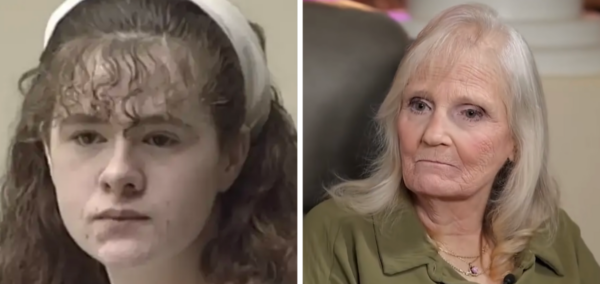
‘She didn’t die’: Mum of Christa Pike’s victim speaks out after two failed lethal injections
She said Christa showed no remorse

Christa Pike’s lawyers share statement addressing why death row inmate’s execution failed
A comprehensive review will ‘determine exactly what occurred’