

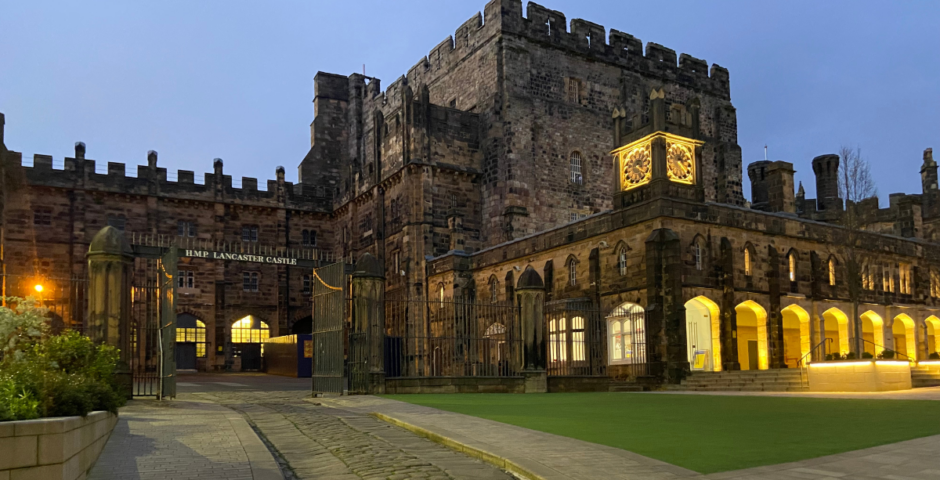
Victorian voices analysed in new Lancaster University research on northern accent development
The study has been undertaken by researchers at Lancaster University and Leiden University to understand how Lancastrian and Cumbrian accents have developed

Researchers at Lancaster University and Leiden University have worked alongside each other to explore how northern accents and dialects developed over the nineteenth century.
This new research has been published in the Journal of Sociolinguistics, and making use of the Elizabeth Roberts Working Class Oral History Archive which is held at Lancaster University Regional Heritage Centre, and also Lancashire Archives.
The three main locations which are discussed in the study are Lancaster, Preston and Barrow-in-Furness.
Dr. Elizabeth Roberts’ archive contains recorded interviews with working class people who resided in the North Lancashire (which then included Barrow-in-Furness), and were born from the 1880s to the 1940s.
Dr Roberts’ work was carried out in the 1970s and 1980s by her and colleagues, with interviews describing the “ordinary lives of working class people” and topics such as cotton weaving, family life and dealing with loss, and preparing meals like sheep’s head broth.
Researchers today have used these recordings for conducting a linguistic analysis to understand how consonants are used differently across the studied region, and how ‘urban dialects in formerly industrial areas’ have developed due to factors such as population increase.
Findings from the linguistic analysis have confirmed that there are local perceptions that the Barrow-in-Furness accent differs greatly from those of Preston and Lancaster.

The LICA building at Lancaster University



The accent’s differences could be put down to the dramatic population growth and high fertility rates in Barrow between 1850 and 1880, between residents who had moved from Cornwall, Scotland, Ireland and the midlands. This therefore helped to create a new and distinctive dialect for the town.
In Preston, however, the Lancashire accent and dialect was kept largely the same as those moving into the city for work were from surrounding areas in the North Lancashire region, though the population was still growing at a steady rate.
As a result, both the Lancaster and Preston accents have been noted as keeping the more “traditional” aspects of their accents, such as rhoticity (also known as a “rhotic r” or the “post-vocalic r”) – for example, Lancaster speakers would pronounce the r in “car”, because r is positioned at the end of the word.
The study also noted that Lancaster accents developed as a more “mixed variety” due to greater inter-class context and less dependence on just one industry (cotton), like Preston – Lancaster’s trade and industry growth in the Victorian era facilitated this development.
Professor Claire Nance, lead researcher of the project, said: “The archive recordings allow us to look back in time at the Victorian origins of contemporary dialects.
Interviews from Preston, Lancaster and Barrow give us a fascinating insight into the development of dialects in northern England as they have very distinct social histories and settlement patterns.
We found very strong links between the growth of industry and the evolution of accent. This research allows us to celebrate accent as another aspect of our region’s long-lasting and distinct cultural heritage.”
For more of the latest news, guides, gossip, and memes, follow The Lancaster Tab on Instagram, TikTok, and Facebook.



Latest

First week back at uni? Here’s everything you need to pack in your bag

Mary Poppins is quaking in her boots…
London university releases statement after professor sentenced for a child sexual offence

Barry Langford was a Professor of Film Studies at Royal Holloway



Young father-of-two died on day he was due to start at University of Glasgow

Young father tragically passes away at 24 years old after suffering a brain aneurysm

Bella Ramsey’s specific acting career gives them ‘an edge’ on Celebrity Traitors (they hope)
Their past roles have prepped them for Missions

12 of The Celebrity Traitors season two cast asked to be Traitors, and six to be Faithfuls
Three celebs couldn’t make up their minds

Maya Jama’s game plan for Celebrity Traitors is to avoid trying ‘too hard’ or ‘overthinking’
This is really devious tbh

Newcastle University buildings evacuated after ‘suspicious item’ found on campus

Police, fire crews, and fire engines arrived at the scene

12 things every Fresher gets wrong in their first few weeks at uni

From wearing your lanyard everywhere to leaving your washing-up until it grows its own ecosystem
Our Celebrity Traitors predictions include Maya Jama turning on her fellow Traitors

Here’s what we think will happen

I’ve just realised that three cast members from Celebrity Traitors were in Game of Thrones

Having flashbacks to Bella Ramsey being crushed by a giant


23 to 70: The ages of the Celebrity Traitors 2026 cast, from youngest to oldest

There’s a huge age range this year

James Blunt was a British Army captain before becoming a singer and joining Celebrity Traitors
He mentioned it on the show

Monster director finally admits why they forced Aileen Wuornos in a show about Lizzie Borden
Despite the name, Lizzie Borden is not the focus of the story
Shows and films you can watch about Aileen Wuornos, where she isn’t thrown into another story

Others tell her entire case, unlike Monster on Netflix

This viral tool lets you customise your Apple Pay cards, and here’s how to do it
You can personalise the entire design

James Acaster could be the Celebrity Traitors’ recruit, as filming reportedly paused for him
It’s not much of a cliffhanger

The ridiculous fortunes of The Celebrity Traitors: Their net worths, from £500K to £50 million
One of them could legit buy the castle three times over