
The five reasons we haven’t been back to the moon since 1972, as NASA launches Artemis II
Why can’t we just go?!
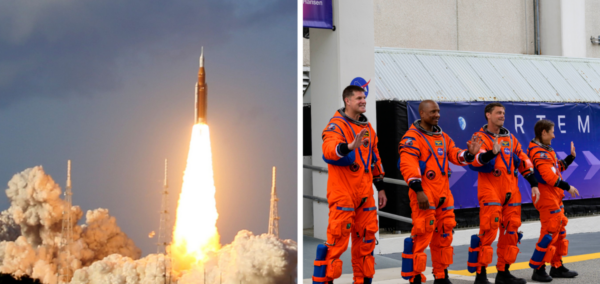
Astronauts on the Artemis II mission are currently orbiting Earth, carrying out final system checks before setting course for the moon. Launched from Florida earlier this week, the mission is the first crewed journey toward the moon in over 50 years.
In July 1969, Apollo 11 moon landing made history. Humans finally set foot on the moon, ticking off one of the biggest scientific and cultural goals of the 20th century. It was dramatic, risky, and felt like the start of something massive. But then… we just stopped?
After Apollo 17 in 1972, humans haven’t been back to the lunar surface. Not once. So what actually happened?

Canva
The main reason? Money. A lot of it.
Getting to the moon was absurdly expensive. The US government initially estimated the Apollo programme would cost around $7 billion. It ended up closer to $20 billion. Once the original goal had been achieved, the appetite to keep spending just… wasn’t there anymore.
And that original goal was pretty specific. Back in 1962, John F. Kennedy stood in Texas and promised the US would land a man on the moon before the decade was out. That famous “We choose to go to the moon” speech basically kick-started everything.
By 1969, mission accomplished. The US had beaten the Soviet Union in the space race, made its political point, and proved its technological dominance. After that, more Moon missions didn’t feel as urgent, or as useful.
As one former Apollo engineer, Charlie Mars, told PBS News: “Because it was the first time, there was an energy. There was a passion that probably is not exactly the same today and hasn’t been for a while.”
Once the hype died down, so did the funding. NASA started getting budget cuts, and priorities shifted elsewhere. Scientific research missions just didn’t carry the same weight as the original “we got there first” moment.

There’s also the awkward fact that we kind of… lost the know-how.

Canva
The technology used during Apollo is now decades out of date. The people who built and ran those systems have mostly retired, and a lot of that expertise disappeared with them. As Astrobotic CEO John Thornton explained to Live Science, “That whole generation is out of the industry at this point. We are relearning how to do this, but we’re also learning it with technology that is new and different.”
So it’s not as simple as dusting off the old blueprints and heading back.
Modern missions come with their own challenges too. NASA has had to develop entirely new spacesuits, fix issues with the Orion spacecraft’s heat shield, and build a brand new lunar landing system from scratch. None of that happens quickly.
But more than anything, it comes down to politics.
“The short answer to that question is political will,” said Teasel Muir-Harmony from the Smithsonian. “It takes a whole lot of political will to send humans to the Moon… It has to be a priority over a sustained period of time.”
And that’s the problem. According to former NASA chief technologist Les Johnson, space goals tend to get completely reset every few years depending on who’s in charge. Which makes long-term projects like Moon landings… tricky.
For more like this, like The Tab on Facebook.
Featured image credit: Canva

Latest

Lizzie Borden wasn’t right for Monster, and the ‘female rage’ reason they chose her makes it worse

There was so much wrong with it

The full Celebrity Traitors 2026 episode schedule as day change is confirmed
Don’t get caught out when it returns this week

Ryan Murphy picks his favourite American Horror Story season, and it’s a controversial choice

It’s Sarah Paulson’s least favourite

Why the Love Island 2026 Islanders are suddenly posting ‘tart’ on all of Lorenzo’s posts

People think it’s a divide
Former Newcastle student raped in Freshers’ Week speaks out on potential dangers

“I didn’t know what had happened to me… I came home and was very confused”


The 20 easiest UK universities to get into, based on accepted students’ grades

University of Roehampton students have a D and two Cs on average


Here’s what joining these Cardiff Uni societies says about you

Things you need to know before joining a new society

A favourite from the Love Island 2026 cast is getting an All Stars return
A second chance is well deserved

Right, it’s time to lock in: Here are 10 things every Cardiff Uni final year needs to know

It’s never too late to make this year the best one yet

Charli XCX’s viral VMAs reaction wasn’t about Taylor Swift, so here’s what actually happened
They’ve been surrounded by rumours for years
University sued over alleged fraternity gang sexual assault and punishing accused with essays
The members discussed the attack over Snapchat

Here’s what TV show your Cardiff Uni accommodation would feature in

Everyone’s favourite show is finally back for another season

The major celebs who skipped the VMAs 2026 and why, despite having multiple nominations
Ariana Grande was nominated eight times but didn’t attend

All the advice freshers need to survive first year: Love, Cardiff Uni students who survived

From YOLO to locking in, here’s all you need



The ultimate Uni of York guide: New year, new advice

Here’s everything you need to know before the academic year at the University of York

The real ‘most foul’ death of Bertha Manchester, who died six days before Lizzie Borden’s trial

Did ChatGPT write Monster or something?