

Review: Fallout
War, fear and friendship
A wonderfully intimate play directed by Hannah Leung and Guilia Hervy, staged by the Queen’s College Amateur Dramatics Society (BATS). It stars Saffiya Chenaf as Del, Daisy Web as Carla and Anoushka Banerjee as Judy. Fallout is a tight-knit play with only three cast members, and explores themes of friendship, support, trauma.
It also looks at the complexities of our interior and unconscious minds wrestling with fears on the impending threat of nuclear war in 1969.
via Ezann Kuai
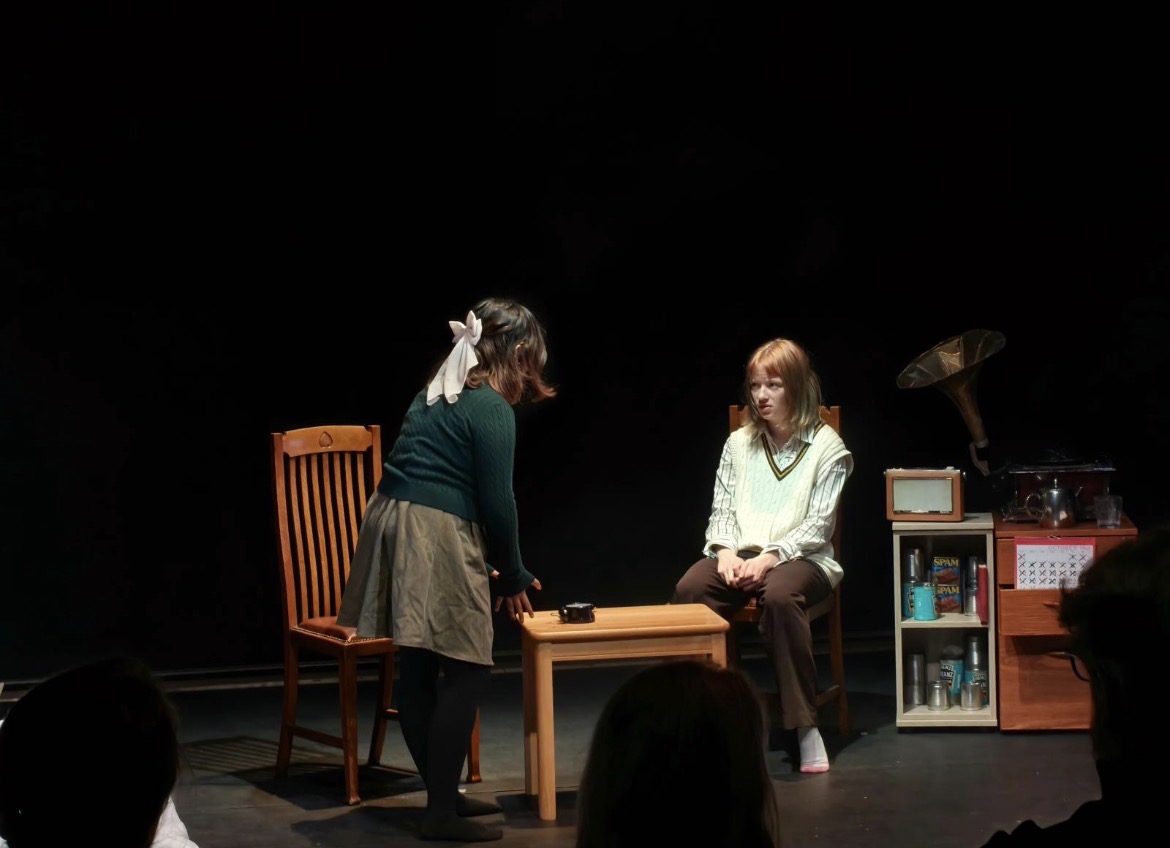
As you walked in, you were met with a surprisingly close stage; two dozen audience seats slightly curved around a small, semi-circle stage on the same floor which our two protagonists rested.
Web and Banerjee were still and motionless in two mattresses facing opposite each other with nothing but two chairs, a small wooden table and a dresser complete with: A gramophone, canned food, a calendar marking off the days (like days in prison) and a radio.
Leung beautifully conveyed an atmosphere of closeness, almost to the point of claustrophobia. They created a space in which space itself is limited, with the only contact to the outside world being an unreceptive radio.
Our protagonists are deprived of light, communication and, most importantly, answers on the state of the nuclear war and political climate of the outside world.
Within this confined space, an atmosphere of interpersonal affection is evident from the first line. Web and Banerjee explore close relationships and the intimacy of support and understanding offered by friends. That being said, they play vastly different characters: Clara is sarcastic, witty and troubled by all-too realistic dreams on a nightmarish apocalypse of destruction and war.
Web’s physicality and jittery movements, constantly fidgeting hands and disturbed expression reinforced her character, playing beautifully opposite Banerjee, who played Judy. Her character was a pragmatic supportive crutch to Carla – ever attentive and comforting.
The language and scripted dialogue written by Leung and edited by Eleanor Baldwin, Rhys LeConte, and Leo Lu, swirled between light-hearted humour and deep, personal memories, and traumas, in turn exploring a whirlwind of human emotion.
The sparse moments of comedy had an undercurrent of anxiety, acting as a constant reminder of the impending doom our characters are grappling with in this period. They presented a situation in which the young, naive, inexperienced minds and voices of these young friends were forced into a terrifyingly uncontrollable adult world.
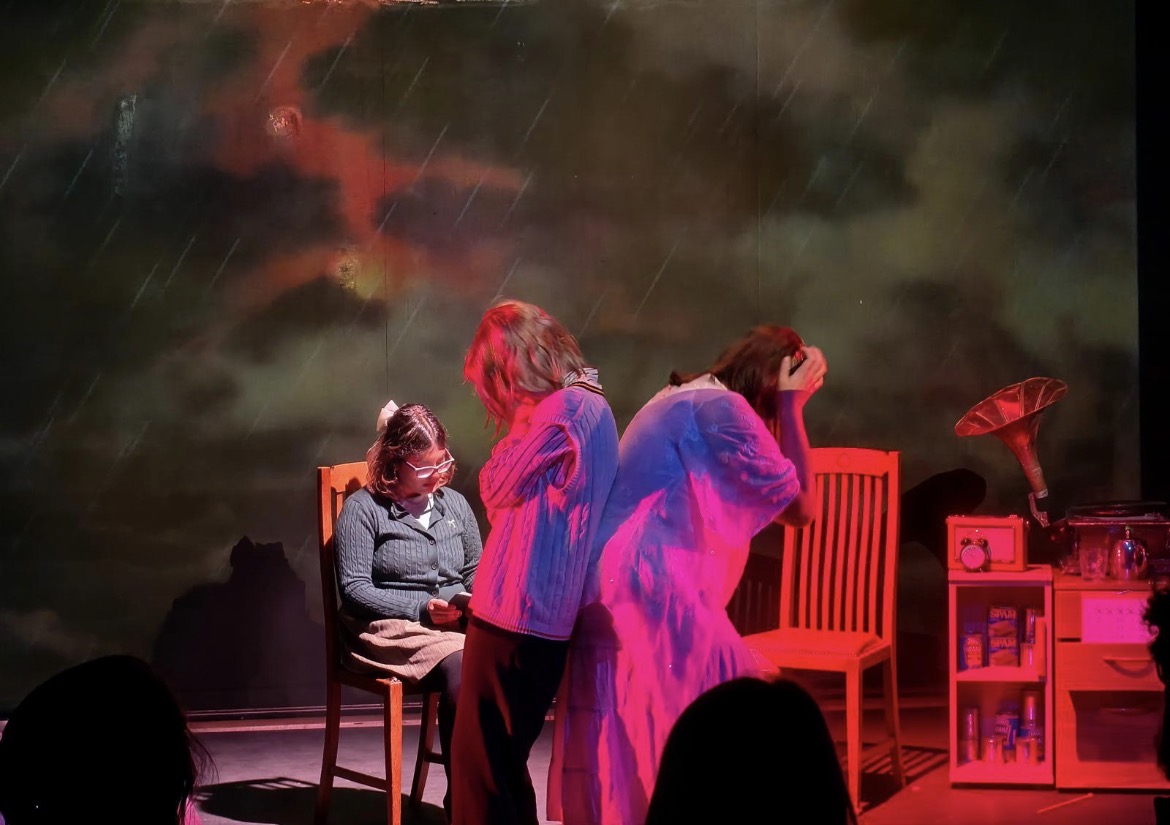
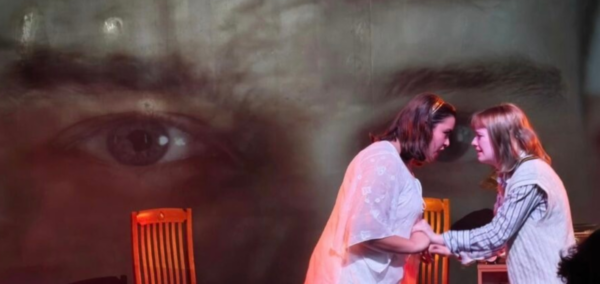
via Ezann Kuai
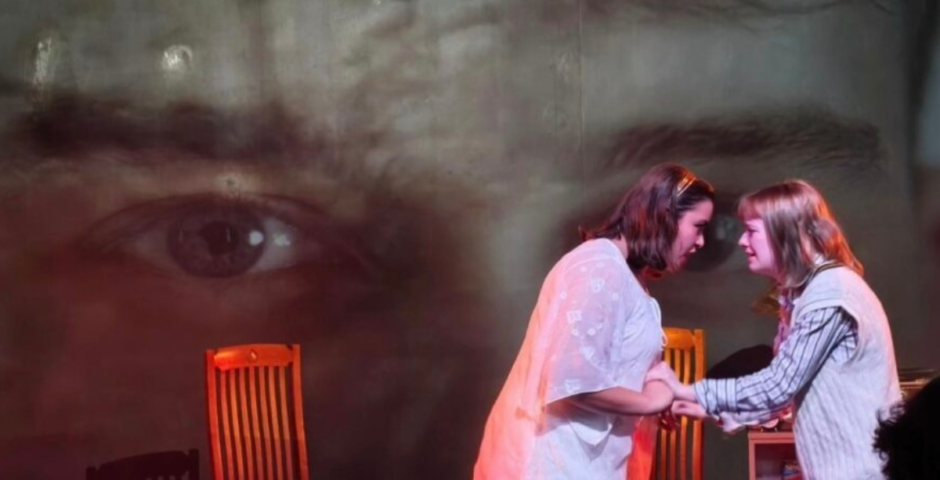
Chenaf who played Del is introduced in all-white – she is omniscient, tantalising, mysterious yet palpably powerful and recognizant. Her stage presence was looming, dominant, and authoritative and yet paradoxically human in their vulnerabilities.
At first, they are inaccessible, impossible to scrutinise, completely in-control and somewhat cruel to Carla and the ignorance of “mortals,” yet she develops into a much more complex character: Chenaf is emotionally explosive – capturing anger, grief and nostalgia skillfully and inviting the audience to empathise with a non-human entity.
Courtesy of Abigail Lemans, Samuel Bailey, and Ezann Kuai the evocation of lighting, sound and the disturbingly powerful use of a black-and-white film showing war and destruction being projected onto the back wall, culminates to produce an unsettling atmosphere.
I was at once hurled into the dreamscape world, with lurid lights, fog, and the all-encompassing sounds of screams, or bombs, creating a completely different world; the dream world was cold, frightening and fascinating – completely polarizing from the ordinariness of the waking world that is small, comfortable and scarcely furnished.
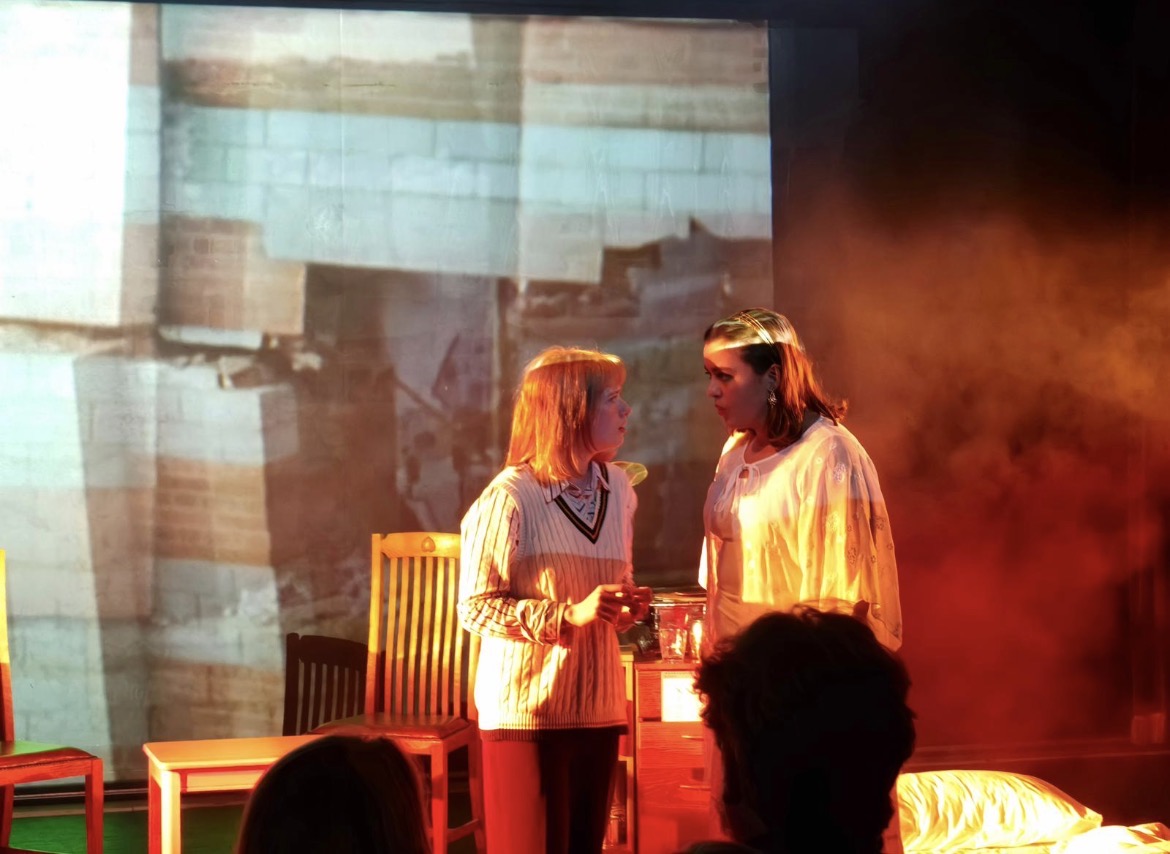
via Ezann Kuai
The use of space and the ability to transform a small, intimate setting into an unbound nightmare was mesmerising – I was transported in and out of Carla’s mind as the realm of the supernatural and realistic were beautifully blended. The space completely changed, and every inch of the limited stage was effectively used.
Ultimately, it was an interesting exploration of trauma, memory and the workings of the mind as well as friendship and human connection. The intimacy of the setting and emotionally raw nature of the script created a tender insight into the anxious atmosphere of 1969 and the tensions of war. A truly absorbing production.
Showing in the Black Box Studio, Fitzpatrick hall, Queens College from October 22nd to October 24th.
For more of the latest news, guides, gossip and memes, follow The Cambridge Tab on Instagram, TikTok, and Facebook.


Latest
How to make the most of who you meet at uni

From friends to flatmates to course friends, you’re destined to meet some good people
Calling all Cardiff Uni social secs – here are the social themes you must include this year

Another Wednesday, another fancy-dress theme to think of
The Tab’s ultimate guide to Halloweek in Sheffield

We’ve found all of the spookiest events happening across Sheffield, so get ready for a week of terror and chaos
It’s Breast Cancer Awareness Month: Here’s a KCL student’s guide to checking their chest

Because everyone should learn how to check their chest

Lancaster MP backs plans to fine passengers for blasting music on public transport

Cat Smith plans to fine bus and train passengers who play loud music
Can you finish this article without checking your phone?

It’s not just you, here’s what endless scrolling is doing to your concentration and your uni work
Are sports socities at UofG too exclusive?

Making a team might require hard work and dedication, but fitting into the social circle can feel like a whole other competition
Film documenting the killing of civilians in Gaza now showing at Tyneside Cinema

NAZA depicts interviews with 24 Israeli soldiers and intelligence officers
New to Birmingham? Here are the best study spots in the city

Whether you’re dodging your flatmates or convinced a change of scenery will fix your productivity, here are some spots where you’ll be able to buckle down (hopefully)
Things to do for Halloween if you didn’t get Salvos Tickets

Don’t fear, there’s more to Halloween than just the club
Six iconic halloween costumes for brunette Bristol girls

With summer now a distant memory, spooky season is upon us ladies
From pumpkins to parties: here’s a round-up of Halloween events happening in Lancaster

A guide to all of Lancaster’s best Halloween events

Love Is Blind’s Cam didn’t ‘do great’ when Aneha critiqued his looks at their engagement

He thought, ‘Wow, does she hate me?’
Lots of the Love Is Blind S11 cast aren’t from Boston – here’s how far apart the couples live
Blake and Erika live in different states
Miranda Hart’s painful reality with illness as Celebrity Traitors marks her iconic return to TV

For years, she was told it was just stress
Interview: Alexander Newman, outgoing Editor-in-Chief

From an unpublished study of Italian seduction to the top of the masthead in record time: the outgoing Editor-in-Chief on manifestation, media barons and why first years should be kept well away from microphones
The flatmate red flags Leeds students need to watch out for (and how to avoid them)

Don’t trust your flatmate? Here’s how to fix that
Newcastle food hot spots worth spending your maintenance loan on
If you’re going to splurge, splurge at these spots x
Top tips for securing the perfect student house in Birmingham

It’s like Escape to the Country, except we’re in Selly and there’s not a blade of grass in sight x