

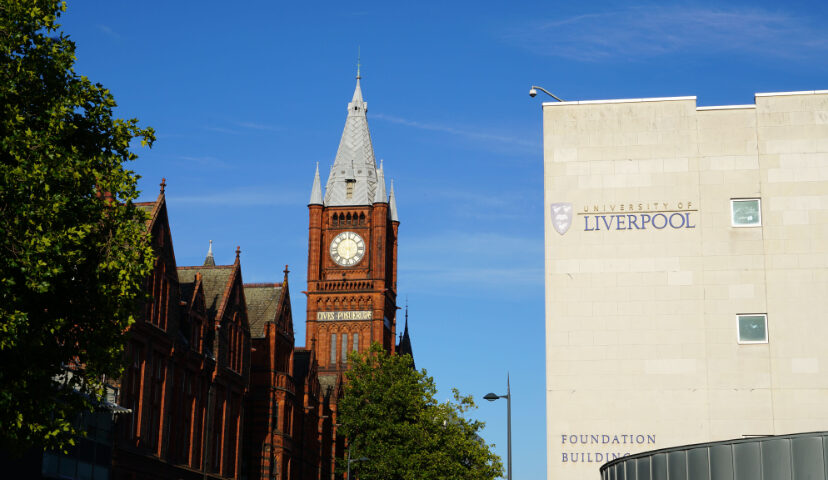
Is this the downfall of Turnitin? Here’s what you need to know
Turnitin’s system is changing and students’ data could be used to train tools which use Artificial Intelligence
As of the 1st of August 2026, the University of Liverpool implemented new guidelines on the use of Generative AI in learning, teaching and assessments for the next academic year. Furthermore, these guidelines allow students more flexibility in their use of GenAI.
The university stated in their guidance leaflet that they “support the transparent use of GenAI to enhance practice, not replace it.”
So, what have they changed?

Assessments now must be placed into one of 4 tiers. Tier 1 means that GenAI use is completely prohibited, tier 2 means it is restricted but not central to learning, tier 3 means it is “actively encouraged,” and tier 4 means that GenAI is classed as an “integral element of the assessment.”
Does this really matter?
Many students are familiar with the platform Turnitin and use it when they upload their assignments via Canvas. Their work goes through Turnitin to detect use of AI. As of September 2026, Turnitin announced a change. Their new policy plans to use students’ data (submitted on the platform) to train AI models.
The University of York’s Student Union took to BBC News to share students’ fears that data was being taken “without the meaningful consent of the people who produced the content.”



In response, the University of York said that they will review the changes to Turnitin’s software. The University of Southampton also responded to concerns and are already phasing out the use of Turnitin for the next academic year.
The University of Liverpool’s Guild Officers posted a statement on Instagram with the following: “We believe your academic work belongs to you and nobody else. AI companies have no right to train their language models without permission.”
This post has received mixed responses. A postgraduate student commented, “The University should absolutely stand their ground regarding this. A part of a university’s reputation depends on how they defend their students against such injustices.”
A University of Liverpool spokesperson said: “Turnitin is one of the tools currently used by the University of Liverpool to support the electronic management of assessment.
“As is the case across the wider higher education sector, we are reviewing our use of Turnitin and will continue to assess its suitability, including as part of any future contract review.
“In the meantime, Turnitin has reassured UK universities and colleges that, in light of concerns raised, it has postponed the introduction of a new End-User Licence Agreement (EULA) until September 2027. Moreover, Turnitin has also confirmed that no student or staff data has been used to develop any generative AI models or large language models.”
Whilst plans have been paused due to immense backlash, the platform still plan to review this policy in September 2027. The University of Liverpool’s statement on Instagram shows that they have no immediate plans to phase out the use of Turnitin.



Latest
Is this the downfall of Turnitin? Here’s what you need to know

Turnitin is currently used by the University of Liverpool, but their system is changing and students’ data could be used to train tools which use Artificial Intelligence

Fewer apps, more life: My experience at the launch of the social SuperApp ZYMIX

Inside the launch of the SuperApp that wants to clear out your home screen

The question we’re all thinking about: What exactly is happening with the library?

Everything you need to know about the JB Morrell Library refurbishment

Plans submitted to council for new research facility at York University

University of York’s Campus West could see a new research building after plans submitted to York Council

Wait, why was Barack Obama in Manchester city centre?

The former US President was spotted outside a hotel before speaking at Co-op Live

The Celebrity Traitors producers are already eyeing up big names for season three’s cast

Stephen Lambert wants Tom Cruise and ‘a big sports star’

Hannah Fry has crunched the numbers, and spotted a suspicious Celebrity Traitors voting pattern

It could be bad news for the Traitors

Former Lancaster University professor John Whitehead dies aged 76

John was a lecturer of mathematics and statistics

How to avoid the struggles that come with a part-time job at a Bristol university

After all, we do live in on of the most expensive cities in the UK.

All the public scandals The Celebrity Traitors cast have been in, from arrests to racist tweets

They’re not as wholesome as people think
Newcastle and Northumbria universities join forces for new Student Health Hub

Students of both unis can access the mental health service on Friday mornings

The net worths of the American Horror Story 13 cast prove who desperately needed that pay cheque

A $50 million net worth with two minutes of screentime? Nice

Three UK universities announced language course closures in 2026 – including Edinburgh
The University of Edinburgh is scrapping 90 programmes

‘She is phenomenal’: Traitor Hannah Fry has realised that she’s related to her co-star
‘I cannot tell you how much I admire her’

From Crawford to Turing: the stories behind UoM’s building names

You’ve walked past them loads, but how many names do you truly know?

‘Students aren’t getting what was promised, regardless of strikes’: Strikers speak out

The UCU strikes have reached their third week, but is the administration budging? The Edinburgh Tab asked strikers their opinions firsthand

Joe Lycett has opened up about being bisexual, after addressing it on Celebrity Traitors
It comes after years of people making assumptions about him

Nottingham among three universities with whole campuses for sale due to financial pressures
The Russell Group uni is selling a site it spent nearly £80m on
Oops! James Acaster’s friend appears to drop hint about his ‘downfall’ on The Celebrity Traitors
He also shared exactly what type of player his friend is
Lol, Celebrity Traitors’ Joe Lycett did actually legally change his name for political activism
A Traitor at heart, even to his own name