

‘I’ll miss the Tesco meal deals’: Inside the lives of Manchester’s Mormon missionaries
Two years — no social media and countless conversations with strangers

Mormons. Or, more accurately, members of The Church of Jesus Christ of Latter-day Saints (LDS). You’ve definitely seen them around Manchester. Smartly dressed in white shirts with black name badges.
They seem to spend more time on Oxford Road than any Manchester student, walking up and down, trying to strike up conversations.
While walking back to my accommodation one afternoon, a young man stopped me and, in a cheery American accent, asked: “Hi! What makes you happy?”
What followed wasn’t the conversation I expected. Instead of immediately talking about religion, we chatted about life, friendship and happiness before he invited me to visit the local church.
Curious, I went.
LDS members differ from mainstream Christianity in several beliefs, including that the resurrected Jesus visited the Americas and in the idea of Restoration – where Christ’s original church was lost and later restored through the Prophet Joseph Smith in 1820.
After touring the church, I became intrigued to learn more about their lives as missionaries.
Young members of the church choose to spend two years living away from home, to go on a ‘mission’ where they teach others and spread their faith.
During this time, missionaries drop their first name and are given the title ‘Elder’ or ‘Sister’. They are paired up with another missionary to live, work, and serve alongside each other 24/7.
Missionaries are required to stay within sight and sound of their assigned companion at all times.
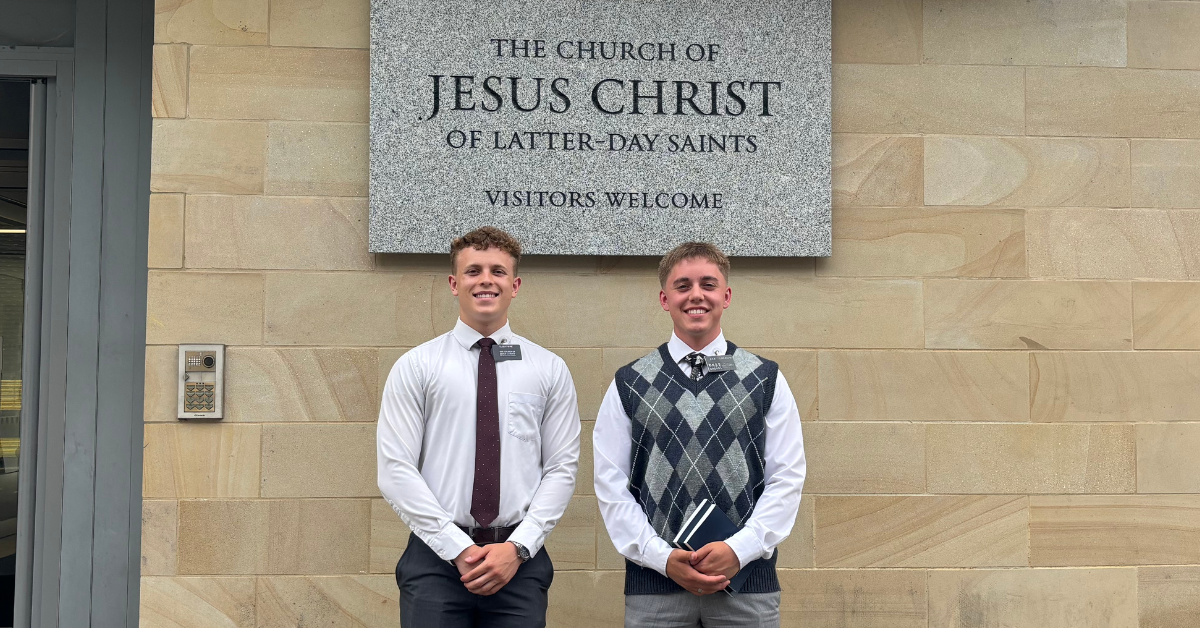
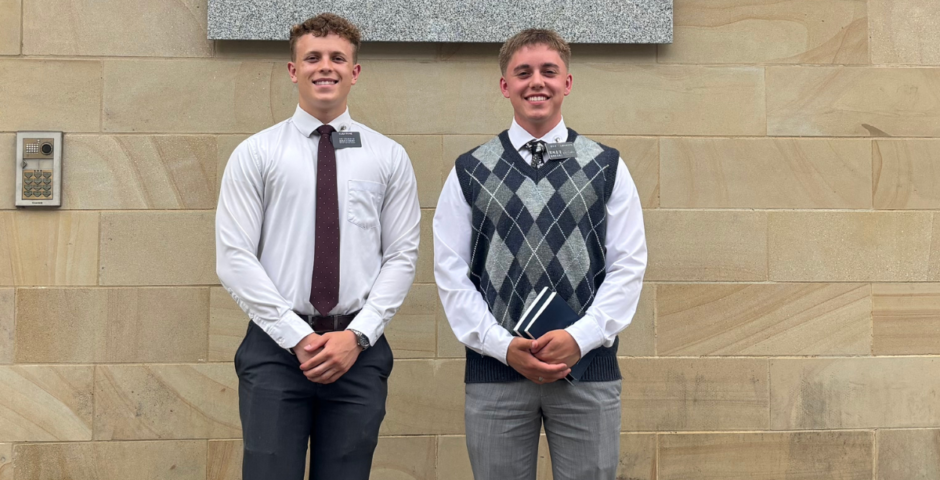
Elder Langston, from Utah, and Elder Payne, from Idaho, arrived in Manchester at age 18, straight after finishing high school. Now aged 20, they reflected on their time in Manchester and their mission.
First things first, they didn’t choose Manchester.
Church leaders assign missionaries around the world, so whilst their peers ended up in Australia, Spain and Switzerland, they found themselves in rainy Manchester.
Unsurprisingly, moving thousands of miles from home wasn’t easy at first.
Elder Payne said it took him around “six months to fully adjust to missionary life.” Langston admitted it felt “weird” to not go home for holidays, but said he felt comforted by his faith because no matter where you go in the world, “the church is the exact same.”
When I asked what they missed most about home, their answers were less spiritual than expected.
In-N-Out, Chick-fil-A and Mexican food all made the list, with Elder Payne insisting Idaho does Mexican food better.
That said, Elder Langston admitted, on occasion, they had enjoyed a Manchester student classic: a Zaytoni kebab.
Some parts of British culture have been harder to experience as tea is actually prohibited for LDS members. Alongside coffee, smoking, vaping and alcohol.
They are also not allowed personal social media during their mission, nor can they binge Netflix shows. I think for many students, two years without a nightly TikTok doomscroll sounds like the real sacrifice.
Missionary life is highly structured. They get one day off each week and are only able to call their families then.
Their day begins at 6:30am with personal scripture study, followed by companion study. Elder Langston is currently learning Mandarin, so he also dedicates part of his morning to studying that.


The rest of the day is spent teaching lessons and spreading their beliefs. Whether they’re travelling on a bus or walking through the city centre, they’ll often strike up conversations with people and invite them to church. By 10.30pm, they’re in bed ready to do it all again.
Approaching strangers every day inevitably comes with rejection, so I asked how they stay positive and keep their spirits up.
They both agreed that while they’ve had difficult experiences, the good ones far outweigh the bad. They don’t take the rejections personally and instead focus on leaving people with a positive impression, regardless of whether they are interested in the church.
“We aren’t doing it to get a reward,” Elder Langston explained, “We do it as an act of service.”
At the end of the two years, there is no big trophy or flashy certificate to take away.
When their mission finishes, they’ll simply head back to America and continue with everyday life.
As they near the end of their mission, I asked what they felt they had gained most from the experience.
Elder Payne reflected:
“Coming down to the end of my mission, I look back from when I first started and it’s like dang that’s quite a big difference.
One of the biggest things is just being able to talk with people and being personable.”
“Before I was a pretty quiet, pretty shy person but talking to people every single day, being able to listen to what they have to say and really being able to connect with people. I think that’s been one of the biggest things.
I’ve gained a really big appreciation for the culture, especially Manchester where everybody has a different perspective on things. It’s pretty cool to see.”
I wondered whether their mission’s success was measured by the number of people they converted but both immediately dismissed the idea.
Elder Payne quoted something he had once heard:
“Your success as a missionary is not determined by how many people you convert or baptise but purely of your desire to serve God.”
Elder Langston agreed:
“Of course we are here to invite others to come to Christ and to experience these things but even if the person we end up converting is ourselves that is still a success.
So it’s not about the numbers or anything like that or about how many people, it’s not like we keep score.”
After two years in Manchester, I asked what they’ll miss the most.
Without hesitation, Payne answered:
“I’ll miss the meal deals to be honest, they don’t have meal deals in America.
Tesco meal deals. Those are pretty good.”
Although both Elder Payne and Langston said they probably won’t be rushing back to Manchester after spending two years here, they’d love to visit again one day, catch up with the friends they’ve made and check in with people they met through the church.


Latest

A guide to treating the Sunday scaries in Selly Oak

Battling a Circo hangover with the impending doom of a 9am lecture? Welcome to an average Sunday in Selly Oak

More than two tonnes of plastic pellets may remain in the Tyne, researchers warn

A collision in July released around 17 tonnes of nurdles

Jax speaks out after toe-curling Love Is Blind reveal, and shares why she *really* ghosted Stew

She claims it had nothing to do with his appearance

A full record of how The Celebrity Traitors S2 cast voted at each Round Table session

Yup, we’re keeping track of all the stats

The Celebrity Traitors comedians whose fortunes are no laughing matter, from £1m to £6.5m

The fact Miranda isn’t the highest is criminal
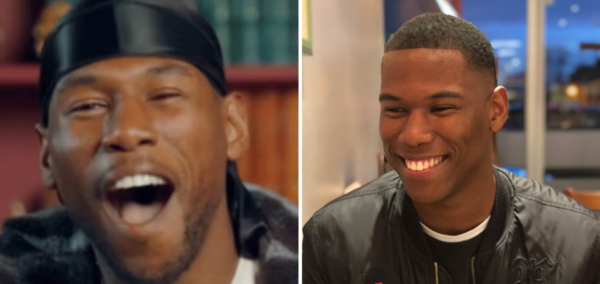
Celebrity Traitors’ King Kenny was arrested after filming a prank on his university campus

He has a wild backstory from his YouTube career
Is this the downfall of Turnitin? Here’s what you need to know

Turnitin’s system is changing and students’ data could be used to train tools which use Artificial Intelligence

Fewer apps, more life: My experience at the launch of the social SuperApp ZYMIX

Inside the launch of the SuperApp that wants to clear out your home screen

The question we’re all thinking about: What exactly is happening with the library?

Everything you need to know about the JB Morrell Library refurbishment

Plans submitted to council for new research facility at York University

University of York’s Campus West could see a new research building after plans submitted to York Council

Wait, why was Barack Obama in Manchester city centre?

The former US President was spotted outside a hotel before speaking at Co-op Live

The Celebrity Traitors producers are already eyeing up big names for season three’s cast
Stephen Lambert wants Tom Cruise and ‘a big sports star’

Hannah Fry has crunched the numbers, and spotted a suspicious Celebrity Traitors voting pattern
It could be bad news for the Traitors
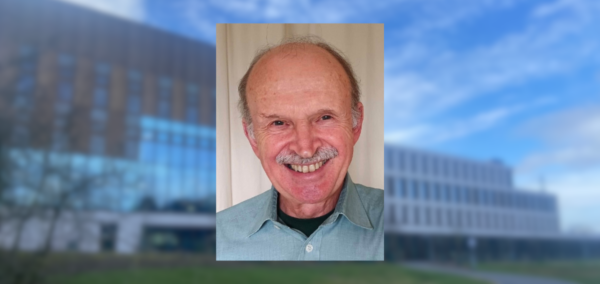
Former Lancaster University professor John Whitehead dies aged 76

John was a lecturer of mathematics and statistics

How to avoid the struggles that come with a part-time job at a Bristol university

After all, we do live in on of the most expensive cities in the UK.

All the public scandals The Celebrity Traitors cast have been in, from arrests to racist tweets
They’re not as wholesome as people think
Newcastle and Northumbria universities join forces for new Student Health Hub

Students of both unis can access the mental health service on Friday mornings

The net worths of the American Horror Story 13 cast prove who desperately needed that pay cheque
A $50 million net worth with two minutes of screentime? Nice

Three UK universities announced language course closures in 2026 – including Edinburgh
The University of Edinburgh is scrapping 90 programmes

‘She is phenomenal’: Traitor Hannah Fry has realised that she’s related to her co-star
‘I cannot tell you how much I admire her’