

Cultural vandalism’: Uni of Edinburgh to close Scottish and Celtic programmes for 2027
‘It is also reflective of a wider institutional effort to undermine the arts and humanities. We must all stand together to resist this destructive pursuit’
With 90 programmes across the University of Edinburgh marked for closure in the upcoming 2027-28 academic year, Scottish and Celtic programmes have been amongst the casualties.
Most of the programmes set to be axed are joint honours degrees, although eight single honours are also taking a hit. Among these are undergraduate programmes in; Celtic, divinity, Persian Studies and, Portuguese.
There is particular concern over the closure of Scottish and Celtic programmes, with the University of Edinburgh holding the title of the longest-established Celtic department in Scotland.
Professor Alex Thomson, head of the school of LLC, said: “The University of Edinburgh is a leading provider of modern languages and of Celtic and Scottish studies in the UK – this will not change.”
In discussing the closure of said programmes, Professor Thomson added: “By closing a number of programmes that have had no or very low enrolments for several years, we believe we are strengthening our portfolio and adding to the experience of our students.”
However, the discussion is pivoting towards if the “low” number of students enrolling is reflective of the lack of Scottish students at a Scottish university. And if removing these programmes will further push them away.
The number of Scottish students at the university is a rather low one. The BBC found that around only “26 per cent of Edinburgh’s students are from Scotland”.
This statistic has become prevalent in the discussion surrounding closing programmes tailored for Scottish students, a sentiment which the University of Edinburgh Scottish Society feels strongly about.
In a statement to The Edinburgh Tab, the Scottish Society explained: “The Scottish Society is deeply concerned and appalled by the university’s plan to cut 90 courses, including seven programmes in the Celtic and Scottish Studies Department.


“Dismantling Scottish culture and language courses, among many others, while university funds are invested in multinational corporations, is cultural vandalism.
“It is also reflective of a wider institutional effort to undermine the arts and humanities. We must all stand together to resist this destructive pursuit.
“The Scottish Society is attempting contact with senior leadership and working alongside UCU and partners to ensure that our voice is heard.”
The full seven undergraduate programmes closing include Celtic and Scottish Lit, Celtic and English Language, Scottish Ethnology, Celtic and Archaeology, Scottish Ethnology and Scandinavian studies, and Scottish Ethnology and English Language.
In response to the Scottish Society’s statement, University of Edinburgh professor Alex Thomson told The Edinburgh Tab: “The University of Edinburgh is a leading provider of modern languages and of Celtic and Scottish studies in the UK – this will not change.
“We are refreshing our programme to consolidate our offering for future students and make their degree pathways easier to navigate. By closing a number of programmes that have had no or very low enrolments for several years, we believe we are strengthening our portfolio and adding to the experience of our students.
“These decisions have been made after thoughtful consideration and we believe the refresh will hold our School in great standing for many years to come.
“Very few students enrol to study Celtic and Scottish studies as their main programme of study, and the majority of the students we teach in these areas do so through their choice of elective courses, which will still be available. We are reviewing the main programmes of study with a stronger focus on employability and the links between culture and the creative arts.
“I would be very pleased to meet with the Scottish Society, and any concerned students, and believe that we have a shared commitment to promote and preserve Scotland’s literatures, languages, cultures and heritage.”
Latest
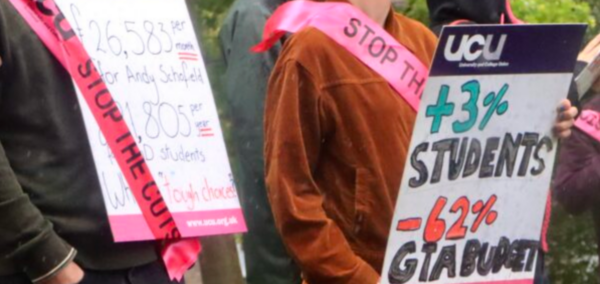
UofG students and staff protest GTA cuts outside university library

Staff and postgraduate researchers continue to protest over ongoing financial precarity due to budget cuts as the university expands external defence partnerships

Cultural vandalism’: Uni of Edinburgh to close Scottish and Celtic programmes for 2027

‘It is also reflective of a wider institutional effort to undermine the arts and humanities. We must all stand together to resist this destructive pursuit’



Um, Mandi Vakili has issued the most painfully awkward apology after her breastfeeding rant

She’s suddenly ‘really sorry’


Monster creator reveals how they pick the show’s subjects and the stories they want to tell next

One they’ve thought about is so random

Love Island’s Priya is now throwing major shade at Aidan after the split and it’s brutal

The niceness didn’t last for long

Your day by day guide to Freshers’ Week 2026 at the University of Sheffield

Starting uni and unsure what to do? Here’s a daily guide of what’s on that you could get involved in

Calling all writers and content creators: The Newcastle Tab wants you!

Come along to our open meeting on Thursday 1st October at 6:30pm at Luther’s x
Channing Tatum’s alleged burner account has responded, so here’s why it might not be him
The evidence is piling up
Crying on stage to fearing for safety: Ed Sheeran’s ‘pity party’ weekend in its woeful entirety

‘I see 50,000 people who haven’t abandoned me’
Eight UK universities already plan to strike over job cuts in the 2026/2027 academic year

Staff at two Russell Group universities will strike this autumn

How Monster used some seriously grim tricks to film *that* Lizzie Borden vomiting scene
It also actually happened in real life

As Ed Sheeran cried on stage, his own cousin dropped brutal bombshell about his ‘malicious’ ways
‘I don’t like his music so I can’t say he’s even a good artist’

Love Island’s Lorenzo is drastically losing Instagram followers and there’s an embarrassing pattern
Thousands of people have dipped

Right, here’s what’s *really* going on with Love Island’s Yasmin, Lorenzo and Central Cee
She met up with both of them last week
The full messy picture of Channing Tatum’s alleged burner account, and the mean things it writes
There are so many posts about Harry Styles and Zoë Kravitz


Oh no! There are divorce rumours surrounding yet another Love Is Blind couple
I can’t deal with this heartbreak