

Does Durham’s marketing focus on the Bailey Colleges too much?
A deep dive into the way Durham is marketed to prospective students

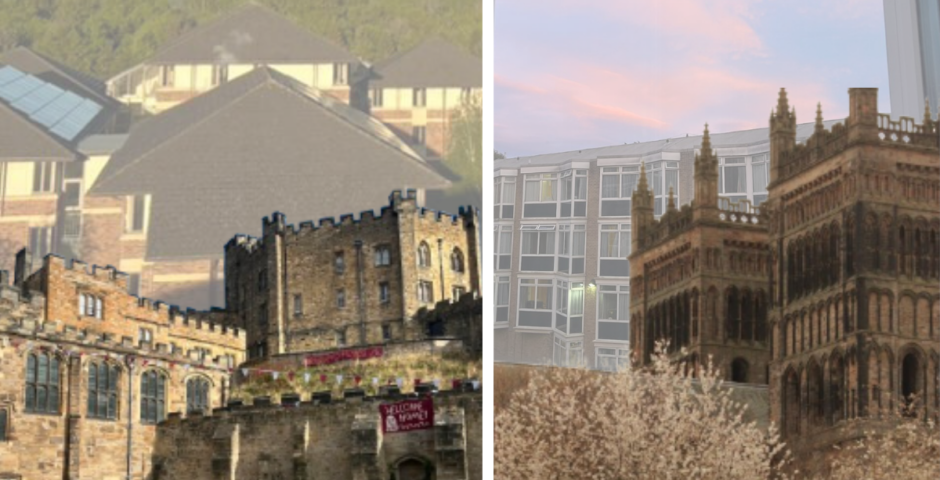
Durham University is fortunate enough to be in a historic town with beautiful heritage sites. Indeed, this accounts for much of its marketing (and rightly so; it’s certainly a focal point of the city’s timely appeal). Including the cathedral, the castle and the botanical gardens, Durham is home to these gorgeous spots. The university uses a significant portion of the buildings along the Bailey as colleges and student accommodation. However, these alone do not encompass the entirety of Durham.
From the stereotypical cultural differences between the Hill and the Bailey to the differing aesthetics, these divides often complicate the student experience. While the marketing may lean into this Harry Potter-esque lifestyle, this ends up being far from the reality for a lot of students.
In a city that’s so connected to its roots, pushing a more modern narrative is still perhaps somewhat unfamiliar. However, for students, showcasing all aspects of university life, despite how “in keeping” they are with its history, is important to diversify its student body and welcome modernity, rather than to simply reject its online presence. It’s a balancing act, and thus should be reflected as such in its publicity.
Open days and the website
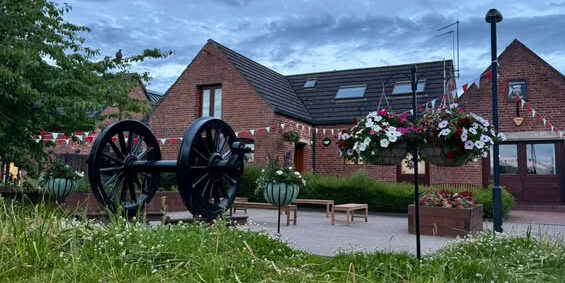
Both in-person and online, Durham seems to push images of the Bailey and the aesthetics of the old buildings to make itself more appealing to prospective students. While this may be intentional, it doesn’t provide an accurate sense of the university. Some are fortunate enough to live on the Bailey, only to be greeted by stone and Norman architecture. But there’s a lack of prospectus photos involving the hill colleges or the less pretty department buildings. Unless you come in person to view the department buildings and travel up the hill, this information is sometimes hard to find.
Personally, I didn’t have the time on an open day to look at the hill colleges. I was focused on staying near the train station, the city centre and the department building most relevant to me. This unconscious confinement to the Bailey ultimately meant my impression of Durham was very different from what it’s like being an actual student.
This isn’t necessarily a bad thing, but newer colleges being underrepresented within this marketing seems counter-intuitive to expanding the university. Rather than replicating the aesthetic of the Bailey, the Hill colleges have different and more modern appearances.
Over-subscribed applications to Bailey colleges
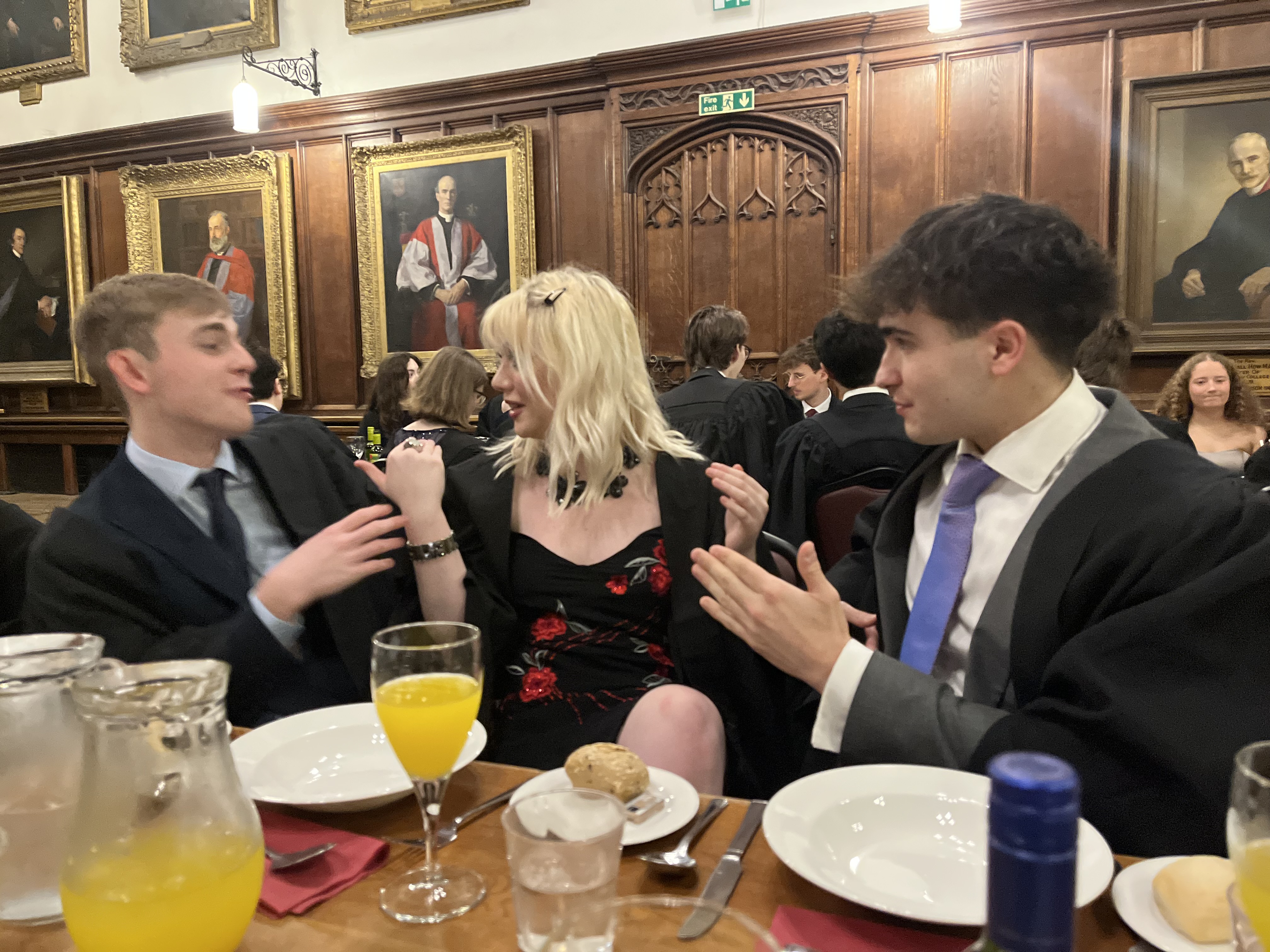
The over-subscription of Bailey colleges affirms this idea that there is a public push on these colleges and their historic resonances and aesthetics. According to the Palatinate in 2025, 20 per cent of students ranked Caste as their first choice (because who doesn’t want the possibility of living in a castle?). Hill colleges such as Collingwood and St Mary’s did feature in the top five. But the bottom five (Stephenson, Grey, St Aidan’s, Trevelyan, and Van Mildert) are also all hill. Bailey colleges (and colleges that somewhat match the Bailey aesthetic) being oversubscribed shows that aesthetics are a huge factor in the student experience people expect.
The hill colleges reputably have friendly communities and most people end up loving their college. But ultimately many students are disappointed when they’re reallocated to their 12th choice (or sometimes lower).
Students’ social media pages
 Looking at the social media of students, there’s also a push on the algorithmic appeal of the beauty of the centre of Durham over the hill. Many students will be familiar with Jack Edwards, who lived in Cuth’s and creates an appeal to its location and beauty. But the university has buildings that are in a liminal spot, neither modern nor aesthetically old. I’ve also seen students online in their second or third year quick to show off the gorgeous view of the cathedral from their windows. By creating this selective space online, it feels like we are trying to curate and pick-and-choose the best-looking aspects of our lives as opposed to their entirety.


The Durham Tab also spoke to Elliot @study.el (a Durham student from Grey College with a large online presence). He noted that The Durham Student Instagram account often focuses on the cathedral, when the only official university connections to this space are matriculation and graduation. As an English student, I’ve noticed that talks about the course haven’t often been in Elvet Riverside, a concrete building that doesn’t have the futuristic aesthetic of the CLC. However, as an engineering student, Elliot also added that “[t]hey don’t show the really ugly [or] uglier STEM buildings”. Instead it shows off the more modern buildings, such as the TLC. He told us “Before Durham, I couldn’t even find [or] knew what the engineering building looked like”.
However, Elliot also noted that Durham influencers and students are more realistic within their online influence. He said that the majority live on the Hill, and so have been noted to sharing more details about their college and what it means to live there. “I think it’s easier for us to not romanticise that [in the way that the] Durham social media [pages] do”.
What do Durham students think?
To find out if these opinions are shared, The Durham Tab ran a poll on Instagram. Several agreed, with one student describing how “I’m in Jobo but only applied to Bailey and it feels so different to how I thought”. Students such as Millie Barter emphasised that there is “Not enough hill” in the representation of the university on social media. Others were more unsure, encouraging students to remember “you’re still within walking distance from the Bailey!”.
One common theme was the underrepresentation of Hild Bede, a college that sees “erasure” and almost no social media coverage due to being neither hill nor Bailey. Students reported that the college is “constantly left out of both”, sitting in a grey area that doesn’t quite characterise the Bailey, nor the Hill.
Hill vs Bailey culture
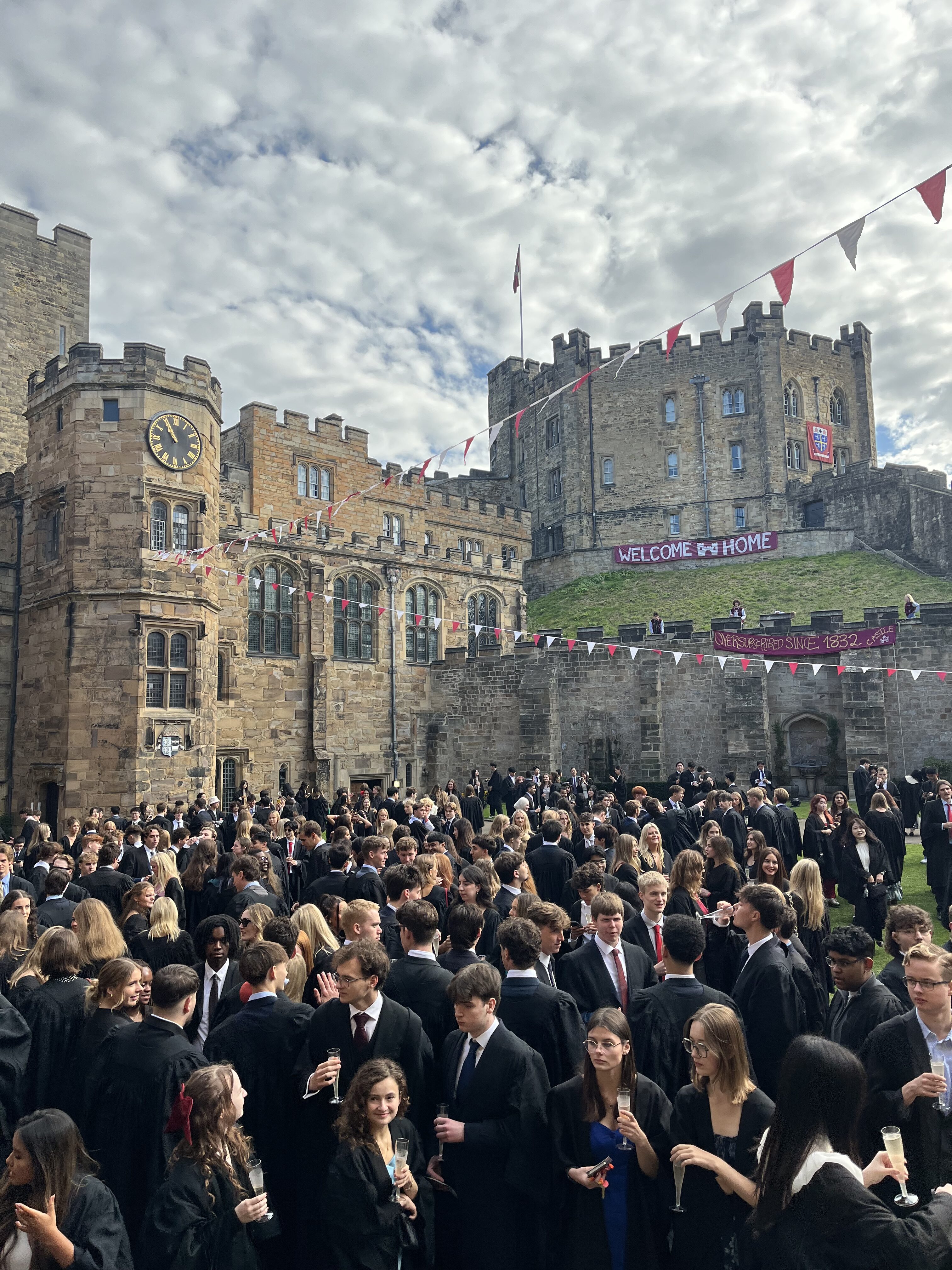
The so-called differences in the social lives and culture of the hill and Bailey also is not really expressed until one has actually begun as a student. Many of the Bailey colleges are rumoured to have “cliques”, and they tend to be what people think of when they picture Durham lifestyle. Because the Bailey image gains a lot of attention, this unfortunately has the potential to make prospective students feel out of place within Durham.
But of course, while stereotypes often do come true, its important to remember everyone is individual, and the college allocation process is entirely randomised. students end up in a college they didn’t feel like they “fit” into, but are forced into the stereotype of “Hill” or “Bailey” anyway. Its luck, after all.
Therefore, this divide isn’t linear; you will find your crowd, whether that’s within your college, on the Bailey or the Hill, or perhaps the best connections you’ll make are those you least expect, and they may not fall along these divided lines after all.
Perhaps what is most needed is a greater push towards some of the different aesthetics and cultures of the hill colleges (where I’ve had a great experience), Durham could appeal to a wider range of people and make the institution feel more academically and socially accessible.
For more of the latest news, guides, gossip, and memes, follow The Durham Tab on Instagram, TikTok, and Facebook.


Latest

James Acaster is being called out for his bizarre behaviour during Celebrity Traitors mission

He’s taking the phrase ‘playing it safe’ too literally

Christa Pike’s team say IV site might have ‘blown’ during failed lethal injection in detailed update

They have finally explained exactly what happened

Second clip of comedian’s rape ‘joke’ resurfaces from five months before his apology

‘There are some clips coming out from that that could be a problem’

Mind-boggling flaw makes it ‘obvious’ who the Celebrity Traitors final three will be
It’s staring us in the face

Love Is Blind’s Aneha feels viewers ‘misunderstood’ her family’s response to Cam

‘My family and I have always been incredibly accepting’

Ross Kemp explains the mindset that left him suspicious of everyone on Celebrity Traitors
‘I was really sensitive’

Spoiler: Kenny’s handwriting on Celebrity Traitors ‘gives away’ who gets murdered next
There would be a national period of mourning

MAFS Australia production in another scandal as police investigate report of inappropriate content
New South Wales Police says the matter will be referred to Western Australia Police

How to write your diss without losing your mind: A third year survival guide

Five ways to survive third year without losing yourself in the process

A closer look at John’s job, since he was stressing over it on Love Is Blind season 11
Sarah did not like him shouting down the phone

How Netflix production changed the real life story for New Stanford Prison Experiment reality show
Robocams were in the prison filming the cast

Three compelling clues Michaella and Rob broke up after Love Is Blind season 11
Exhibit B: Michaella’s Substack

Love Is Blind’s Aneha and Cam break down what they actually like about each other
‘He just looked completely different from what I was thinking’

A Love Is Blind participant who quit early found love with someone from the pods afterwards
Sahar and Tucker are still together now

What the Love Is Blind season 11 cast really do in their day jobs, as per their LinkedIns
It’s not hard to guess who has LinkedIn premium

The way Celebrity Traitors’ Jerry Hall decided to go all in on modelling is bizarrely iconic
Only Jerry Hall could make a painful moment a lifelong career

Traitors’ Sebastian Croft seemingly addresses secret relationship with co-star in new music
Following in Taylor Swift’s footsteps, the breakup pushed him to release his music

The huge cash payout Jerry Hall reportedly got in settlement when she divorced her billionaire ex
She also got a number of properties

Sense and Sensibility characters as different types of Newcastle students

Stay wary of any incarnation of a rugger
Lancaster University political societies release statement following alleged physical assault

The victim was reportedly taken to hospital with a shoulder dislocation