

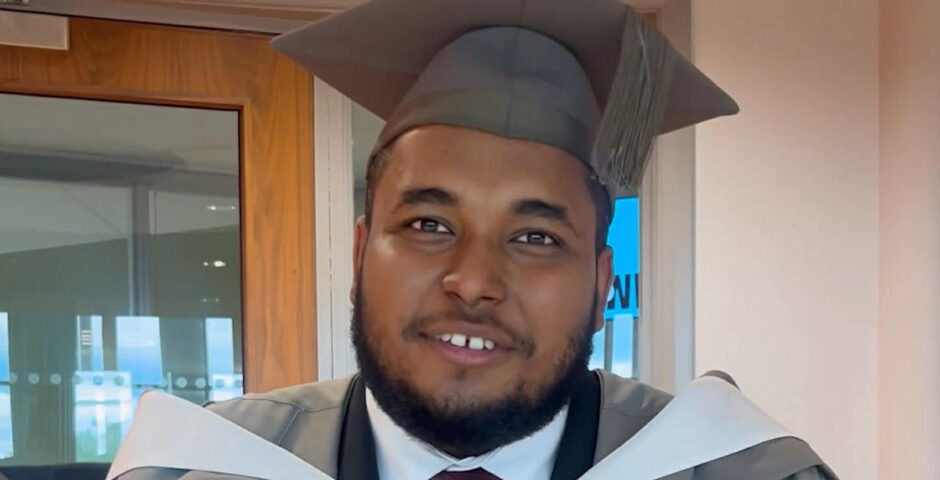
University of York student helps create international exhibition on Saudi Arabian heritage
Mohammed Alhusayni was chosen to select historically significant filming locations and communities

A postgraduate student at the University of York has helped create an international exhibition exploring heritage and identity in Saudi Arabia.
Archaeology and heritage graduate, Mohammed Alhusayni, worked as an archaeological consultant on Cries in the Desert, a collaborative film and sound installation. He is currently studying for an MA in cultural heritage management.
The project formed part of the AIUla Arts Festival and was supported by the British Council and the Royal Commission for AIUla.
Combining heritage and community
As part of the project, Mohammed played a key role in ensuring the exhibition reflected local perspectives.
Working as both a consultant and cultural mediator, he selected historically significant filming locations, facilitated access to local communities and helped ensure cultural accuracy throughout the project.
As a local archaeologist from AIUla, he also acted as a bridge between international artists and the community, helping to ensure the voices of local people were within the installation.
An immersive exhibition
The installation was set inside a traditional house in AIUla’s AIJadidah Arts District and featured a mix of film and sound.
Spread across four rooms, the exhibition included six short films exploring different aspects of AIUla’s landscape, from underground water sources to mountains and sky, alongside sound installations using recorded voices, conversations and music from local people.
A key part of the project was the documentation of Hadwa, a traditional women’s wedding performance that is rarely recorded, helping preserve an important form of cultural heritage.


Inspired by studies at York
Mohammed said his studies at York plated a major role in how he approached the project.
He explained that his degree helped him understand heritage as something lived and experienced, rather than just preserved, influencing how he worked with communities and approached storytelling.
His training also informed how the exhibition balanced artistic presentation with cultural meaning, as well as how recordings were documented and archived for future use.
Bringing heritage to wider audience
View this post on Instagram
The project reflects a wider effort to make heritage more accessible through creative and immersive formats. By combining archaeology, community collaboration and artistic interpretation, Cries in the Desert aims to give audiences a deeper understanding of AIUla’s cultural landscape.
A major highlight of the project came when Mohammed met Prince William during his visit to AIUla, where he presented the installation and discussed its structure. The visit coincided with the announcement of the Saudi-British Cultural Year 2029, highlighting growing cultural collaboration between the two countries.
For Mohammed, the experience shows how academic study can translate into real world impact, helping to preserve and share heritage internationally.
Featured image via Instagram
Latest
The reason Netflix’s Lizzie Borden series has jarring modern music, according to the showrunner

Not a single song is from the 1800s

Lizzie Borden was acquitted, so who do people think actually killed her parents?

There are many other suspects

95 per cent oppose Turnitin plans to train AI on student work, poll by The Lancaster Tab finds

Of over 700 respondents, almost all decided they would not be happy to have their assignments train AI tools

Why Joey Essex has called off a romance with Priya after Love Island 2026

Yes, there really was something going on between them
Are you a fresher? Here’s my advice as a recently graduated student

What I wish I knew when I started

How to do the Hotel Lobby AI trend from TikTok that puts people into Quavo and Takeoff video

It’s gone viral this week
The iconic stars we won’t see in American Horror Story 13, and the ‘absurd’ reason for the snub
I’m going to write a very angry letter to Ryan Murphy

Ed Sheeran’s cousin shares his theory on Macklemore’s exit, as rapper announces new tour
‘I’ve witnessed him being a coward’

The actress who plays Lizzie Borden has shared her take on if she was guilty or not
It’s the big question

Ed Sheeran’s tour survived the Macklemore row, but now two shows have been cancelled
The stage was almost built

Raves, trips and becoming a godfather: Lorenzo Alessi on his single era after Love Island
He’s living his best life
How Aileen Wuornos spent her last day on death row, and how Monster changed it
She didn’t actually have a last meal
Welcome to Durham: Everything you need to know about starting out

The best ways to start your first term at Durham

Aileen Wuornos’ death row letters, from sharing a keg with Jesus to calling her girlfriend ‘ugly’
There are hundreds of letters over a 10 year period
Timeline of real-life Lizzie Borden photos shows what she looked like over the years
Monster doesn’t get her quite right

Age differences between The Lizzie Borden Story cast and the real people make it inaccurate
Andrew and Abby were so much older when they died
Monster gave Lizzie Borden and Bridget a happy ending, but did it actually happen?
The creators have explained their decision
In her own words: Aileen Wuornos’ girlfriend on why she didn’t go to police sooner
Aileen came home and told her what she’d done

Explained: This is what the chino-chanting video actually was

Take your guesses: Which intramural team do you think this will be about?