

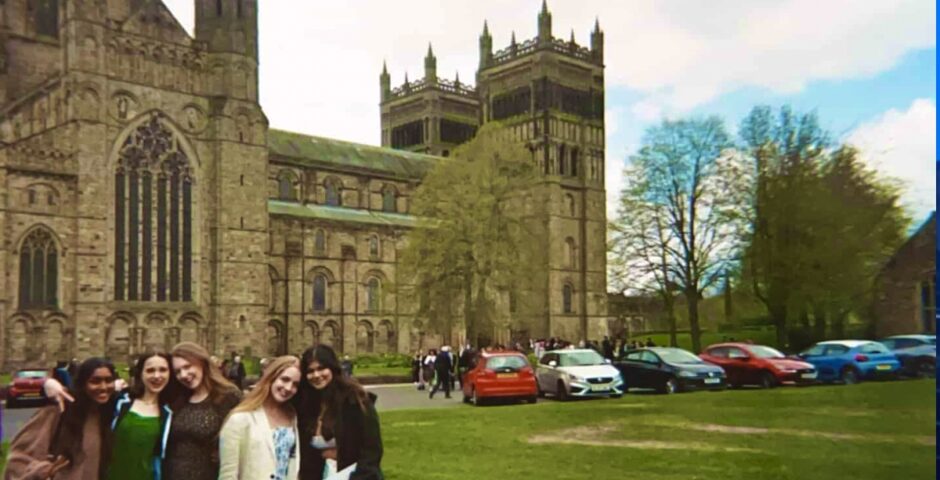
You’ve got diss: How to survive your Durham dissertation
A comprehensive guide to conquering Durham’s most ominous rite of passage

It feels only right to talk about the ominous “dissertation” as we head into the Easter holidays – that magical time of year when chocolate eggs exist, but you’re too busy writing 10,000 words to enjoy them.
Let’s be honest: While others are frolicking through fields and living their best spring lives, many of you will be hunched over your laptops, surviving on caffeine, mild panic, and an alarming quantity of Mini Eggs. It’s a rite of passage. A character-building experience. A slow descent into academic chaos.
Whether you’re a final year currently in the trenches, a second year spiralling over potential topics, or a first year still wondering what on earth a “dissertation” even is: Welcome. You’re in the right place.
In this article, I’ll share some tips and tricks on how to approach your dissertation, get started without crying (too much), and, most importantly, actually finish it.
Now, before anyone calls me out: Yes, writing this without having finished my own dissertation is slightly… bold. Some might say fraudulent. However, I have consulted highly reliable sources (my friends, who are currently deep in the thick of it), so consider this article basically peer-reviewed!
And yes, I may or may not be writing this while procrastinating my own prep reading for my “dissy t” (which, I’m told, is what the youths are calling it these days). But as the wise once said: do as I say, not as I do 🙂
The first step: Choosing a topic

From personal experience, even thinking about your dissertation can feel overwhelming. You’re essentially being asked to choose a topic you’ll spend months working on – one that counts for a significant portion of your final-year grade – and somehow turn it into 10,000–12,000 words without losing the will to live. No pressure, right?
So… where do you even start?
Step one is choosing a topic, which sounds simple, but really isn’t. I remember in second year when my anthropology department sat us down for an intro talk, and my immediate thought was: I’m only in second year, surely this is a future me problem? The very harsh reality is that, unfortunately, it is very much a present you problem. The earlier you start thinking about it, the easier it becomes.
The best advice I was given (and will now pass on as if I came up with it myself) is this: Pick something that genuinely interests you. I know, groundbreaking. But it matters, especially in a subject like anthropology, where you can quite literally write about anything related to human life (which is both freeing and wildly unhelpful).
If nothing immediately comes to mind, don’t panic. Go back through your old essays, lecture notes, and seminar readings. Think about the moments where you had that “wait… this is actually really interesting” reaction which reminded you why you chose your degree in the first place. Those little sparks of curiosity are exactly what you’re looking for.
At the end of the day, your dissertation is a chance to explore something you actually care about. If you choose a topic that excites you, or at least doesn’t make you want to immediately close your laptop, the whole process becomes a lot more enjoyable (or, at the very least, slightly less painful).
Actually starting (yes, this means reading)

Once you’ve picked a topic, congratulations, you’re already halfway there. Now comes the slightly less glamorous part: actually starting. Time to get crack-a-lacking.
Here’s the not-so-shocking truth: You are going to have to do a lot of reading. And then, just when you think you’re done… more reading.
The earlier you start, the better (I know, truly groundbreaking advice). If you can, use the summer to get ahead, even doing a bit of light reading will make a huge difference later on when deadlines start looming and stress levels rise.
The good news is, it doesn’t matter if your early reading feels a bit random. The important thing is just to start. You’ll quickly find that one article leads to another, and before you know it, you’ve fallen down an academic rabbit hole you didn’t even know existed. That’s completely normal, and actually part of the process.
Also, once you’ve chosen your topic, you’ll be assigned a dissertation supervisor. Think of them as your academic guide through the chaos. In my first meeting, mine gave me a few key readings to start with, and from there I was able to build out my research and figure out where I wanted to go next.
So: Start early, read widely, and accept that your dissertation journey will probably take a few unexpected turns along the way.
Stay organised (and save yourself stress)

Organisation is what turns your dissertation from overwhelming into manageable.

Break it into chapters so it feels like a series of smaller essays rather than one huge task. A clear table of contents with subheadings helps you work in smaller chunks (e.g. 500 words at a time), which is far less intimidating than tackling thousands of words in one go.
Cite as you go, seriously, don’t leave it until the end. Pick a referencing style early, stay consistent, and use tools like MyBib to build your bibliography automatically.
Make the most of your supervisor. Their guidance is genuinely helpful, and they’re often your first marker, so their feedback matters. It’s also worth checking your department’s marking criteria so you know what you’re aiming for.
If you’re unsure about structure or style, look at past dissertations for inspiration.
Finally, keep your files organised, having a separate folder for each chapter can make a big difference once everything starts piling up.
If everything starts to feel overwhelming, tools like Grammarly offer an AI checker and rephrasing features that can help you refine your work. I’m not encouraging you to rely on AI, but if you do use it, try to use it thoughtfully and strategically.
It takes a village
You are not in this alone, even if it sometimes feels like you versus a blinking cursor at 2am.
Lean on the people around you. Your friends, your family, your course mates, they’re all either going through the same thing or have survived it before. There is absolutely no shame in reaching out. Whether it’s a joint “I hate my diss” rant with your friends, a dramatic phone call to your mum, or booking yet another meeting with your supervisor, support is there, and you’re allowed to use it.
Make the most of the resources available to you. When you’re submitting drafts, actually put the effort in, the more you give, the more useful the feedback will be. In many courses, your meetings with your dissertation supervisor are limited, so use them wisely. Maybe mention if you are feeling overwhelmed you can speak to college student support
And honestly? Don’t be afraid to (politely) pester your supervisor. That is quite literally their job. They are there to guide you, answer your questions, and help you figure things out when everything feels a bit chaotic.
So speak up, reach out, and remember: Dissertations may be individual projects, but surviving them is very much a team effort.
There is light at the end of the tunnel
Let’s be honest: The dissertation process can feel incredibly daunting. At times, it might even feel completely overwhelming, like you’ve signed up for something far bigger than you anticipated.
But here’s the key: Break it down.
Instead of thinking about 10,000+ words looming over you, focus on smaller, manageable chunks. A paragraph. A section. A page. Baby steps really do add up, and before you know it, you’ll have something that actually resembles a dissertation.
Also, and this is important, your dissertation does not define you as a person. It might feel like the most important thing in the world right now, but it is not a measure of your worth, your intelligence, or your future. It’s just one piece of work (a very long one, granted).
Make sure to reward yourself along the way. Whether it’s a coffee break, a walk, or a well-earned episode of something trashy, you deserve it. Rome wasn’t built in a day, and neither is your dissertation.

When you’re nearing the end, give yourself enough time to properly proofread. Ideally, step away from it for a couple of days and do something completely different. Coming back with fresh eyes will help you spot mistakes (and questionable sentences) much more easily.
A surprisingly helpful trick: Change the font when you’re editing. It sounds odd, but it can make your brain register the text as something new, which makes it easier to catch errors.
So take it step by step, be kind to yourself, and remember: you will get there in the end. Whether you’re currently deep in the trenches or just nervously eyeing the starting line, I hope this article has made the whole dissertation ordeal feel at least slightly more survivable.
And to leave you with some wisdom from my lovely, wise-beyond-her-years main babe Emily:
“You got diss’ x”
For more of the latest news, guides, gossip, and memes, follow The Durham Tab on Instagram, TikTok, and Facebook.


Latest

First week back at uni? Here’s everything you need to pack in your bag

Mary Poppins is quaking in her boots…

London university releases statement after professor sentenced for a child sexual offence

Barry Langford was a Professor of Film Studies at Royal Holloway

Young father-of-two died on day he was due to start at University of Glasgow

Young father tragically passes away at 24 years old after suffering a brain aneurysm
Bella Ramsey’s specific acting career gives them ‘an edge’ on Celebrity Traitors (they hope)
Their past roles have prepped them for Missions
12 of The Celebrity Traitors season two cast asked to be Traitors, and six to be Faithfuls
Three celebs couldn’t make up their minds
Maya Jama’s game plan for Celebrity Traitors is to avoid trying ‘too hard’ or ‘overthinking’
This is really devious tbh

Newcastle University buildings evacuated after ‘suspicious item’ found on campus

Police, fire crews, and fire engines arrived at the scene

12 things every Fresher gets wrong in their first few weeks at uni

From wearing your lanyard everywhere to leaving your washing-up until it grows its own ecosystem

Our Celebrity Traitors predictions include Maya Jama turning on her fellow Traitors

Here’s what we think will happen

I’ve just realised that three cast members from Celebrity Traitors were in Game of Thrones

Having flashbacks to Bella Ramsey being crushed by a giant



23 to 70: The ages of the Celebrity Traitors 2026 cast, from youngest to oldest

There’s a huge age range this year

James Blunt was a British Army captain before becoming a singer and joining Celebrity Traitors
He mentioned it on the show
Monster director finally admits why they forced Aileen Wuornos in a show about Lizzie Borden
Despite the name, Lizzie Borden is not the focus of the story
Shows and films you can watch about Aileen Wuornos, where she isn’t thrown into another story

Others tell her entire case, unlike Monster on Netflix
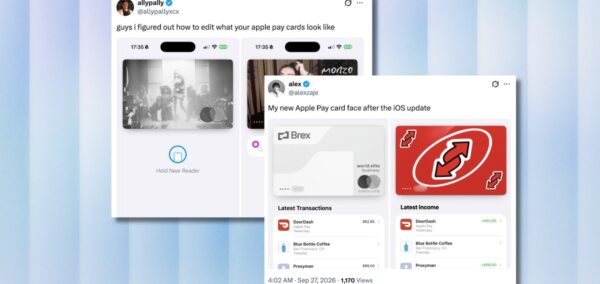
This viral tool lets you customise your Apple Pay cards, and here’s how to do it
You can personalise the entire design

James Acaster could be the Celebrity Traitors’ recruit, as filming reportedly paused for him
It’s not much of a cliffhanger

The ridiculous fortunes of The Celebrity Traitors: Their net worths, from £500K to £50 million
One of them could legit buy the castle three times over