

Patrick Leigh-Pemberton: The Rock of Our Ages
The Rolling Stones (for those of you that don’t know, a group that consists of one Knight of the Realm and three other old men who should know better – […]
 An Admin
|
An Admin
|
The Rolling Stones (for those of you that don’t know, a group that consists of one Knight of the Realm and three other old men who should know better – much like many Parliamentary Inquiries), are headlining Glastonbury this year. This is terribly exciting for anyone who has a vague interest in Rock music. At the same time, it is actually terrible for Rock music itself. In the 1960s and 1970s, the Rolling Stones belonged to the original generation of “angry young men.” Along with other hell-raisers, they horrified the establishment with their music and incredible mockery (notably after the Redlands bust), and ignited a generation to break boundaries and push parents. Whether or not they were a product of rebellion, or instigators of it, is not something I am prepared to discuss with this publication’s tyrannical insistence on 500 word columns. However, the fact that fifty years later The Stones are the ones playing to another generation of music fans, while a testament to the power of their music, acts as a signal to a decline in modern rock music.
Where are our hell-raisers? Punk musicians thought they had broken the hegemony of The Stones within rock and allowed other greats to appear, but that fracture has long been closed up and nothing will supersede them now. When you listen to the charts these days, there is an incredible amount of talent (some of it modified, most of it not), but there is no sense of rebellion. On top of this, there is just a tacit acceptance of this state of affairs.
Of course, there are some notable exceptions to this (Plan B’s “Ill Manors” comes to mind), but there doesn’t seem to be anything that our generation wants our music to say – apart from that recreational drugs, sex, and fame are a good thing.
Especially with the increase in the popularity of house music, the ability to communicate powerful thoughts through music is rapidly diminishing. As a result, when we want to listen to music that describes our feelings, rather than music that just makes us dance in blissful ignorance, we have to tap into the revolution of past greats.
Perhaps the most damaging revelation of all of this is that, in reality, little has changed since these songs became popular. The wealth gap is increasing, economies are unravelling, and politics is still controlled by a few superpowers on the international scale. Maybe we still find the Stones’ music powerful simply because we are still constricted by the same fears and controls that previous generations were frustrated by. As long as these problems remain relevant, we’ll all keep tuning in.
An Admin
|
Latest

Jax speaks out after toe-curling Love Is Blind reveal, and shares why she *really* ghosted Stew

She claims it had nothing to do with his appearance
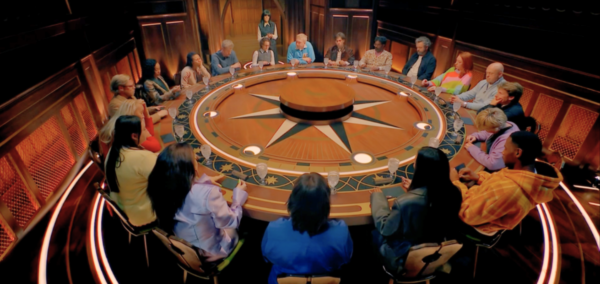
A full record of how The Celebrity Traitors S2 cast voted at each Round Table session

Yup, we’re keeping track of all the stats

The Celebrity Traitors comedians whose fortunes are no laughing matter, from £1m to £6.5m

The fact Miranda isn’t the highest is criminal

Celebrity Traitors’ King Kenny was arrested after filming a prank on his university campus

He has a wild backstory from his YouTube career
Is this the downfall of Turnitin? Here’s what you need to know

Turnitin’s system is changing and students’ data could be used to train tools which use Artificial Intelligence

Fewer apps, more life: My experience at the launch of the social SuperApp ZYMIX

Inside the launch of the SuperApp that wants to clear out your home screen

The question we’re all thinking about: What exactly is happening with the library?

Everything you need to know about the JB Morrell Library refurbishment

Plans submitted to council for new research facility at York University

University of York’s Campus West could see a new research building after plans submitted to York Council

Wait, why was Barack Obama in Manchester city centre?

The former US President was spotted outside a hotel before speaking at Co-op Live
The Celebrity Traitors producers are already eyeing up big names for season three’s cast
Stephen Lambert wants Tom Cruise and ‘a big sports star’
Hannah Fry has crunched the numbers, and spotted a suspicious Celebrity Traitors voting pattern
It could be bad news for the Traitors

Former Lancaster University professor John Whitehead dies aged 76

John was a lecturer of mathematics and statistics

How to avoid the struggles that come with a part-time job at a Bristol university

After all, we do live in on of the most expensive cities in the UK.
All the public scandals The Celebrity Traitors cast have been in, from arrests to racist tweets
They’re not as wholesome as people think
Newcastle and Northumbria universities join forces for new Student Health Hub

Students of both unis can access the mental health service on Friday mornings

The net worths of the American Horror Story 13 cast prove who desperately needed that pay cheque
A $50 million net worth with two minutes of screentime? Nice

Three UK universities announced language course closures in 2026 – including Edinburgh
The University of Edinburgh is scrapping 90 programmes
‘She is phenomenal’: Traitor Hannah Fry has realised that she’s related to her co-star
‘I cannot tell you how much I admire her’
From Crawford to Turing: the stories behind UoM’s building names

You’ve walked past them loads, but how many names do you truly know?
‘Students aren’t getting what was promised, regardless of strikes’: Strikers speak out

The UCU strikes have reached their third week, but is the administration budging? The Edinburgh Tab asked strikers their opinions firsthand