

Leeds University students lead call for misogyny to be reclassified as a hate crime
Misogyny is not currently a crime, but Leeds University Union is demanding change

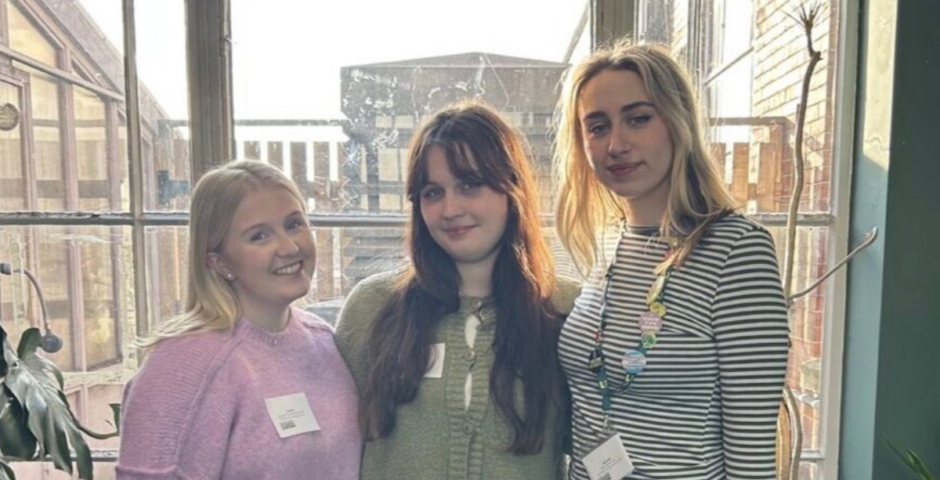
A student officer at Leeds University Union has joined forces with two other Student Union officers SUs in the north of England to lead a national campaign for a change in the law to make misogyny a hate crime.
Amara Relf, Union Affairs and Communications Officer at LUU, has worked with fellow officers at Liverpool Guild of Students and Newcastle University SU to launch a petition urging the Government to update the Sentencing Act 2020, to record crimes motivated by misogyny as hate crimes and introduce tougher laws for online abuse.
In England and Wales alone, more than one million crimes involving violence against women and girls were recorded in 2022/23, around 3,000 offences every day – a 37 per cent increase over the previous five years. However, in practice, sexual harassment is rarely criminalised. This lack of consequence not only enables harmful behaviour but also actively discourages reporting.
Back in 2021, the Law Commission advised against adding sex or gender as protected characteristics for aggravated offences, arguing it could be ineffective and potentially hinder prosecutions.
However, Labour’s 2021 green paper Ending Violence Against Women and Girls supported recognising misogyny as a hate crime and allowing enhanced sentences where crimes are linked to a victim’s sex or gender. Having been unchanged since then, this new petition now calls on the government to fulfil its pledge to change the law.

via Wikimedia Commons
LUU’s Amara Relf collaborated with Lily Allan (Wellbeing and Communities Officer at Newcastle University SU) and Holly Thompson (Deputy President at Liverpool Guild of Students). Their petition has already amassed enough signatures to trigger a government response, but they aim to reach 100,000 signatures to secure a parliamentary debate on the issue.


A joint statement from the group said: “When we began our roles as sabbatical officers, one priority was clear: Improving student safety. Very quickly, it became apparent that while serious sexual offences can carry severe sentences, the everyday behaviours that shape women’s lives; catcalling, groping, sexually suggestive comments and harassment are too often minimised, overlooked, or left entirely unpunished.”
Amara added: “We’re calling on every students’ union in the country to share this petition with their members to show nationwide strength of feeling on this important issue.”
For the group, student safety does not just “stop at campus gates.” What happens online, can shape attitudes offline. Misogyny is plaguing social media, with Amnesty International recording 73 per cent of social media users having witnessed misogynistic content online with half encountering it on a weekly basis.
Male violence against women and girls is a growing societal problem. As a student movement, we need to influence the Government to recognise and address it through harsher sentencing, increased reporting, and a clampdown on everyday harassment – making life safer for women at university and in the wider community.
To sign the petition, visit this website.
The Labour Party has been contacted for comment.


Latest
35,000 Partake in the Great Scottish Run through Glasgow

Recreational runners joined elite athletes to partake in the busiest Great Scottish Run to date
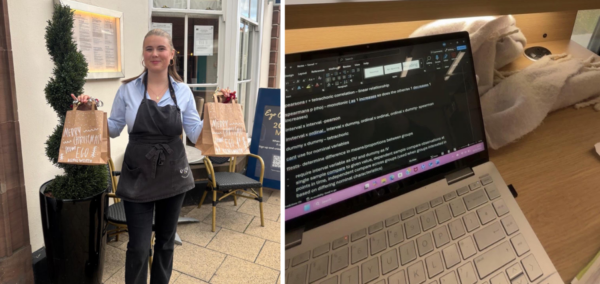
Beyond the payslip: The reality of working alongside university

From exhausting shifts to unforgettable experiences, student jobs are anything but predictable
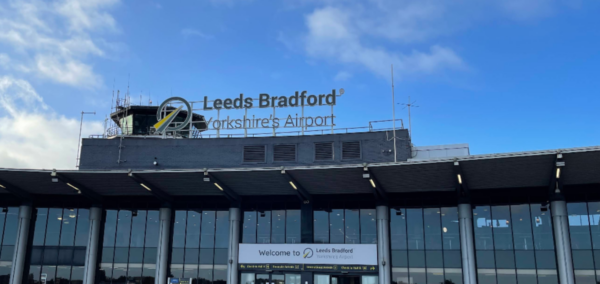
Closures expected at Leeds Bradford Airport due to staff strikes

Those striking include air traffic control personnel and security staff

Dumped for Mr Bean to marriage of ‘trauma’: A nosy look at The Celebrity Traitors’ love lives

Joanne McNally is having a gay baby

The strict rules on Celebrity Traitors lead to rumours escalating, as per Richard E Grant

‘You’re kind of infantilised’

Assigning each Durham college a dream holiday destination

From beaches to big cities: This guide has you covered
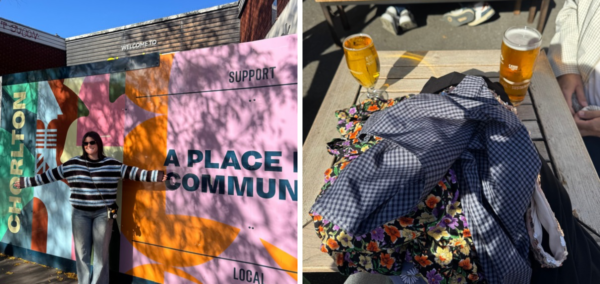
We went charity shopping in Manchester – these are our top picks

For when your wardrobe needs a refresh but your bank balance says otherwise

You’re obvs not a celeb, but the most common jobs on The Traitors show a clear trend
Quitting my job right now, I WILL be on season five

Maya Jama explains her ‘stupid’ choice to recruit James and Hannah on The Celebrity Traitors
‘It was too late at that point’

Cambridge and Newcastle among universities to change deals with Turnitin over concerns on AI
Students feared their work being used to train AI models
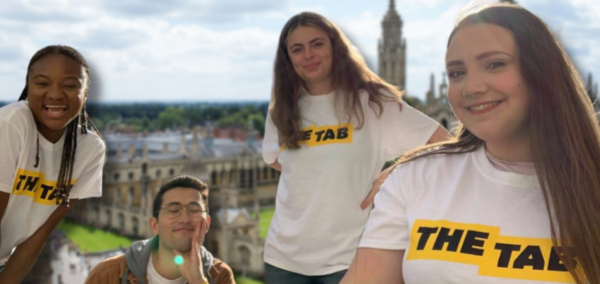
Come to our open meeting: The Cambridge Tab is looking for new writers and video journalists

Come to our open meeting on Friday 16th October, 5pm at The Maypole

Celebrity Traitors cast ‘at each other’s throats’ as insiders spill on tense unaired moments
The cameras stopped rolling, and the drama went into full throttle
House-hunting already? The fresher’s guide to the student neighbourhoods in Leeds

A pub near your house? What’s not to like?

Smallville’s Tom Welling drops hilarious response after his reflection exposed… a bit too much
Not quite the Superman reveal people were expecting

Shop adds context to whether the model bird Kelly Clarkson tried to buy was really for sale
Viral photos show a $15,000 price tag next to Molly the mechanical bird
The Edinburgh Tab wants you as a Social Editor: Terminally online people, assemble

Applications close on October 16th at 11.59pm

Yorkshire zoo confirms fate of Altai the tiger after he killed a man who climbed into enclosure
Witnesses claim he wanted to ‘play’ with the predator
Spend smart, party hard: Your ultimate guide to surviving first year on a student budget

The broke freshers’ guide to a brilliant year

From Soho to Shoreditch: Here’s the ultimate guide to student nightlife in London
All the treasures London has to offer