


Groundbreaking Birmingham University trial to help cancer patients manage arthritis
The treatments are intended to ease the painful side effects of chemotherapy and radiotherapy

Professor Benjamin Fisher from Birmingham University is developing a new trial for cancer treatments, hoping to ease the painful side effects that typically incur after traditional treatments, such as chemotherapy and radiotherapy.
Birmingham University is leading the new REACT trial, which will be delivered through the National Institute for Health and Care Research (NIHR) Birmingham Biomedical Research Centre

via Unsplash
The treatment comes in response to immunotherapy, an effective treatment for cancer is immunotherapy. Whilst immunotherapy is effective in treating cancer, it can cause inflammatory side effects. This is as the treatment involves patients taking immune checkpoint inhibitor drugs that prevent a person’s immune system from turning off.
Although this counteracts the cancer as cancer works by attempting to stop a person’s immune system from working by ‘switching it off’ (in very simple terms). The drugs aim to turn the patient’s immune system back on.
However, it can cause inflammatory side effects by going too far in the other direction. In some cases the immune checkpoint inhibitors work too well and push the immune system into overdrive.

This leads to the immune system attacking the healthy parts of a person’s body. This manifests in many different ways one of them being arthritis. This can affect up to 5 percent of cancer patients and can hugely impact their quality of life. This is what the REACT trial is aiming to tackle.

via Unsplash
The aim of this trial is to look into the effectiveness of a drug called anti-TNF, in treating cancer patients with arthritis not only in a way that is more effective than the traditional treatment of steroid tablets, but also in a way that interferes less with the cancer treatment itself.
Rebecca Smith from Solihull has already partaken in the REACT trial and speaks of how partaking in this trial means that her “quality of life is back to what it was before”.
The REACT trial is set to run up until August 2028 and in that time they hope to have 70 participants to help them view the safety and effectiveness of the treatment strategies.
For more of the latest news, guides, gossip, and memes, follow The Birmingham Tab on Instagram, TikTok, and Facebook.

Latest
Oasis is returning to Manchester: here’s everything you need to know

Get your bucket hats at the ready for another Ticketmaster war

The Lost Paintings: A Prelude to Return at Bristol Museum and Art Gallery

19 June – 27 September 2026
The Lost Paintings: A Prelude to Return, running until 27 September, brings together 53 Palestinian artists from Palestine and the diaspora. Each artist was invited to respond to one of Tomb’s lost painting titles.
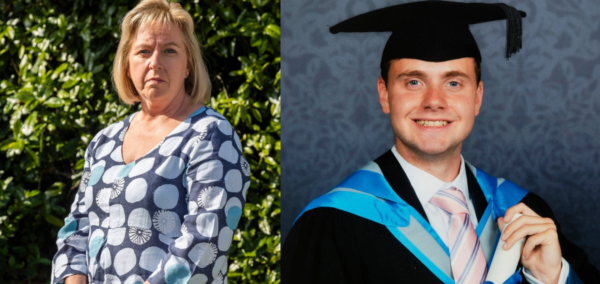
The mother of missing Jack O’Sullivan blames police for ‘total failure’ to find him

The most recent update in the Jack O’Sullivan case
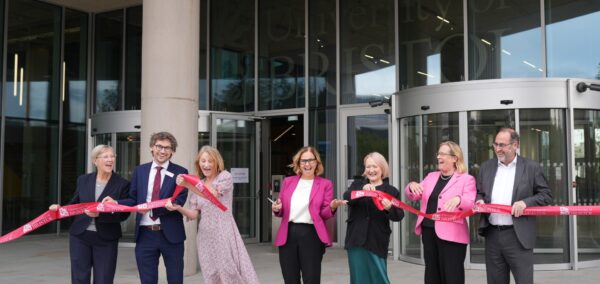
New Sloane Robinson Building opens: Temple Quarter

First step towards the new Temple Quarter Enterprise Campus
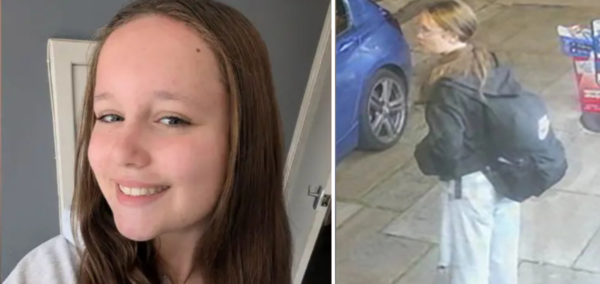
Missing 13-year-old found in Manchester city centre after eight day search

Police have confirmed the teenager is safe and well

Who Lizzie Borden’s sister Emma was and if they were close, because Monster gets it all wrong

She never got married for a start
The real life Lizzie Borden house is still standing today, so here’s what it’s used for

It’s one of the most visited true crime landmarks

What Lizzie Borden was actually like in real life, according to the people who knew her
Monster keeps describing her as ‘plain’

Was Lizzie Borden in love with her maid Bridget? The real life theory around her sexuality
People dug up notes and have tried to prove the theory for decades
Calling all aspiring journalists! How to join The Bristol Tab

Come to our open meeting on the 28th of September at 8pm at The Beckford (In Senate House)

Stop what you’re doing: The King’s Tab is looking for new writers AND content creators

Come to our open meeting on Thursday 1st October, 5pm at The Vault!

Channelling your broke uni student lifestyle

Not everything needs to be accompanied by a £5 iced latte, here’s how to be more mindful

The York Tab is recruiting new writers and we want YOU!

Open meeting Monday 28th September, 6pm in SLB/004!

Here’s who the uncle in Monster: The Lizzie Borden Story was, and what Netflix makes up

John Morse really did stay in the Bordens’ house

Er, Lizzie Borden’s meeting with the actor Nance O’Neil was nothing like Netflix’s Monster
Their paths didn’t actually cross for another 14 years

With 600 alleged killings, this minor character in Lizzie Borden should have been the Monster

HUGE missed opportunity

Did Andrew Borden have a stutter? Charlie Hunnam breaks down accent and voice in Netflix show
The actor has fully explained it
Elektrik Warehouse responds to alleged ‘crowd crush’ concerns at Shoshi event

‘It was just lucky nothing insanely bad happened’
Uni of Edinburgh confirms 25 days of strike action over five weeks, affecting Welcome Week

Am email sent to Edinburgh University students read ‘staff are not obliged to tell us if they plan to take part, which means we cannot tell you who is or is not’

There’s a really smart way to hack your Spotify Wrapped results for 2026 – before it’s too late
The cut-off for data tracking is very soon!