

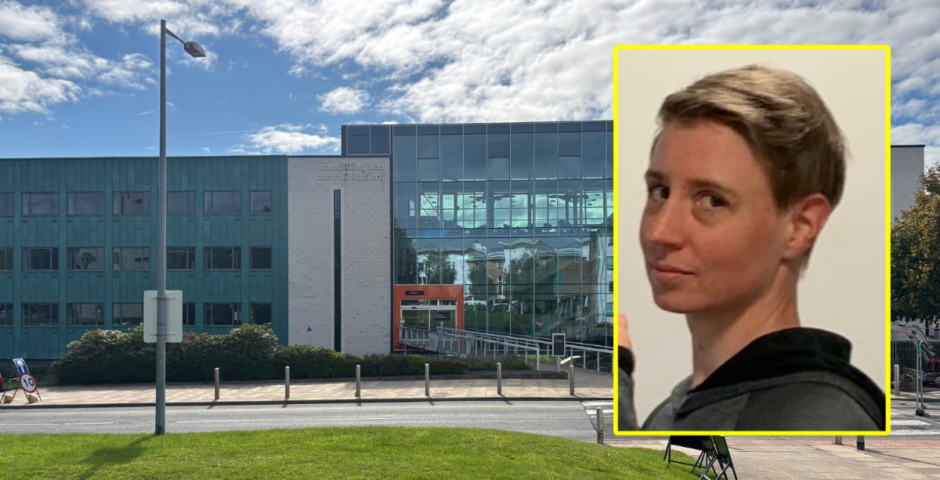
Lancaster University professor warns against AI at Supreme Court panel
She argued AI ‘risks eroding the nuanced human judgement and empathy that underpin justice’
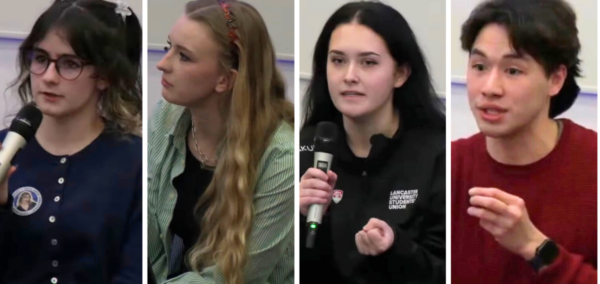
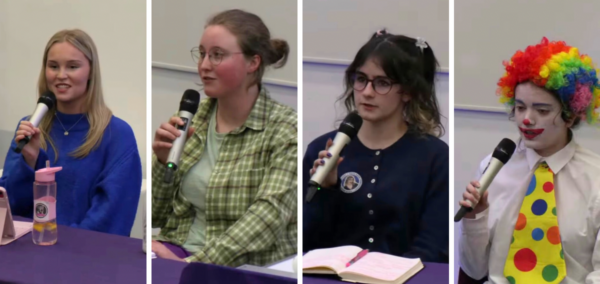
On Thursday 29th January, a panel, attended by Professor Claire Hardaker, met to discuss artificial intelligence (AI) and its benefits and drawbacks regarding democratic institutions.
The panel debated both the strengths and dangers of AI, and whether it risks destabilising such institutions.
Claire Hardaker, Professor of Forensic Linguistics at Lancaster University, specialises in deceptive and manipulative language, and the risks and opportunities surrounding AI.
Her research is focused on aggressive, deceptive and manipulative behaviours in computer-mediated communication (CMC) using a forensic linguistic approach.
The panel, debating the question, Why Trust Matters: Public confidence in the rule of law in an age of AI and populism, was chaired and moderated by the CEO of leading think tank, the Institute for Government, Dr Hannah White. Those also in attendance include, Lord Reed, the President of the Supreme Court, and Daniel Cameron, Ipsos Research Director. As well as this, an audience of law students were invited from leading universities.
Professor Hardaker, renowned for her language detection skills, cautioned the panel and audience on the drawbacks of AI. She highlights the importance of trust, and warns against deepfake technologies and large language models, claiming they open more doors for strategic manipulation, the spread of misinformation, and unfounded biases. She said: “While AI offers efficiency and analytical power, uncritical deployment, particularly in legal and institutional contexts, risks eroding the nuanced human judgement and empathy that underpin justice.”
This underpins the mission of Lancaster’s Data Science and AI Institute (DSAIL), where Professor Hardaker leads the new theme on ‘integrity’. The theme aims to address how fairness, transparency and trust can be maintained in sociotechnical systems that are endlessly evolving.
Following the panel’s conclusion, members looked to the audience for questions, and gave audience members the opportunity to further the discussion at a reception in the court’s lobby.
A video recording of the discussion is publicly available for people to watch on the court’s YouTube channel.
For more of the latest news, guides, gossip, and memes, follow The Lancaster Tab on Instagram, TikTok, and Facebook.
Featured image via Claire Hardaker on LinkedIn.


Latest
Nine major scenes Christopher Nolan’s The Odyssey left out that completely changed the story

Can’t believe the bag of winds storyline was cut

Ian Diaz appealed all four of his convictions after A Toxic Love Story, so here’s why it was denied
He is in a federal prison now
A look at Angela Connell Diaz’s life now and surprising job, five years after jail release

She’s an active member of the community
Bonnie Blue details the x-rated accident that occurred at her ‘milk me’ stunt, and I’m wincing

Machinery and flesh don’t tend to go together, no

Dumped Islander reveals most ‘disingenuous’ cast member, who made ‘derogatory’ comments

The Love Island 2026 villa has been frosty at times

From the pyramids to MI5: Inside Anastasia Kingsnorth’s wildest podcast conspiracy theories
Who knew AI stood for ancient intelligence?

Here are five things in Lancs that are more exclusive than seeing The Odyssey in IMAX
If you think seeing Nolan’s new blockbuster in one of the 45 IMAX theatres worldwide is the epitome of exclusive’ you have not fought for a seat in the library during exam season
Meet infamous p*rnstar Gattouz, and the explicit reason he’s bigger than Bonnie Blue
He’s actually bigger than Bonnie, js

Lancaster Police appeal for information about ‘racist incident’ outside Moorlands Islamic Centre
Police are investigating the incident that occurred last week in the city

It’s time! Here’s everything you need to know about Liverpool Pride 2026
Divas, dolls, and allies alike, it’s time for one of the city’s most exciting and unforgettable weekends of the year: Liverpool Pride!


An investigation into *that* filthy ‘leaked’ Justin Bieber video, as people demand an OnlyFans
The 12-second dirty video has gone viral

Who’ll be successful after Love Island 2026, ranked by how many Instagram followers they gained
The top three have already won

A guy crashed one of the MAFS Australia 2027 weddings and got loads of juicy insights
The show is filming right now
KJ Apa opens up about severe eating disorder he struggled with whilst filming Riverdale
He also described how Cole Sprouse helped him with addiction

Remember the YouTuber Fred? His life has changed 20 years on, and he’s married to a male model
The annoying teen was the first person to hit one million subscribers on YouTube

Beauty influencer dies following mysterious complications after getting cosmetic surgery
She leaves behind a six-year-old daughter

Set designer stabbed to death in her New York home hours before husband found dead in park
The couple’s 11-month-old son was found unharmed