

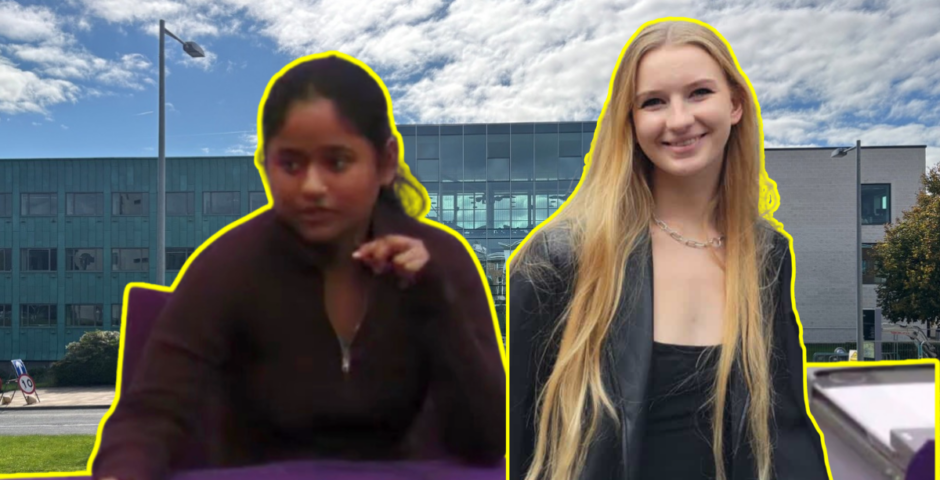
We asked the LUSU education candidates the same questions, here is what they said
Education, education, education… it’s why we are here, after all

It’s election season, you’ve seen the posters, the banner, the clown candidate pull out of the race…the main point is you get it.
Considering the fact we all come to university to study at least one subject, you may want to pay attention to what these candidates have to say.
The main topics include: transparency, feedback timeframes and use of student feedback, and AI regulation.
Question one: Can you summarise your main campaign goals for us, and the reasons for them?

Navyah Vasihisth: “My campaign focuses on three key priorities: fair and transparent assessments, a stronger student voice, and better academic support. Students deserve clear marking criteria and timely, meaningful feedback so they can understand how they are assessed and how to improve. Too often, feedback can feel delayed or unclear, which affects both confidence and academic progress. I want to work towards greater transparency and accountability in how assessments are communicated and delivered.
Secondly, I want to strengthen the student voice. Feedback should not disappear into surveys — it should lead to visible outcomes. As a Senate member and FST PGT Representative at Lancaster University, I’ve seen how student input can influence real decisions when it is raised effectively. I want students to feel confident that their concerns are not only heard but acted upon. Finally, I want to improve access to academic resources.”
Niamh McAuley: “First, a student-first AI policy. The current RAG system is confusing and doesn’t give students enough clarity or protection. More students are being flagged, often with little understanding of the process or where to get support. I want a clearer, fairer framework: plain-English guidance on what’s allowed for each type of assessment, and a transparent process with proper support if a student is flagged.
“Second, fairer assessment scheduling. I ran on this last year, and unfortunately it is still a key issue that I myself have faced. Too often deadlines and exams get bunched together, which harms learning and wellbeing. I will push the University to reduce assessment clustering and make timetabling work for students, including ensuring any new scheduling software is designed around student experience.
“Third, better communication and transition support around the Curriculum Transformation Programme and other major changes. These reforms will affect every student, so consultation and communication have to be the baseline, not an afterthought. Students are key stakeholders in our education and should be treated that way.
“I have already began to make an effective relationship with the new VC, through my role on Senate. I am best placed to work with him and his executive to finally get student consultation right. I have other points, outside of my main three, listed on my manifesto; do take a look! The main takeaway from my big three is that they are (1) unapologetically student-focused, and (2) deliverable given my expertise and experience. Integrity means a lot to me, and so it gives me great pride in promising something I know I can deliver on.”
Question two: What is one specific change students would clearly notice by the end of your term?


Navyah Vasihisth: “By the end of my term, I want students to clearly notice improved transparency around feedback and assessment. This means clearer marking criteria, better communication about feedback timelines, and clearer updates on what changes have been made as a result of student input. Students should be able to see the impact of their voice in a tangible way.”
Niamh McAuley: “A clearer, student-focused AI policy. By the end of my term, students should be able to submit work knowing exactly what AI use is permitted for that assessment, what counts as misconduct, and what the process looks like if they’re flagged.
“That clarity would reduce stress, improve fairness, and update a system that hasn’t kept pace with how students are actually being assessed. Better yet, students would have been key stakeholders in getting to that stage. Students must be brought along the policy journey; we must be treated as the crucial key stakeholders that we are.”
Question three: How would you challenge the university when needed while maintaining a productive relationship?

Navyah Vasihisth: “Challenging the University requires both confidence and collaboration. As a current Senate member, I already work directly with senior leadership and understand how decisions are made at Lancaster University. When change is necessary, I would raise concerns firmly, professionally, and backed by evidence from student feedback.
“Maintaining a productive relationship does not mean avoiding difficult conversations — it means approaching them constructively, proposing solutions, and ensuring that student interests remain at the centre of discussions. My priority will always be to represent students effectively while building relationships that enable long-term progress.”
Niamh McAuley: “I’m comfortable challenging the University when students are being let down, and I’m no stranger to doing that already in Senate. To me, being effective isn’t always about shouting the loudest; it’s about being well-evidenced and persistent.
“I raise issues publicly when needed, and I work professionally with staff the rest of the time to get changes agreed and implemented. That balance is how you protect students’ interests while still getting results. It’s a balance you can only really appreciate the nuance of once you’ve been working in the politics of the University for a while, like I have.”
For more of the latest news, guides, gossip and memes, follow the Lancaster Tab on Instagram, TikTok, and Facebook.
Featured images via Youtube and Instagram @niamhmcau1ey

Latest

Love Is Blind’s Cam didn’t ‘do great’ when Aneha critiqued his looks at their engagement

He thought, ‘Wow, does she hate me?’
Lots of the Love Is Blind S11 cast aren’t from Boston – here’s how far apart the couples live
Blake and Erika live in different states

Miranda Hart’s painful reality with illness as Celebrity Traitors marks her iconic return to TV

For years, she was told it was just stress
Interview: Alexander Newman, outgoing Editor-in-Chief

From an unpublished study of Italian seduction to the top of the masthead in record time: the outgoing Editor-in-Chief on manifestation, media barons and why first years should be kept well away from microphones
The flatmate red flags Leeds students need to watch out for (and how to avoid them)

Don’t trust your flatmate? Here’s how to fix that
Newcastle food hot spots worth spending your maintenance loan on
If you’re going to splurge, splurge at these spots x

Top tips for securing the perfect student house in Birmingham

It’s like Escape to the Country, except we’re in Selly and there’s not a blade of grass in sight x
‘Everyone needs to fart’: Bristol bus driver loses tribunal claim after ‘significant flatulence’ incident

A Bristol bus driver has lost her tribunal claim after being dismissed on probation, with the judge ruling there was no discrimination or harassment

Traitor Maya Jama outed herself at breakfast, and we (and the Faithfuls) didn’t catch it
Gotta love a classic Freudian slip

Bristol road closed off after bomb squad called to neutralise suspicious item

Bomb experts have been called to Park Street after a suspicious package was left unattended

Stew’s workplace shares hilarious videos poking fun at his time on Love Is Blind

Posted on the actual work account

Here are all the famous people you didn’t know went to university in Leeds

All five major Leeds universities have some pretty famous alumni

Want to live your Strictly dreams? Here are the best places to dance in Cardiff

Cardiff, its time to get your dancing shoes on and cha-cha-cha your way into the night

Ed Gamble has defended Celebrity Traitors’ James Acaster, after he ‘sabotaged’ challenge

‘He just wants everyone to be okay’

What Does Your Favourite Pres Game Say About You?

Your go-to pres game is basically a personality test…
H3 Podcast crew shares statement as Ethan Klein’s wife publicly accuses him of ‘nightmare’ affair
His own crew has cut ties with him

James Acaster is being called out for his bizarre behaviour during Celebrity Traitors mission
He’s taking the phrase ‘playing it safe’ too literally

Christa Pike’s team say IV site might have ‘blown’ during failed lethal injection in detailed update
They have finally explained exactly what happened

Second clip of comedian’s rape ‘joke’ resurfaces from five months before his apology
‘There are some clips coming out from that that could be a problem’