

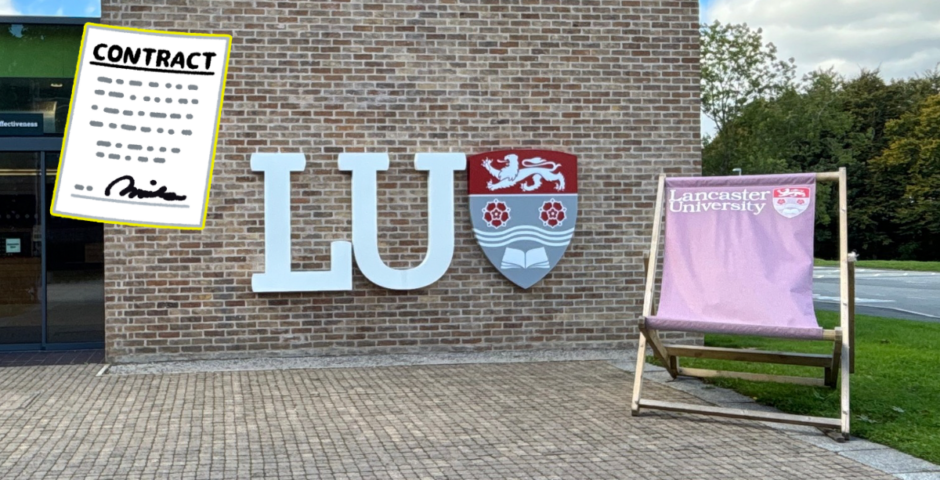
Study by Lancaster University think tank reveals zero-hour contracts are at a record high
The number of workers employed under zero hour contracts has reached 1.23 million

A Lancaster University study revealed the number of people employed on zero-hour contracts has risen by 91,000 in a year, reaching a record total of 1.23 million.
The Work Foundation at Lancaster University conducted analysis on the Office for National Statistics (ONS) data.
This study highlights the urgent need for the reforms to the Employment Rights Act expected in 2027, on key rights such as, a right to guaranteed hours, advance notice of shifts, and financial compensation for late shift cancellations.
Zero hour contracts used to be championed for allowing flexibility to those in education or those requiring childcare, however, they have now reached a record high of 943,000 (77 per cent) zero-hour contract workers not being in full time education, suggesting that the previous benefits of the contract have become redundant.
32.8 per cent of those employed on zero-hour contracts depend on them as their full time employment and salary, many expressing a desire for more hours and work.



Groups such as women and young people are disproportionally disadvantaged by these ‘exploitative’ zero-hour contracts:
- The analysis found that in 2025, one in eight workers aged 16-24 are on zero-hour contracts and are 5.1 times more likely to be employed under zero-hour contracts than those over 25 (12.5 per cent vs 2.44 per cent).
- Women cover 54 per cent of zero-hour contracts, whereas men only take up 48 per cent of these contracts, making women 1.2 times more likely to be employed under a zero-hour contract.
Ben Harrison, Director of the Work Foundation at Lancaster University, said: “This new data indicates that some employers continue to rely on highly precarious forms of employment such as zero-hour contracts, despite the Government’s commitment to kerb their use. Such arrangements underpin the kind of ‘one-sided flexibility’ that leaves over a million workers unsure how many hours they will work or how much money they will earn next week.”
For more of the latest news, guides, gossip, and memes, follow The Lancaster Tab on Instagram, TikTok, and Facebook.



Latest

More than two tonnes of plastic pellets may remain in the Tyne, researchers warn

A collision in July released around 17 tonnes of nurdles

Jax speaks out after toe-curling Love Is Blind reveal, and shares why she *really* ghosted Stew

She claims it had nothing to do with his appearance

A full record of how The Celebrity Traitors S2 cast voted at each Round Table session

Yup, we’re keeping track of all the stats

The Celebrity Traitors comedians whose fortunes are no laughing matter, from £1m to £6.5m

The fact Miranda isn’t the highest is criminal

Celebrity Traitors’ King Kenny was arrested after filming a prank on his university campus

He has a wild backstory from his YouTube career
Is this the downfall of Turnitin? Here’s what you need to know

Turnitin’s system is changing and students’ data could be used to train tools which use Artificial Intelligence

Fewer apps, more life: My experience at the launch of the social SuperApp ZYMIX

Inside the launch of the SuperApp that wants to clear out your home screen

The question we’re all thinking about: What exactly is happening with the library?

Everything you need to know about the JB Morrell Library refurbishment

Plans submitted to council for new research facility at York University

University of York’s Campus West could see a new research building after plans submitted to York Council

Wait, why was Barack Obama in Manchester city centre?

The former US President was spotted outside a hotel before speaking at Co-op Live

The Celebrity Traitors producers are already eyeing up big names for season three’s cast
Stephen Lambert wants Tom Cruise and ‘a big sports star’

Hannah Fry has crunched the numbers, and spotted a suspicious Celebrity Traitors voting pattern
It could be bad news for the Traitors

Former Lancaster University professor John Whitehead dies aged 76

John was a lecturer of mathematics and statistics

How to avoid the struggles that come with a part-time job at a Bristol university

After all, we do live in on of the most expensive cities in the UK.

All the public scandals The Celebrity Traitors cast have been in, from arrests to racist tweets
They’re not as wholesome as people think
Newcastle and Northumbria universities join forces for new Student Health Hub

Students of both unis can access the mental health service on Friday mornings

The net worths of the American Horror Story 13 cast prove who desperately needed that pay cheque
A $50 million net worth with two minutes of screentime? Nice

Three UK universities announced language course closures in 2026 – including Edinburgh
The University of Edinburgh is scrapping 90 programmes

‘She is phenomenal’: Traitor Hannah Fry has realised that she’s related to her co-star
‘I cannot tell you how much I admire her’

From Crawford to Turing: the stories behind UoM’s building names

You’ve walked past them loads, but how many names do you truly know?