
Expert reveals what will happen if monkey Punch keeps being rejected and I can’t take this
Please let me adopt him
Everyone’s favourite viral monkey Punch still isn’t integrating with the rest of the group, and an animal expert has devastatingly revealed what will happen if he doesn’t socialise soon. I’m crying already.
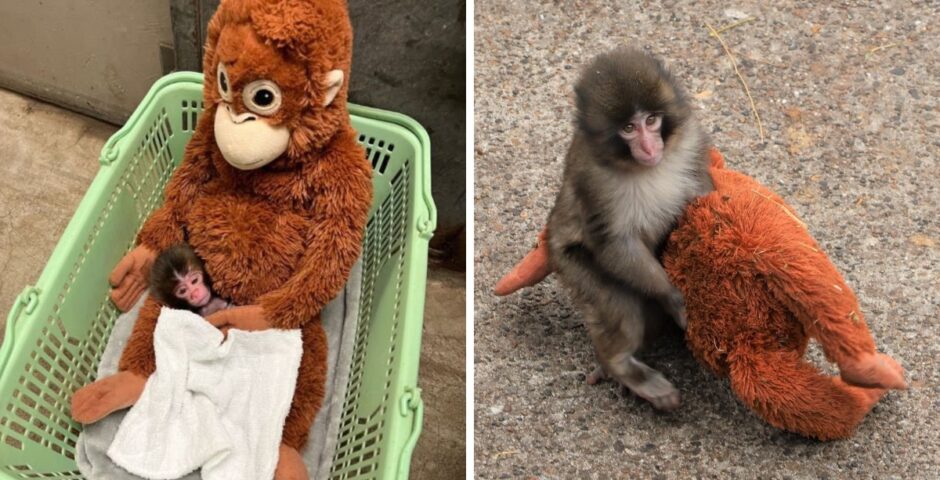
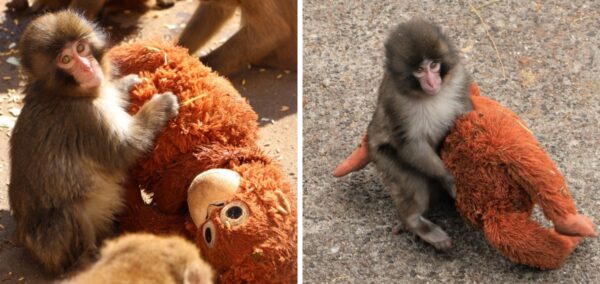
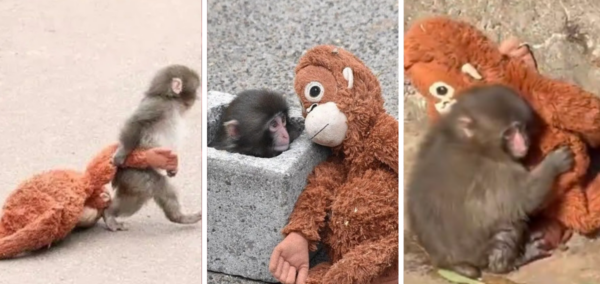
The baby Japanese macaque went viral a few weeks ago after the Ichikawa City Zoo near Tokyo, where he lives, shared an adorable photo of the monkey with an organgutan teddy. They gave him the plushie to comfort him because he had been abandoned by his mother, and wasn’t socialising with the rest of the group. So, he was raised by staff at the zoo instead.
In a new update, the Ichikawa City Zoo revealed that Punch still isn’t a “member of the troop,” which is really bad news according to this scientist. Dr Emily Bethell, Associate Professor in Primate Cognition and Welfare at Liverpool John Moores University, told the Daily Mail if Punch the monkey doesn’t integrate soon, he won’t learn the skills he needs to survive as an adult.
“Having been abandoned by his mother and the social group more broadly, he has missed key developmental opportunities to learn appropriate social behaviours that would help him to navigate the hierarchical social world of macaques,” she explained. “At six months old a wild macaque would still be somewhat reliant on the mother for comfort, nutrition and opportunities to learn about social behaviour.

Credit: Ichikawa City Zoo/Twitter



“What is key at this stage is that he has the opportunity to interact with conspecifics to develop species–typical social skills. If he is raised mostly by keepers, and his interactions are mostly with humans, he may never learn the necessary skills to integrate into a social group fully.”
So, this social isolation is going to have a long-term psychological effect for the little snow monkey. In the worst case, he might not survive at an adult. I can’t take this. However, it’s not all bad news. Because he’s a male, that works in his favour.
“Japanese macaques are female–bonded and males typicaly migrate out of the social group at sexual maturity,” Dr Bethell said. “There is evidence that mothers may invest more in raising daughters since they will stay in the natal group. He may therefore be moved to a new social group when he gets older and have an opportunity to forge new social relationships.” There’s still some hope.
For more like this, like The Tab on Facebook.
Credit: Ichikawa City Zoo/Twitter

Latest

Did Andrew Borden make coffins and chop customers to size? In real life he did have an eerie job

These scenes made me feel unwell
Monster is wrong: Here’s Lizzie Borden and Abby’s real relationship, and the fight that ended it

The incident, which wasn’t included in the show, caused Lizzie to stop calling Mrs Borden mother
Monster’s lead star explains why Aileen Wuornos was clumsily shoved into Lizzie Borden show
It just felt really random
Here’s what the real Lizzie Borden’s father Andrew was actually like to be around

One newspaper said he was ‘strictly honourable in all his doings’

The most jarring inconsistencies in Lizzie Borden’s account of the day her parents died
She spent 20 minutes eating three pears?!

Bridget Sullivan’s full court testimony, where she described the Borden murders in detail

Here’s the entire day from her point of view


Plans for a mural to replace graffiti-tagged wall in Monkgate

Plans have been submitted to replace a graffitied wall in Monkgate with a commissioned mural
Lizzie Borden actress reveals why show portrayed her as a lesbian, despite no real evidence
Monster made it a main storyline

The Cardiff Tab is recruiting and we want you! Here’s why you should join the team

Join us for our open meeting at Misfits on October 6th at 6 pm
What actually happened to Lizzie Borden’s birth mother? Her untimely real life death explained
The Netflix show completely skipped over it
You’re not going to ‘find yourself’ at Glasgow University

You’re going to find out which version of yourself gets invited to the pub
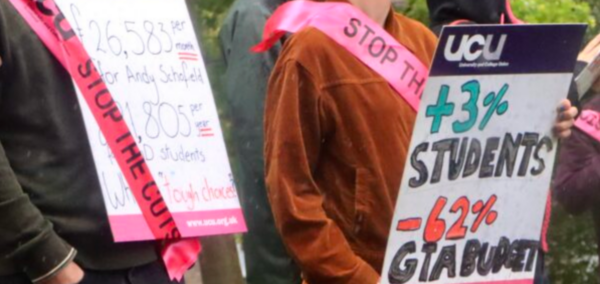
UofG students and staff protest GTA cuts outside university library

Staff and postgraduate researchers continue to protest over ongoing financial precarity due to budget cuts as the university expands external defence partnerships

Cultural vandalism’: Uni of Edinburgh to close Scottish and Celtic programmes for 2027

‘It is also reflective of a wider institutional effort to undermine the arts and humanities. We must all stand together to resist this destructive pursuit’



Um, Mandi Vakili has issued the most painfully awkward apology after her breastfeeding rant

She’s suddenly ‘really sorry’


Monster creator reveals how they pick the show’s subjects and the stories they want to tell next
One they’ve thought about is so random

Love Island’s Priya is now throwing major shade at Aidan after the split and it’s brutal
The niceness didn’t last for long
Your day by day guide to Freshers’ Week 2026 at the University of Sheffield

Starting uni and unsure what to do? Here’s a daily guide of what’s on that you could get involved in