

Striking Sheffield Hallam staff warn budget cuts are ‘putting the university in jeopardy’
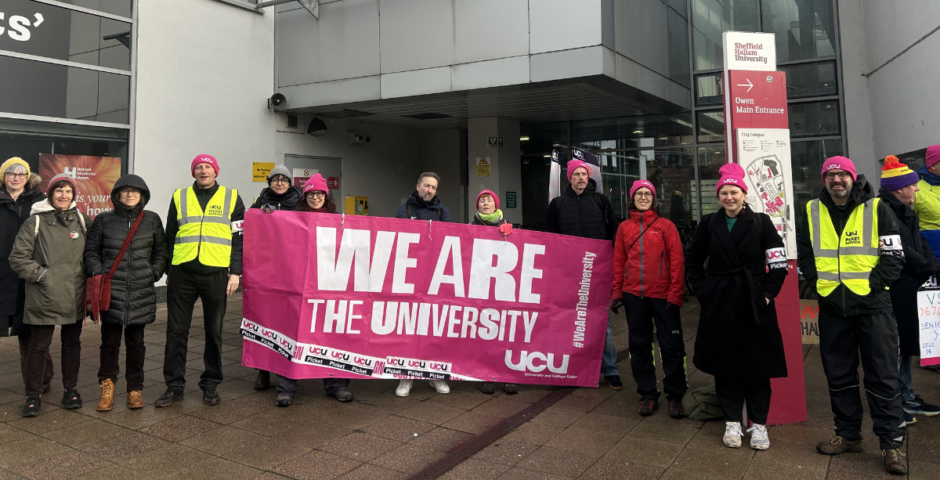
Union members were on the picket line again today

Striking staff at Sheffield Hallam University have warned that budget cuts are “putting the university in jeopardy”.
Hallam branch members of the University and College Union (UCU) returned to the picket line for a sixth day of strike action today, as they protested against a potential £31 million in planned spending reductions and the threat of compulsory redundancies.
Speaking on the picket line, one UCU representative said the action was necessary because management had refused to remove compulsory redundancies from the table.
“The main reason for striking today is the university is proposing a further £31 million in budget cuts this academic year,” they said. “We’ve asked they take compulsory redundancies off the table and reduce the severity of the cuts. We don’t even believe they need to do this – it’s a choice.”
The UCU representative claimed that “the university won’t go bust if they don’t make these cuts.”
Sheffield Hallam University insists it is working to “minimise the impact on our students and wider university community” from industrial action and that it was making “tough decisions” in response to financial pressures regarding budget cuts.
They believe the issues behind today’s strike are the product of long-term marketisation of higher education, with “decades” of growing pressure. “The drive to marketise higher education is in nobody’s interest, not even taxpayers. Students and staff are the pawns, and students are getting the worse deal.”
The sector’s competitive spending on advertising was also criticised by the representative, who called it “glossy adverts that say nothing”.
According to the union, workloads have skyrocketed for staff due to a 20 per cent cut to staffing: “We’ve lost 1,000 staff in the last two years out of 5,000; that’s a 20 per cent reduction in headcount. We’re still teaching the same things as before.”
The union says this year’s 1.4 per cent pay uplift – which was delayed by seven months until March this year – leaves staff significantly worse off: “Inflation is far above that; we’ve had a pay cut of about 2 per cent in real terms. That’s basically another week of unpaid work a year.”
They warned that staff on the lowest pay scale, including some on the real living wage, may struggle to cover basic costs.
‘We’ve been asking them since summertime to commit to no compulsory redundancies
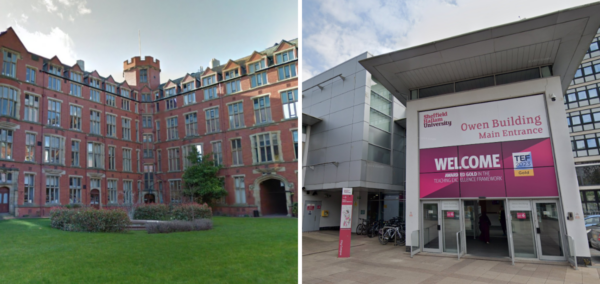
Outside the Owen Building, the representative expressed frustration at Hallam’s management’s handling of the dispute, claiming the university had repeatedly declined to negotiate until this week.
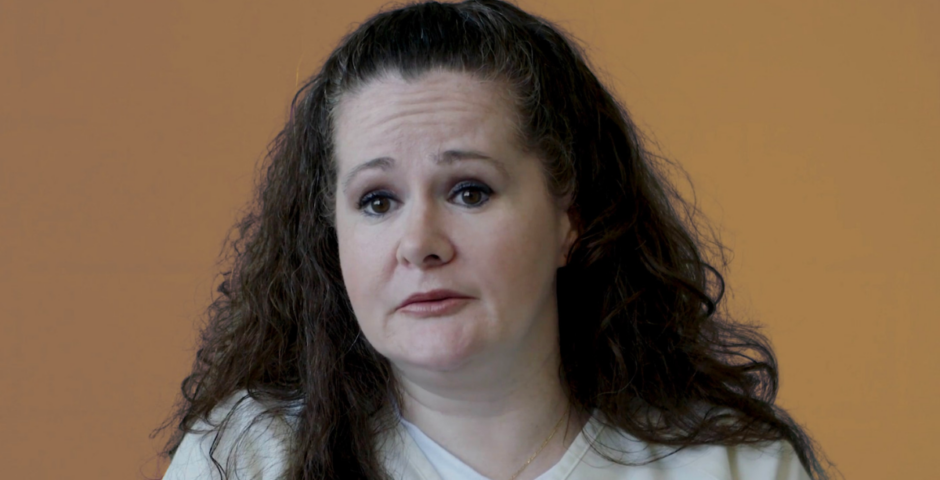


They said: “We’re extremely disappointed. We’ve been asking them since summertime to commit to no compulsory redundancies; they refused.
“We went into a meeting and they just said ‘No, we won’t do it’. And effectively sent us straight to strike action. We had to go back to them last week and ask to talk.”
In comparison, they noted that the University of Sheffield had already held “six to eight hours of talks”. “All the evidence suggests they’re ignoring it and hoping the strike will fizzle out.”
They also raised concerns about rising staff illness: “Sickness rates have skyrocketed. We’ve got a serious mental health problem and they’re not addressing it. Reducing staff will only make workloads and sickness worse.”
A spokesperson for Sheffield Hallam University said the institution was “disappointed” that UCU members had chosen to take industrial action but insisted the university was working to “minimise the impact on our students and wider university community.”
They said Hallam, like other universities, was making “tough decisions” in response to financial pressures, adding that the university had “been able to make significant savings without the need for any compulsory redundancies” so far.
The spokesperson said Hallam would “continue to seek to avoid compulsory redundancies where possible” and remained committed to engaging “closely and constructively” with staff and trade union representatives.
Student support has been ‘inspiring’
Despite the disruption, the representative said student support had been “inspiring”.
“It’s not us causing the problem – it’s the executive team who’ve mismanaged finances and wasted money. Students’ learning opportunities are being cut, and staff are being blamed.”
They encouraged students to stay informed and show solidarity wherever possible.
For more of the latest news, guides and gossip from all of Sheffield’s universities, follow The Sheffield Tab on Instagram, TikTok and Facebook.

Latest
A closer look at John’s job, since he was stressing over it on Love Is Blind season 11

Sarah did not like him shouting down the phone
How Netflix production changed the real life story for New Stanford Prison Experiment reality show

Robocams were in the prison filming the cast
Three compelling clues Michaella and Rob broke up after Love Is Blind season 11
Exhibit B: Michaella’s Substack

Love Is Blind’s Aneha and Cam break down what they actually like about each other
‘He just looked completely different from what I was thinking’

A Love Is Blind participant who quit early found love with someone from the pods afterwards
Sahar and Tucker are still together now

What the Love Is Blind season 11 cast really do in their day jobs, as per their LinkedIns
It’s not hard to guess who has LinkedIn premium

The way Celebrity Traitors’ Jerry Hall decided to go all in on modelling is bizarrely iconic

Only Jerry Hall could make a painful moment a lifelong career
Traitors’ Sebastian Croft seemingly addresses secret relationship with co-star in new music
Following in Taylor Swift’s footsteps, the breakup pushed him to release his music

The huge cash payout Jerry Hall reportedly got in settlement when she divorced her billionaire ex
She also got a number of properties

Sense and Sensibility characters as different types of Newcastle students

Stay wary of any incarnation of a rugger
Lancaster University political societies release statement following alleged physical assault

The victim was reportedly taken to hospital with a shoulder dislocation
Rugby boys, soggy Greggs, and social martyrs: Things scarier than Halloween in the Toon

The looksmaxxers are probably dressed as Patrick Bateman
A message to the Leeds freshers finding university life hard

Uni is said to be the best years of your life, but it doesn’t always feel that way

Tired of the vampire fangs? Here are 10 new Halloween costume ideas for Cardiff students

Let’s actually be creative for once

Hannah Fry’s Celebrity Traitors spreadsheet updated to reveal who looks most suspicious

It shows which Faithfuls are safest

Top Selly Oak food spots for Birmingham uni students to visit while hungover

Here are the top spots to eat for those days when cooking is the last thing on your mind, and your hangover needs an instant cure

Sorry TikTok: Celebrity Traitors’ James Acaster has a secret girlfriend, and they have four cats
You know its serious when felines are involved
Halloween without the hangover: A guide to sober Halloween in Bristol

Not a fan of sticky dance floors and overpriced drinks? Bristol has plenty of ways to celebrate Halloween without stepping foot in a club.

Let Liverpool cure your autumn blues this October

5pm finishes might leave you feeling gloomy this semester, but Liverpool has everything students need to make the most of this autumn season

King Kenny sparks Celebrity Traitors winner theories after revealing alliance is ‘unstoppable’
He seemed very confident