

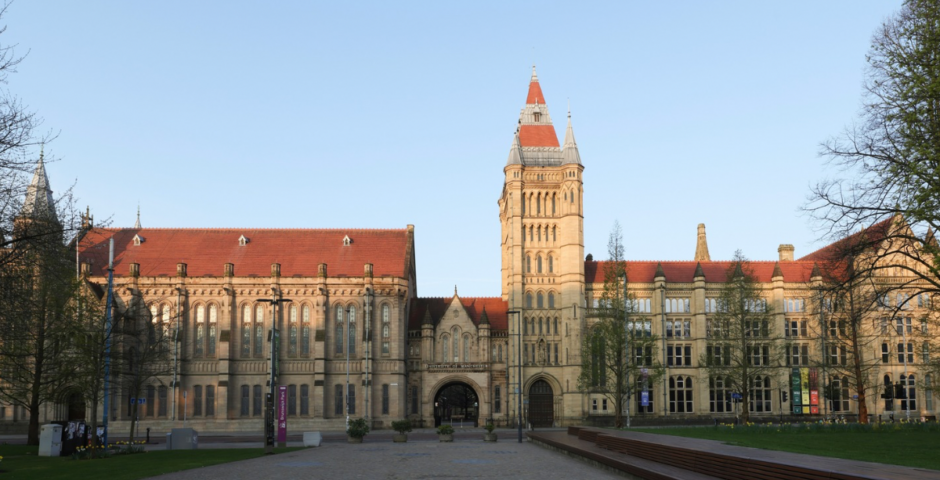
University of Manchester students criticise world-first AI partnership with Microsoft
Students have questioned the educational and environmental cost of the partnership

Students at the University of Manchester have expressed concerns about the university’s AI partnership with Microsoft, which aims to “equip students with future-ready skills.”
The world-first partnership will see the university providing full and free access to Microsoft 365 Copilot for 65,000 staff and students by summer 2026.
The initiative aims to include advanced AI tools in everyday academic and research activity, preparing graduates for the modern workplace with these digital skills.
Though some have welcomed the use of AI technology in their studies, students speaking to Mancunian Matters expressed reluctancy due to concerns over the environmental cost and what the partnership may signal for the future of higher education.
Training AI models requires high energy consumption and produces carbon emissions equivalent to hundreds of households and AI data centres are often powered by fossil fuels, contributing to greenhouse gases.
Student societies like Manchester Young Greens and Manchester Trade Union Society, amongst others, have held events discussing AI’s effect on people and the planet.
Kate Holden, a current Master’s student interviewed by Mancunian Matters, raised concerns about academic independence, questioning whether deeper ties to major technology corporations risk reshaping education along commercial lines.
“It’s a business now,” she said. “It’s about making money.”
Kate also expressed worry that the partnership points to a broader over-reliance on AI systems and a shift away from independent thinking.
“They’re encouraging students to outsource our learning, rather than develop it,” she said, “we’re being told to prioritise measurable outputs like speed or productivity rather than critical thinking.”



Though the university has stated that AI should be understood as a supplement rather than a replacement for human-led learning, Maria Ai, a current undergraduate student and president of Manchester Young Greens, told The Manchester Tab: “We don’t need to supplement our learning with AI, we’ve lived without it for so long.”
“We only feel like we need it because it’s making us lazier and more ignorant,” she added, “people should not be happy to outsource their thinking.”

via Unsplash
Some students have also expressed disappointed with the university’s endorsement of AI use in higher education and research. They are dissatisfied with the university’s response to their concerns, particularly in the ongoing debate surrounding the use of AI technologies in higher education.
Featured image via Unsplash


Latest
First week back at uni? Here’s everything you need to pack in your bag

Mary Poppins is quaking in her boots…

London university releases statement after professor sentenced for a child sexual offence

Barry Langford was a Professor of Film Studies at Royal Holloway


Young father-of-two died on day he was due to start at University of Glasgow

Young father tragically passes away at 24 years old after suffering a brain aneurysm

Bella Ramsey’s specific acting career gives them ‘an edge’ on Celebrity Traitors (they hope)
Their past roles have prepped them for Missions
12 of The Celebrity Traitors season two cast asked to be Traitors, and six to be Faithfuls
Three celebs couldn’t make up their minds

Maya Jama’s game plan for Celebrity Traitors is to avoid trying ‘too hard’ or ‘overthinking’
This is really devious tbh

Newcastle University buildings evacuated after ‘suspicious item’ found on campus

Police, fire crews, and fire engines arrived at the scene

12 things every Fresher gets wrong in their first few weeks at uni

From wearing your lanyard everywhere to leaving your washing-up until it grows its own ecosystem
Our Celebrity Traitors predictions include Maya Jama turning on her fellow Traitors

Here’s what we think will happen

I’ve just realised that three cast members from Celebrity Traitors were in Game of Thrones

Having flashbacks to Bella Ramsey being crushed by a giant



23 to 70: The ages of the Celebrity Traitors 2026 cast, from youngest to oldest

There’s a huge age range this year
James Blunt was a British Army captain before becoming a singer and joining Celebrity Traitors
He mentioned it on the show

Monster director finally admits why they forced Aileen Wuornos in a show about Lizzie Borden
Despite the name, Lizzie Borden is not the focus of the story
Shows and films you can watch about Aileen Wuornos, where she isn’t thrown into another story

Others tell her entire case, unlike Monster on Netflix
This viral tool lets you customise your Apple Pay cards, and here’s how to do it
You can personalise the entire design

James Acaster could be the Celebrity Traitors’ recruit, as filming reportedly paused for him
It’s not much of a cliffhanger

The ridiculous fortunes of The Celebrity Traitors: Their net worths, from £500K to £50 million
One of them could legit buy the castle three times over