
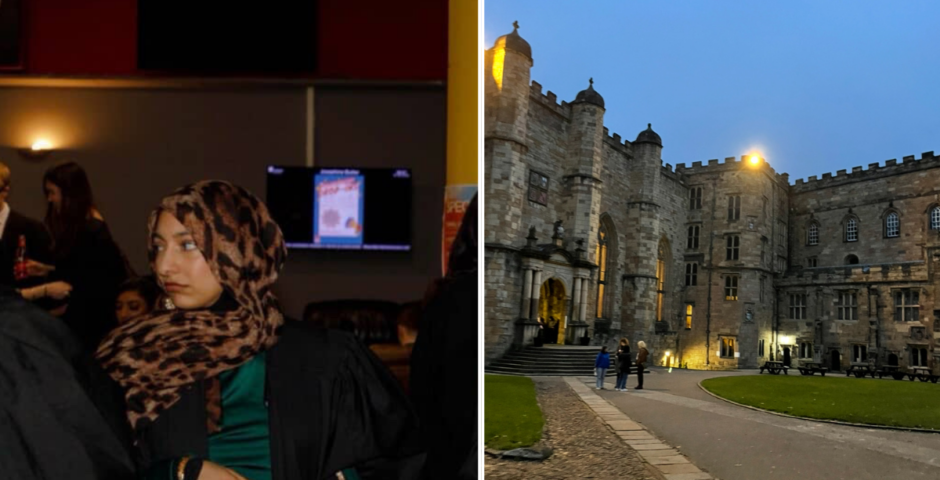
A brown girl with a scarf: My experience being a Muslim girl in Durham
Samara explores the realities of her minority identity in Durham

I remember the last day I spent outside without a hijab at Durham University. The frigid gasps of winter were fading into a peaceful springtime. Meditating on my upcoming decision while meandering down cobbled walkways, I remember feeling the wind rake nails against my scalp, tousling hair chaotically around my ears and mouth. I felt small, lost in a sea of people who didn’t know my commitment to my faith, the most important part of my life. They saw a girl with brown skin drowning in her decisions with a furrowed brow, and I didn’t know if they saw anything past that. I didn’t feel free without the headscarf, I felt exposed and vulnerable, small and forgettable.
My first week of wearing the hijab outside, I kept having the feeling of being watched. I would walk hurriedly through campus, trying to outpace the sun on my way home through the easy spring air. Cherry blossoms unfolded overhead, the serene sight dampened by my rising self-consciousness. With the hijab draped over my head and shoulders, dress fluttering shyly in the wind, I tried not to scrutinise every look thrown my way, wondering if every mutter and muffled laugh was targeted at me. I wondered what generalisations were being piled onto me, if they thought I was oppressed, if they thought I was judging or rude or a thousand other stereotypes.

I am incredibly proud of my religion, but also incredibly aware of the assumptions now placed upon me by people who had never met me. The first friend I met up with after putting on the hijab asked me, eyeliner drawn thickly around concerned eyes, “Did your parents make you wear that?” I had laughed slightly, my smile fading once I realised that she wasn’t joking. I took a calming sip of the hot chocolate in front of me and made myself actually consider an answer.
“My mom doesn’t wear the hijab, actually. It’s her choice whether or not to put it on, to dress as covered as they want. I choose to dress modestly because I like being known by my faith.” I twisted my lips to the side, considering. “Just like how your goth clothes,” I gestured to her fashionable all-black ensemble, “let people know that you’re a theatre kid with great taste, my hijab lets people know how I conduct myself, just like my Indian jewelley lets people know that I’m proud of my heritage. I choose to dress in a way that displays my identities, and how happy I am to represent them.”
She pouted at the thought that she was goth and we laughed it off. She never brought up the subject again. One night a few months later, preparing to walk home from the library into the frigid air, she turned to me while tying her scarf into a balaclava. “Can you teach me how you do your scarf? I want it to look elegant like that.”
I remembered our conversation in the spring a few weeks after making the big decision. I was walking with my mother around the quiet streets of my American hometown, a green scarf covering my head, a blue scarf covering her shoulders. “You’re already all the way in England, beta. What if something happens to you? What if someone tries to attack you because you wear a hijab?”I smiled at her gentle, protective prodding. “I’ll be okay. I’ve been a brown girl in this town,” I flung my arms out, gesturing to Chicago, “for my whole life. I already know what it’s like to be scared around people who might not understand me.”
She pursed her lips.“I know, I know you’ll be careful.” She paused, collecting her words. “It’s a brave thing to do. I’m just so worried about you.” I hate that I have to carry my mother’s worry around. I hate that I can’t tell her about my hijabi friend who had her scarf pulled off, violently, suddenly, in the middle of the street just a town over from my university campus. I hate that her worries have so much validity. “By the way,” a full smile returned to my mother’s face, “I know some Indian moms in the community who want a ‘good Muslim girl’ for their sons.”
I laughed, well aware of the trope. Yes, I wear hijab with mindfulness, and I know the stereotypes that come along with it. But I am not a “good Muslim girl,” and my mother knows that. I am not good. I am passionate, I’m angry, and I cry during rom-coms that aren’t really that sad. The people that love me understand that putting on the scarf never changed who I was – it just made me less invisible, made my identity more clear, and put the declarations I’ve made to my God at the forefront of who I am.
The ability to be seen for who I really am is why I wear my hijab, why I wear Indian jumkahs and eat paneer and celebrate Eid. It makes me feel at home, protected from gazes that seek to put me in a box. The people that love me, know me – and I hope anyone staring at me in public, transfixed by my brown skin and modest clothes, will know who I am as well.

Latest

More than two tonnes of plastic pellets may remain in the Tyne, researchers warn

A collision in July released around 17 tonnes of nurdles

Jax speaks out after toe-curling Love Is Blind reveal, and shares why she *really* ghosted Stew

She claims it had nothing to do with his appearance

A full record of how The Celebrity Traitors S2 cast voted at each Round Table session

Yup, we’re keeping track of all the stats
The Celebrity Traitors comedians whose fortunes are no laughing matter, from £1m to £6.5m

The fact Miranda isn’t the highest is criminal
Celebrity Traitors’ King Kenny was arrested after filming a prank on his university campus

He has a wild backstory from his YouTube career
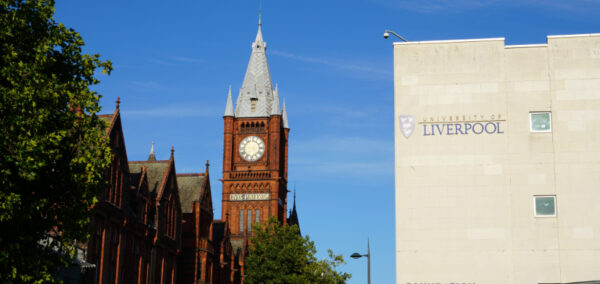
Is this the downfall of Turnitin? Here’s what you need to know

Turnitin’s system is changing and students’ data could be used to train tools which use Artificial Intelligence

Fewer apps, more life: My experience at the launch of the social SuperApp ZYMIX

Inside the launch of the SuperApp that wants to clear out your home screen
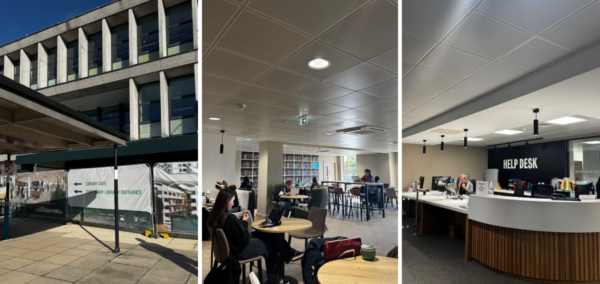
The question we’re all thinking about: What exactly is happening with the library?

Everything you need to know about the JB Morrell Library refurbishment

Plans submitted to council for new research facility at York University

University of York’s Campus West could see a new research building after plans submitted to York Council
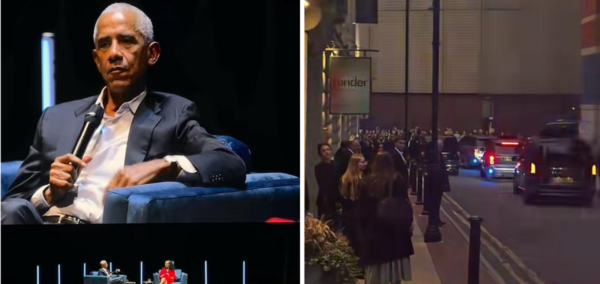
Wait, why was Barack Obama in Manchester city centre?

The former US President was spotted outside a hotel before speaking at Co-op Live
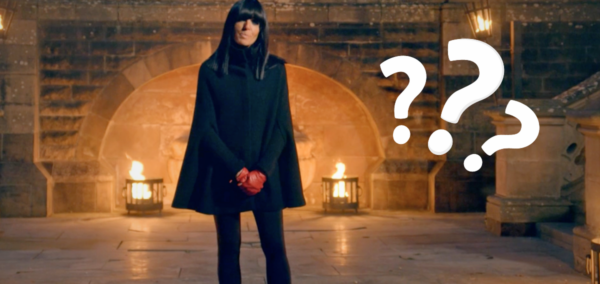
The Celebrity Traitors producers are already eyeing up big names for season three’s cast
Stephen Lambert wants Tom Cruise and ‘a big sports star’

Hannah Fry has crunched the numbers, and spotted a suspicious Celebrity Traitors voting pattern
It could be bad news for the Traitors

Former Lancaster University professor John Whitehead dies aged 76

John was a lecturer of mathematics and statistics
How to avoid the struggles that come with a part-time job at a Bristol university

After all, we do live in on of the most expensive cities in the UK.

All the public scandals The Celebrity Traitors cast have been in, from arrests to racist tweets
They’re not as wholesome as people think
Newcastle and Northumbria universities join forces for new Student Health Hub

Students of both unis can access the mental health service on Friday mornings
The net worths of the American Horror Story 13 cast prove who desperately needed that pay cheque
A $50 million net worth with two minutes of screentime? Nice

Three UK universities announced language course closures in 2026 – including Edinburgh
The University of Edinburgh is scrapping 90 programmes

‘She is phenomenal’: Traitor Hannah Fry has realised that she’s related to her co-star
‘I cannot tell you how much I admire her’
From Crawford to Turing: the stories behind UoM’s building names

You’ve walked past them loads, but how many names do you truly know?