

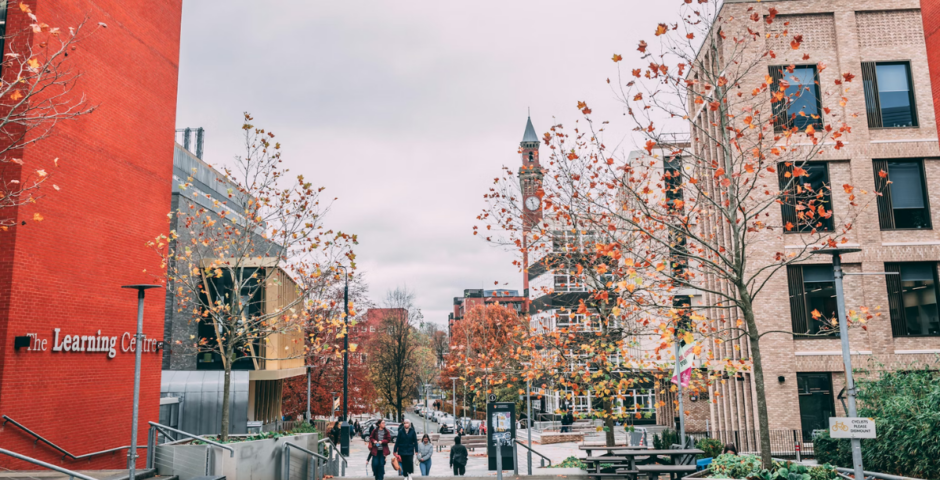
Birmingham medical students join national campaign to address funding gaps in degrees
‘These are the doctors of the future that we cannot afford to lose’

Medical students at the University of Birmingham are taking part in a British Medical Association (BMA) campaign calling for fully-funded maintenance for medical students.
The university will be one of 12 institutions participating in the “Stop the Drop” campaign taking place today (Wednesday 11th February).
The campaign calls for the government to fully fund medical students’ maintenance throughout the course of their degrees.
Currently, medical students can be funded by student loans for the first four years of their course, before receiving the NHS student bursary in their fifth year. This means that some students transitioning from full students loans to the bursary will see a drop of over £4,500.
The nationally co-ordinated “Fix our Funding” forum campaign day comes in response to a report by the BMA, which has found many medical students struggle to afford necessities, such as food and heating.
‘These are the doctors of the future that we cannot afford to lose’

Yalna Pouya, BMA medical school committee deputy co-chair for finance and a medical student at the University of Nottingham via Matt Saywell/BMA.
The campaign day builds on the BMA’s #FixOurFunding campaign, which began in November 2024. A report by the UK Medical Students Committee (MSC) of the BMA surveyed 4,400 medical students and discovered that many are reliant on the support of their family, debt or emergency loans, or securing a part-time job in order to afford their studies.
One of the campaign’s leaders, Yalna Pouya, a medical student at the University of Nottingham, told The Birmingham Tab: “Speaking to other students about their financial struggles has been one of the most sobering parts of this campaign.
“Dedicated, talented students have told me they’re worried they won’t make it to graduation day for no other reason than they just can’t make ends meet long enough.
What’s happening?
As Times Higher Education’s 10th ranked UK medical school, the University of Birmingham enjoys a strong reputation due to its proximity to the Queen Elizabeth hospital. The university trains over 350 medics each year. However, Yalna warns the lack of full funding threatens “talented, motivated students reconsidering medicine entirely because they simply can’t afford to see the course through”.
The event in Birmingham will feature a relaxed, drop-in stall in the medical school common room for students to learn more about the campaign, information displays explaining how funding decreases in later years of the degree and the impact this has, and an informal space for students to share their experiences and ask questions surrounding finance.



Students who attend will also be provided with campaign merchandise and free pizza. There will be a session running from 3-4pm and the event will continue into the evening for discussions.
The event aims to unite students and raise awareness for restoring full maintenance funding. Organisers have designed the day to maximise engagement by being accessible, low-pressure, and informal.
Yalna said: “Bringing the campaign directly onto campus allows students in Birmingham to engage with the issue collectively and understand that what they’re experiencing isn’t isolated – it’s part of a national problem that we’re trying to fix together.”
The day sees the BMA bring its work completed on a national scale to university campuses across the country. Other universities involved in the national co-ordinated effort are:
-
Anglia Ruskin University
-
Bangor University
-
University of Birmingham
-
University of Exeter
-
King’s College London
-
Newcastle University
-
University of Leeds
-
University of Lancashire
-
University of Nottingham
-
University of Sheffield
-
University of Sunderland
-
University of Surrey
‘Our ask is simple’
Campaigners are calling on the government to instate full maintenance funding for the entirety of medical courses. The cost of doing so has been calculated at £29 million to the Treasury, a figure accounting for 0.147 per cent of Student Finance England’s annual lending.
However, failure to act may be to the detriment of the NHS and the future healthcare workforce. As Yalna, who serves as deputy co-chair for finance on the BMA Medical School Committee, has warned: “Medicine risks becoming a profession only accessible to those with financial backing.
“That’s bad for students, bad for the NHS, and bad for patients, because a workforce that isn’t diverse can’t properly reflect or serve the population.”
Already she has witnessed medical students “already burned out before they even enter the NHS” as balancing work shifts and studying takes a significant toll on food and sleep.
Speaking of the need for this funding, Yalna commented: “At a time when the NHS is under enormous pressure, supporting the doctors of the future should be an obvious priority.”
The BMA is a professional association and trade union representing and negotiating on behalf of all doctors in the UK. A leading voice advocating for outstanding health care and a healthy population. An association providing members with excellent individual services and support throughout their lives.
The Department for Health and Social Care has been contacted for comment.
For more of the latest news, guides, gossip, and memes, follow The Birmingham Tab on Instagram, TikTok, and Facebook.
Featured image via Unsplash


Latest

Spend smart, party hard: Your ultimate guide to surviving first year on a student budget

The broke freshers’ guide to a brilliant year

From Soho to Shoreditch: Here’s the ultimate guide to student nightlife in London
All the treasures London has to offer


The 7 ways I’m planning to lock in for my final year

Disclaimer: This article contains no mentions of grad programmes

It’s time for week three, so here is the full episode schedule for The Celebrity Traitors this week

‘Heads will roll’ during these episodes

Our official ranking of every Dusk cocktail

We’ve saved you from having to try all sixteen of them x

Student loan running dry? Here’s 7 budgeting ways to survive the rest of October!

Because unfortunately, your student loan will run out, fast!

Final year students, here is the ultimate Uni of York bucket list

Why wouldn’t you want to make the most out of your uni city

Calls for help to Exeter’s CCTV centre double during Freshers’ Week

Dennis said most incidents involve antisocial behaviour caused by excess drinking

A fresher’s guide to Exeter city centre

As the good weather is scheduled to continue, and summative deadlines hide in the distance, it’s time to explore your new city



University of Bristol plans new security doors at Beacon House

New security gates are to be put up in Beacon House study centre

People are torn about American Horror Story replacing Papa Legba’s actor, despite the tragedy

The new actor has spoken out

Professor Hannah Fry’s pink jumpers from The Celebrity Traitors are almost affordable

Two of her knitwear pieces are from the same shop

Fancy celebrating Oktoberfest? Here are the five best spots in Manchester

The good news is you don’t need to travel all the way to Munich get stuck in with the festivities

Meet Alexandra, founder of LEX. – Newcastle’s answer to Mayfair after dark

Girls just want to have fun (club edition)

New report from University of York exposes hidden poverty in city

The University of York’s Cost of Living Research Group uncovers modern-day deprivation and inequality in the city
I interviewed Christa Pike 20 years ago, and meeting her will stick with me forever
‘She knows she wasted her life’
Far-right commentator driven off campus after clash with protesters

Students protested the presence of Montgomery Toms outside a University of Bristol study centre

We were barely born when Madeleine McCann went missing, so why can’t Gen-Z stop thinking about her?
‘Someone the same age as you never got to enjoy life as you have’