

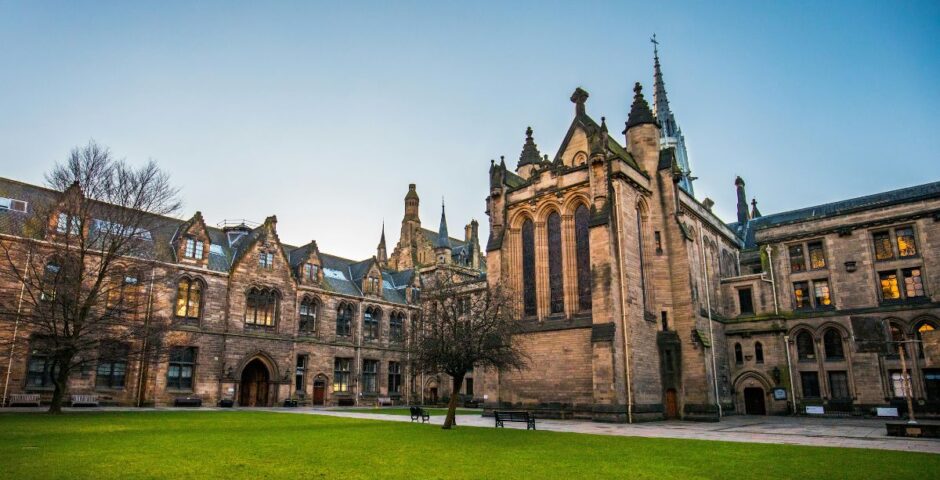
Glasgow University recorded 109 reports of sexual misconduct over the last five years
One student reported feeling ‘disregarded’ when she came forward with a complaint

Reports of sexual misconduct at Glasgow University are on the rise, with over 109 reported in the last five years.
Across Scottish universities as a whole, 675 reports of sexual abuse have been recorded since the beginning of the 2021/2022 academic year, a 70 per cent incline in figures from four years prior.
Glasgow University is among the top three Scottish universities with the highest rate of sexual misconduct reports. Edinburgh had the highest number of reports, holding 127 cases across the five year period. Glasgow, at second, had 109 reports, following by St Andrews which received 85 reports in the same period.
611 of the 675 cases across Scottish universities were placed against students, while 64 were filed against staff from the 19 Scottish universities.
At Glasgow, 90 reports of sexual misconduct detailed misconduct performed by students. Last year, there were 29 reports against students, the highest of over the five year period. The consequences involved expulsion for some students.
Across the five year period, 19 cases were placed against Glasgow University staff members. As a result, staff members were dismissed from their roles.
The recent boom in sexual assault and harassment at Scottish universities has led to growing concern from staff and students, with students.

via Unsplash
At Glasgow University in particular, students reported feeling “disregarded” when they made sexual abuse complaints
Sarah, who was studying for a master’s degree at Glasgow in 2023, recalled being told the university “couldn’t do anything” to help her, after she filed a report against her abusive ex who was also studying at the institution.
She explained: “You’re providing these very detailed, intense reports of abuse to people who just feel like administrators. It feels very personal giving them all these details. And I was quite angry with the reply. It was very ‘we can’t do anything. Here’s a link that might be useful. When you feel like you’re not being listened to or being disregarded, it’s quite a tear out of you.
“It’s a loophole that just shrugs off any accountability, and it feels like they’re supporting the student who’s doing all these abusive things.” and she asked “where the integrity of the institution lies in how they respond to these reports and how they justify taking action.”
Glasgow University said it would not be taking further action in Sarah’s complaint because her report contained incidents that occurred a few months before the student began studying at the university
Hannah, another student at Glasgow in 2023, recalled feeling dismissed by the administrative side of the university’s complaint process, claiming the whole exchange took place over email.
She said: “I think even if there was an offer of a zoom call to talk about something, or getting to see someone face-to-face to have a chat would’ve been better. It feels like their services are there for the sake of having services rather than wanting to change anything [for victims]. With everything over email, they can kind of hide behind that. And they forget that the person they’re talking to has been through everything they’ve just said they’ve been through, and dismiss all of it.”
Scotland’s 19 higher education establishments are represented by Universities Scotland, which has ascribed the growth to a “major drive” in encouragement for victims to come forward and report.
However, Sandy Brindley, Chief Executive at Rape Crisis Scotland, called the figures “deeply troubling”. She explained: “While an increase in reported incidents can signal growing confidence in the reporting process […], it also signals a likely increase in sexual violence itself.
“While many institutions do now have a robust reporting process in place, there needs to be a focus on the quality of support in place for student survivors and increased access to information around issues like consent.”



At Edinburgh University, 105 students were listed in the reports which followed to 47 formal investigations. 22 of the reports involved staff members. The university noted a surge in cases filed from students since 2021/22. Showcasing the relevance, and need for the implementation of a new reporting and support platform.
St Andrews University presented 79 cases against students, and six against members of staff. These led to 35 inquiries implemented, and 26 punitive results. The university became the first in the UK to hold an Emily Test Charter Award, which requiresr “institutions to have built and maintained an environment in which students are supported, encouraged and empowered to report all instances of sexual misconduct.”

via Unsplash
A Universities Scotland spokesperson said: “There has been a major drive within universities over the last five to ten years to put new reporting mechanisms for sexual misconduct in place and to build a wider culture where survivors can have confidence to report an incident knowing they will be supported.”
“An increase in reported cases is very likely to reflect this necessary progress […] It is really important that governments in Scotland and across the UK go further to address misogyny and violence against women and girls at the root cause.”
A Scottish Government spokesperson said: “Any incident of gender-based violence is unacceptable and it is clear that more must be done to end abuse in our campuses and in wider society. We are clear that universities must continue to take every action within their power to reduce the risk of this happening, and do more.
“That is why we are taking forward measures requiring colleges and universities to act to prevent gender-based violence and provide support for students experiencing abuse, as a condition of funding they receive from the Scottish Funding Council. This action will come about as a result of part of a new Scottish Government law that was passed [recently], which we collaborated on with the organisation EmilyTest.
A Glasgow University spokesperson previously said: “The university aims to promote a culture where differences are welcomed, harassment and bullying are known to be unacceptable and where allegations are dealt with in a fair and timely fashion, and without fear of victimisation.”
A St Andrew’s University spokesperson said: “We agree with Sandy Brindley that there needs to be a focus on the quality and accessibility of support for survivors, something we have concentrated on at St Andrews.
“In our experience, and that of others, when support and accessibility is improved, the numbers of survivors coming forward will increase. Sometimes it is those institutions reporting higher numbers of instances of sexual misconduct who are making most progress by providing an environment in which survivors feel supported and able to report.”
An Edinburgh University spokesperson said: “We are here for our students, and their safety is our absolute priority. We do not tolerate any forms of violence or harassment in our community. The university has a dedicated and specially-trained support team who provide advice and support to survivors of sexual violence and other forms of gender-based violence, as well as providing guidance on how to contact external organisations.
We deliver training for students and staff to promote positive behaviours around sexual consent and tackling harassment, and we work closely with our students’ association, partners in the city and frontline groups to support people in crisis. We will continue to do all we can to ensure everyone in our community feels safe and protected.”
If you have been affected by any of the issues raised in this article, you can call the Samaritans on 116 123.
SHOUT, a confidential text support service, can be contacted by texting the word “shout” to 85258.
All University of Glasgow students can access a free confidential helpline on 0800 028 3766 (or use the Student Space app) to discuss any difficulties they may be facing.
Glasgow University has been contacted for comment.
Featured image via Unsplash


Latest

A guide to treating the Sunday scaries in Selly Oak

Battling a Circo hangover with the impending doom of a 9am lecture? Welcome to an average Sunday in Selly Oak

More than two tonnes of plastic pellets may remain in the Tyne, researchers warn

A collision in July released around 17 tonnes of nurdles

Jax speaks out after toe-curling Love Is Blind reveal, and shares why she *really* ghosted Stew

She claims it had nothing to do with his appearance

A full record of how The Celebrity Traitors S2 cast voted at each Round Table session

Yup, we’re keeping track of all the stats

The Celebrity Traitors comedians whose fortunes are no laughing matter, from £1m to £6.5m

The fact Miranda isn’t the highest is criminal

Celebrity Traitors’ King Kenny was arrested after filming a prank on his university campus

He has a wild backstory from his YouTube career
Is this the downfall of Turnitin? Here’s what you need to know

Turnitin’s system is changing and students’ data could be used to train tools which use Artificial Intelligence

Fewer apps, more life: My experience at the launch of the social SuperApp ZYMIX

Inside the launch of the SuperApp that wants to clear out your home screen

The question we’re all thinking about: What exactly is happening with the library?

Everything you need to know about the JB Morrell Library refurbishment
Plans submitted to council for new research facility at York University

University of York’s Campus West could see a new research building after plans submitted to York Council

Wait, why was Barack Obama in Manchester city centre?

The former US President was spotted outside a hotel before speaking at Co-op Live

The Celebrity Traitors producers are already eyeing up big names for season three’s cast
Stephen Lambert wants Tom Cruise and ‘a big sports star’

Hannah Fry has crunched the numbers, and spotted a suspicious Celebrity Traitors voting pattern
It could be bad news for the Traitors

Former Lancaster University professor John Whitehead dies aged 76

John was a lecturer of mathematics and statistics

How to avoid the struggles that come with a part-time job at a Bristol university

After all, we do live in on of the most expensive cities in the UK.

All the public scandals The Celebrity Traitors cast have been in, from arrests to racist tweets
They’re not as wholesome as people think
Newcastle and Northumbria universities join forces for new Student Health Hub

Students of both unis can access the mental health service on Friday mornings

The net worths of the American Horror Story 13 cast prove who desperately needed that pay cheque
A $50 million net worth with two minutes of screentime? Nice

Three UK universities announced language course closures in 2026 – including Edinburgh
The University of Edinburgh is scrapping 90 programmes

‘She is phenomenal’: Traitor Hannah Fry has realised that she’s related to her co-star
‘I cannot tell you how much I admire her’