

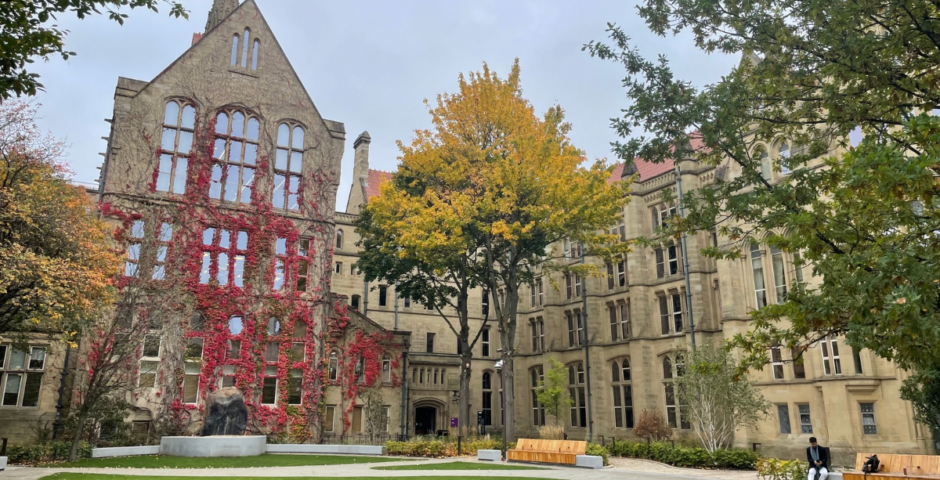
University of Manchester recognised among global top 100 in 10 subject areas
The university placed within the top 50 for four subject areas

10 subject areas at the University of Manchester have ranked in the Times Higher Education’s 2026 global top 100.
The rankings placed Manchester in the top 50 globally for four subject areas, including arts and humanities, business and economics and social sciences.
Engineering achieved Manchester’s highest subject ranking, placing fifth in the UK and 48th globally.
Several subject areas also improved their positions compared to last year’s rankings. Social sciences rose five places to 32nd, while arts and humanities climbed two places to 41st. Physical sciences also improved, moving up four places to rank 51st globally.
The Times Higher Education subject rankings evaluate universities across 148 individual disciplines, grouped into broad subject areas. Universities were assessed using five main criteria: teaching quality, research environment, research quality, international outlook and industry engagement.
Vice president for research, Professor Colette Fagan, said: “This global subject ranking is testament to the high level of teaching and research excellence this university prides itself on.”


The subject rankings were described by the university as an important measure used to shape its long-term strategy, “Manchester 2035”, which was launched earlier this year.
According to Professor Hallam, vice-president for teaching, learning and students, “these rankings are useful in demonstrating where we are, and where we would like to be, to ensure we keep building on the high-quality teaching we deliver to our talented students.”
The subject results came alongside Manchester’s wider performance in global league tables for 2026.
The University ranked eighth in the UK and 56th globally in the overall Times Higher Education World University Rankings, which assessed more than 2,000 institutions worldwide.
In addition, the University ranked first in the UK and second globally in the Times Higher Education Impact Rankings, which measured contributions to the United Nations’ Sustainable Development Goals.


Latest

Lizzie Borden’s doctor’s full court testimony, where he recalled finding Andrew and Abby dead

‘His face was hardly to be recognised by one who knew him’

A weapon in the Lizzie Borden case was never found, and it might not have even been an axe

Many different theories were investigated

Lizzie Borden wasn’t right for Monster, and the ‘female rage’ reason they chose her makes it worse
There was so much wrong with it

The full Celebrity Traitors 2026 episode schedule as day change is confirmed
Don’t get caught out when it returns this week

Ryan Murphy picks his favourite American Horror Story season, and it’s a controversial choice

It’s Sarah Paulson’s least favourite

Why the Love Island 2026 Islanders are suddenly posting ‘tart’ on all of Lorenzo’s posts
People think it’s a divide
Former Newcastle student raped in Freshers’ Week speaks out on potential dangers

“I didn’t know what had happened to me… I came home and was very confused”

The 20 easiest UK universities to get into, based on accepted students’ grades

University of Roehampton students have a D and two Cs on average

Here’s what joining these Cardiff Uni societies says about you

Things you need to know before joining a new society

A favourite from the Love Island 2026 cast is getting an All Stars return
A second chance is well deserved

Right, it’s time to lock in: Here are 10 things every Cardiff Uni final year needs to know

It’s never too late to make this year the best one yet

Charli XCX’s viral VMAs reaction wasn’t about Taylor Swift, so here’s what actually happened
They’ve been surrounded by rumours for years

University sued over alleged fraternity gang sexual assault and punishing accused with essays
The members discussed the attack over Snapchat
Here’s what TV show your Cardiff Uni accommodation would feature in

Everyone’s favourite show is finally back for another season

The major celebs who skipped the VMAs 2026 and why, despite having multiple nominations
Ariana Grande was nominated eight times but didn’t attend

All the advice freshers need to survive first year: Love, Cardiff Uni students who survived

From YOLO to locking in, here’s all you need