

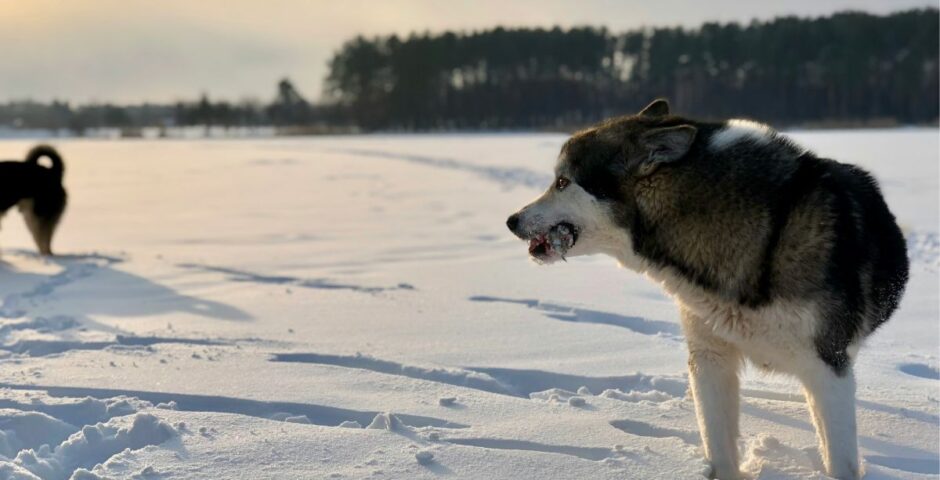
Cardiff Uni researchers crack woolly rhino mystery using the remains of an Ice Age wolf
DNA recovered from a wolf frozen in permafrost has helped researchers solve a 14,400 year-old woolly rhino extinction mystery

Cardiff University researchers have helped uncover new details about why the woolly rhinoceros went extinct after DNA was recovered from the stomach of an Ice Age wolf.
Scientists extracted woolly rhino DNA from the preserved remains of a wolf that lived around 14,400 years ago, marking the first time the full genome of one Ice Age animal has been sequenced after being found inside another.
The wolf was discovered frozen, in permafrost near the village of Tumat in north-eastern Siberia. During an autopsy, researchers identified a small fragment of preserved tissue inside its stomach, and after genetic testing, later confirmed the tissue belonged to a woolly rhinoceros, making it one of the youngest known specimens of the species ever discovered.
Researchers from Cardiff University worked alongside teams from Stockholm University, the Swedish Museum of Natural History, and other international institutions on the study.
Dr David Stanton, a researcher at Cardiff University’s School of Biosciences, said the discovery was unexpected, explaining: “It was a very unusual specimen to work on. It was initially identified as a piece of cave lion tissue, so it was quite a surprise when the genetic analysis showed that it was actually a woolly rhinoceros.”
Radiocarbon dating later revealed the tissue came from a period very close to when woolly rhinos went extinct, highlighting how rare the sample was.
Dr Stanton added: “The date estimate, very close to when woolly rhinos went extinct, made it incredibly valuable for understanding how and why so many species disappeared at the time.”

via Wikimedia Commons



The research team compared the newly recovered genome with two older woolly rhinoceros genomes dating back around 18,000 and 49,000 years. The comparison showed no increase in inbreeding or harmful genetic mutations over time.
This suggested woolly rhinos remained genetically healthy until shortly before they disappeared, pointing towards a rapid population collapse rather than a slow decline.
Professor Love Dalén, an evolutionary genomics expert involved in the study, said the findings challenge the idea that humans were responsible for the species’ extinction.
He said: “Woolly rhinos had a viable population for 15,000 years after the first humans arrived in north-eastern Siberia, which suggests climate warming rather than human hunting caused the extinction”.
Researchers believe rapid environmental changes at the end of the last Ice Age likely played a key role in the species’ disappearance. They say the findings could also help modern conservation efforts, offering lessons on how quickly even stable populations can collapse when faced with sudden climate change.
The study has been published in Genome Biology and Evolution and involved scientists from universities and research institutions across Europe, including Cardiff.
For more of the latest news, guides, gossip and memes, follow The Cardiff Tab on Instagram, TikTok, and Facebook.
Featured image via Unsplash


Latest

Lizzie Borden’s doctor’s full court testimony, where he recalled finding Andrew and Abby dead

‘His face was hardly to be recognised by one who knew him’

A weapon in the Lizzie Borden case was never found, and it might not have even been an axe

Many different theories were investigated

Lizzie Borden wasn’t right for Monster, and the ‘female rage’ reason they chose her makes it worse
There was so much wrong with it

The full Celebrity Traitors 2026 episode schedule as day change is confirmed
Don’t get caught out when it returns this week


Ryan Murphy picks his favourite American Horror Story season, and it’s a controversial choice

It’s Sarah Paulson’s least favourite

Why the Love Island 2026 Islanders are suddenly posting ‘tart’ on all of Lorenzo’s posts
People think it’s a divide
Former Newcastle student raped in Freshers’ Week speaks out on potential dangers

“I didn’t know what had happened to me… I came home and was very confused”


The 20 easiest UK universities to get into, based on accepted students’ grades

University of Roehampton students have a D and two Cs on average


Here’s what joining these Cardiff Uni societies says about you

Things you need to know before joining a new society

A favourite from the Love Island 2026 cast is getting an All Stars return
A second chance is well deserved

Right, it’s time to lock in: Here are 10 things every Cardiff Uni final year needs to know

It’s never too late to make this year the best one yet

Charli XCX’s viral VMAs reaction wasn’t about Taylor Swift, so here’s what actually happened
They’ve been surrounded by rumours for years

University sued over alleged fraternity gang sexual assault and punishing accused with essays
The members discussed the attack over Snapchat

Here’s what TV show your Cardiff Uni accommodation would feature in

Everyone’s favourite show is finally back for another season

The major celebs who skipped the VMAs 2026 and why, despite having multiple nominations
Ariana Grande was nominated eight times but didn’t attend

All the advice freshers need to survive first year: Love, Cardiff Uni students who survived

From YOLO to locking in, here’s all you need